
Genre-Bending Music Production Strategies
Discover Genre-Bending Music Production strategies that unlock viral microgenres. Learn 10 ultimate, proven techniques for advanced sound design and crushing industry barriers. Start creating today!
Introduction
The modern musical landscape is one of relentless fusion, where the rigid boundaries of established genres have become obsolete. In an era of infinite music access, the listeners’ ears are constantly craving novelty, and the most successful producers are those who embrace sonic alchemy. This is why mastering Genre-Bending Music Production is not just an artistic choice; it is a critical competitive advantage.
The Problem: In Music Production You are likely facing the challenge of sounding unique in a saturated market. Trying to adhere strictly to a single genre, be it EDM, Hip-Hop, or even Ambient, often results in predictable, formulaic tracks that fail to capture attention.
The Value Proposition: This expert guide provides 10 ultimate, advanced techniques that professional producers use to invent entirely new sonic palettes. In this Music Production Genre bending Article You will learn to move beyond simple mashups and into the realm of Creating Viral Microgenres—a skill set that guarantees explosive relevance in the 2025 music industry.
Genre-Bending Music Production Defined: The Hybrid Evolution
Genre-Bending Music Production is the deliberate, skillful amalgamation of two or more distinct musical styles to create a new music production style, coherent artistic statement. This process moves far beyond simple Crossover music, which often involves a surface-level combination (e.g., a rapper over a pop beat). True genre-bending results in a unique sound identity—the microgenre.
The Difference Between Crossover and Hybrid Music Genres
Crossover music primarily focuses on broad commercial appeal, leveraging the recognizable elements of two popular genres to target a wider audience. Hybrid music, however, delves deeper. It takes the fundamental sonic DNA—the rhythmic structure, harmonic language, and timbral texture—of disparate styles and synthesizes them into an entirely new entity.
Analyzing the Anatomy of a Microgenre
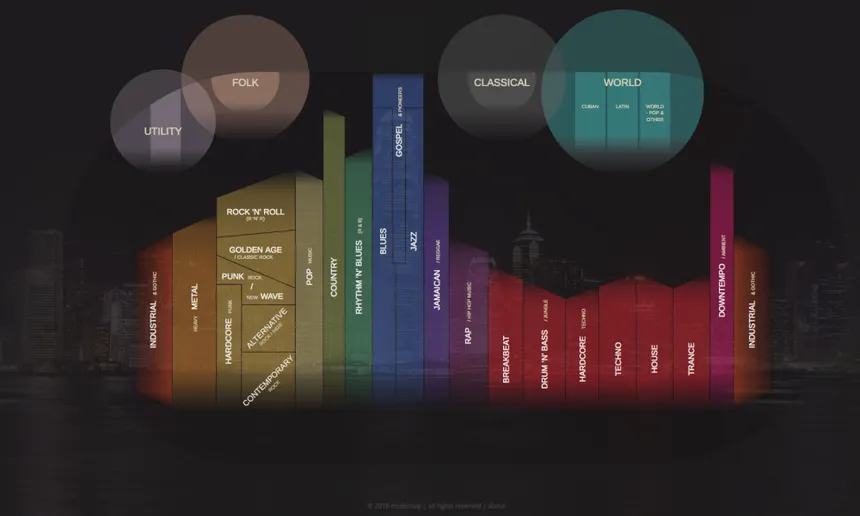
A microgenre is a highly specific, often internet-driven, subset of a larger hybrid style. Its success hinges on a few key elements: a unique sonic identifier (a specific synth sound, drum pattern, or vocal effect), a memorable name, and often, a strong visual aesthetic.
Key Elements of Successful Hybrid Music Genres
The most successful Hybrid Music Genres in music production are built upon intelligent contrasts:
- Rhythm: Combining complex rhythmic patterns (e.g., Afrobeat or Dancehall) with simple, westernized harmony (e.g., Pop).
- Timbre: Using acoustic, organic sounds with heavily processed, synthetic textures.
- Tempo: Utilizing unexpected tempo shifts or the subtle use of polymeter.
H2: Technique 1: Modular Synthesis for Advanced Sound Design
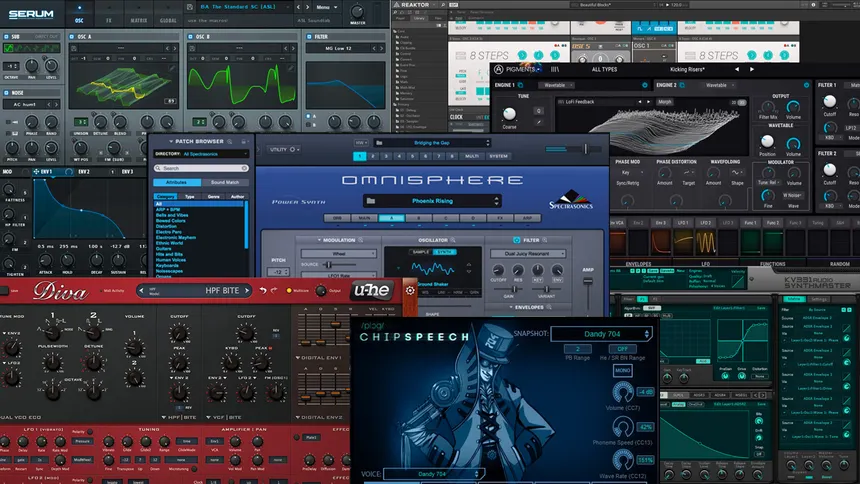
To escape the limitations of preset sounds, elite producers turn to the limitless potential of modular and semi-modular synthesis. This is where truly unique sonic signatures are forged, offering the technical depth needed for next-level Genre-Bending Music Production.
Using Granular Synthesis to Morph Tonal Sources
Granular synthesis breaks audio into tiny fragments (grains) of sound, which can then be manipulated independently. This is an incredible tool for genre-bending, as you can feed a familiar sound (like a piano chord or a classic drum loop) into a granular engine and completely warp its texture, turning a classic sound into a modern, unrecognizable element of your microgenre.
Cross-Modulation and FM Synthesis in Sound Synthesis Techniques
Frequency Modulation (FM) and Cross-Modulation are essential Sound Synthesis Techniques for creating metallic, glass-like, or alien timbres often found in cutting-edge genres. By modulating the frequency of one oscillator with the output of another, you can generate rich, complex harmonics that no standard subtractive synth can match. This complexity is key to creating a sound that defies simple genre categorization.
The Art of Layering in Music Production
Instead of simply layering a sine wave with a sawtooth, try layering a heavily distorted digital wave with a pure analog pulse wave. The resulting tone often carries an inherent tension—a push-pull between the synthetic and the organic—that is the hallmark of modern, complex music.
H2: Technique 2: Tempo and Time Signature Manipulation
In Music Production, the rhythmic foundation is often the most rigid aspect of a genre. By intelligently disrupting it, you immediately signal something new to the listener.
Implementing Polymeters and Poly-tempos in Your Groove
A polymeter is the simultaneous use of two or more different time signatures (e.g., a 4/4 drum loop with a 3/4 melodic sequence). A poly-tempo is the use of two or more different tempos running simultaneously. While challenging, the momentary “clash” creates a unique tension. This technique is especially powerful when fusing African diaspora rhythms with European dance music conventions.
Using Time-Stretching as a Rhythmic Tool
High-quality time-stretching algorithms are not just for matching loops. Drastically time-stretching an entire 4-bar section of a beat by 200% can turn a driving rhythm into a sparse, ethereal atmosphere, while retaining the original pattern’s feel.
Audio Manipulation Tips for Unexpected Groove Shifts
One of the most effective Audio Manipulation Tips is to automate subtle tempo nudges within your DAW. Try subtly slowing the tempo by 1-2 BPM before a drop and then quickly accelerating back to the original. This gives the listener a feeling of physical movement and disorientation, a potent technique for hybrid forms.
H2: Technique 3: Reverse Engineering Existing Hits
To successfully blend and achieve genre bending in your music production workflow, you must first understand the ingredients. This technique is about dissecting the successful tracks of your target genres to isolate their core DNA.
Deconstructing the Rhythm of a Foreign Genre
Take a genre you know little about—say, Brazilian Funk or Japanese City Pop. Do not focus on the melody. Focus solely on the rhythmic pocket and the placement of the kick, snare, and percussion. Understanding the rhythmic grammar of a foreign style is the first step to injecting it into your own sound.
Isolating the Core Emotional Elements of a Track
Every genre has a core emotion: Trap might be aggressive confidence; Ambient might be reflective calm. Identify the elements that carry this emotion (e.g., the reverb tail, the sub-bass presence, the harmonic major/minor feel) and isolate them. You can then use the emotion of one genre with the rhythm of another.
The Music Production Workflow for Genre Deconstruction
A highly efficient Music Production Workflow involves creating a dedicated project file for analysis. Drop a hit song into the DAW and use an EQ to isolate frequency bands, a spectrum analyzer to study the balance, and a transient shaper to examine the dynamic envelope. This scientific approach removes guesswork.
H2: Technique 4: Non-Traditional FX Chains and Processing
Effect processing is often formulaic in music production. Breaking the rules of conventional mixing is a fast track to sonic originality.
Routing Vocals Through Guitar Amps and Cabinet Emulations
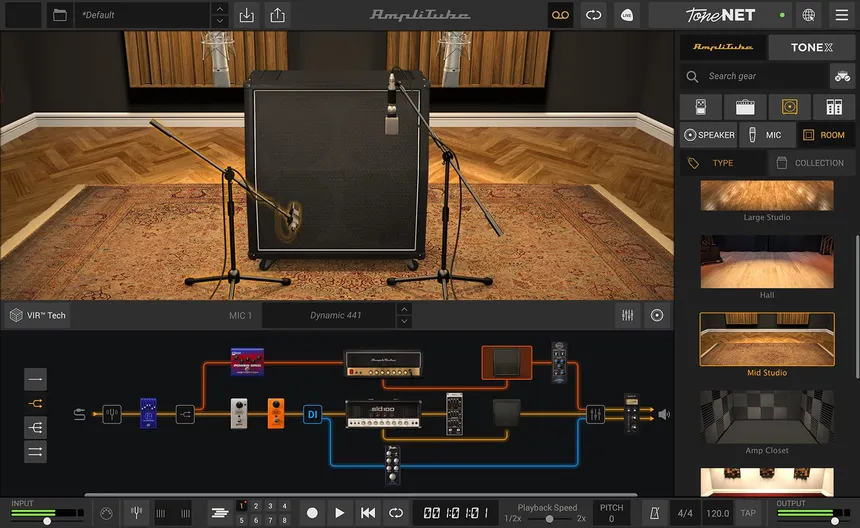
A raw, unprocessed vocal track can be transformed into a distorted texture, a bass line, or a percussive element by routing it through a high-gain guitar amplifier and cabinet simulator. This treatment completely recontextualizes the human voice, turning it from a lyrical element into a sound design tool.
Using Delays as Pseudo-Reverbs and Vice Versa
By setting a stereo delay with extremely short, tight timings (under 10ms) and high feedback, you can simulate a hyper-dense, metallic reverb. Conversely, using a pre-delay on a reverb that is longer than usual (say, 150-250ms) can create a cavernous, almost slap-back effect, adding an aggressive, unsettling depth.
Creative Sidechaining Beyond the Kick Drum
Sidechain compression is not only for ducking the bass against the kick. Try sidechaining a lead melody against an auxiliary white noise track to momentarily “suck out” the melody’s energy, creating a stuttering effect. Or, sidechain the snare drum against the reverb return to clean up the mix only when the snare hits.
H2: Technique 5: Vocal-Centric Sound Design
If vocals are present, they are often the most recognizable element in your music production. Manipulating them is paramount to creating a new sonic identity. This can be combined with knowledge of specific kits, such as those found in essential trap drum kits.
Manipulating Formants and Pitch for Atypical Vocal Textures
Formant shifting allows you to change the perceived size of the singer without changing the pitch. Shifting formants down dramatically can make a singer sound monstrous or mechanical, a common trait in future bass and hyper-pop microgenres. Used in combination with extreme pitch shifts, the vocal becomes an entirely new instrument.
Chopping and Splicing Acapellas to Create New Melodies
Use an existing acapella (or a custom recording) and treat it like a breakbeat. Slice the vocal into tiny, percussive fragments and re-arrange them to create a new, abstract melodic or rhythmic sequence. This technique breaks the lyric-melody convention and opens up new rhythmic doors.
Gating and Filtering for Rhythmic Genre-Bending Music Production
Applying an aggressive noise gate or a high-Q bandpass filter, triggered by a rhythmic source (like a high-hat), can turn a sustained vocal into a choppy, rhythmic texture. This process helps integrate the vocal tightly into the groove, moving it toward a percussive role in your Genre-Bending Music Production.
H2: Technique 6: Mastering Sampling for Contextual Blending
Sampling is the bedrock of hybrid music production, but the advanced approach requires a strategic ear and technical know-how.
Curating Found Sounds and Field Recordings for Ambiance
Don’t limit samples to drum loops and melodic phrases. Incorporate high-quality, curating found sounds for music production (from sources like FreeSound) like the distant hum of a city or the crunch of snow. These non-musical elements add an emotional context that ties disparate genre elements together into a cohesive atmosphere.
Time-Stretching Samples to Fit Unnatural Tempos
Take a groove-heavy sample and deliberately stretch it so its transients no longer align with the new track’s grid. This results in a floating, off-kilter rhythm that sounds both familiar and alien—a highly sought-after effect in lo-fi and cinematic microgenres.
Using One-Shots from Incompatible Drum Kits
In Every music production workflow, try to mix a deep, resonant Amapiano kick drum with a highly processed Trap snare and an industrial techno hi-hat. The juxtaposition of these sonically incompatible elements forces the listener to abandon their genre expectations and focus purely on the groove you have created.
H2: Technique 7: Harmonic Tension and Key Signature Twists
Advanced genre-bending in music production often challenges Western musical theory by introducing harmonic friction. This is often achieved using the best free VST plugins.
Borrowing Chords from Unrelated Scales (Modal Mixture)
The easiest way to create tension is to use modal mixture. If your track is in C Major, intentionally borrow a chord from C Minor (e.g., the Eb Major chord). This unexpected chord creates a momentary emotional shift—a sense of melancholic longing in an otherwise cheerful track—which is a powerful narrative tool in Advanced Melodic Sound Synthesis Techniques.
Utilizing Atonal Sounds as Melodic Counterpoints
An atonal sound—a sound that exists outside of the track’s key—can be used sparingly as a melodic counterpoint or a dramatic sting. A pitch-bent riser or a noise burst, for example, can disrupt the listener’s expectations, then resolve back into the established key, creating an incredibly satisfying payoff.
Developing Advanced Melodic Sound Synthesis Techniques
Synthesize a bassline that oscillates between two slightly detuned, conflicting intervals, or create a lead sound with aggressive pitch-shaping that momentarily drifts into dissonance. This creates an energetic Advanced Melodic Sound Synthesis Techniques that sounds futuristic and unpredictable.
H2: Technique 8: The Power of Liminal Space in Mixes
The mixdown itself can be used as a genre-bending tool by playing with the sense of depth and space.
Creating Depth and Distance with Aggressive Reverb/Delay Throws
Use automated reverb and delay sends, known as “throws,” to occasionally push a sound (a vocal snippet or a percussion hit) far back into a massive, unnatural space, only to snap it back to the foreground. This constant pushing and pulling between the front and back of the mix creates a sense of liminal space—an in-between state—that is emotionally engaging.
Using Saturation to Glue Disparate Elements Together
When you blend genres, your sound sources will often have wildly different tonal characteristics. Saturation (harmonic distortion) can act as a sonic glue, introducing subtle, shared harmonics across all tracks, making an acoustic drum loop and a clean digital synth sound like they belong in the same space.
Controlling the Transient Envelope for Genre Ambiguity
A genre like techno thrives on sharp, aggressive transients, while lo-fi hip-hop is characterized by dull, soft transients. Use transient shapers to either round off the attack of a kick drum (reducing its punch) or exaggerate the attack of a soft pad (giving it an aggressive bite). This control over the dynamic envelope allows you to selectively borrow a genre’s feel without its specific sounds.
H2: Technique 9: Building A Signature Music Production Workflow
Consistency and speed are vital for inventing and capitalizing on a microgenre. This requires an optimized process. This process can be significantly improved by leveraging tools such as MIDI kits and production workflow.
Establishing a VST/Plugin Template for Instant Inspiration
Create a DAW template that automatically loads your favorite instruments, effect sends, and channel routings. Include a few “wildcard” tracks—a track pre-loaded with an unusual granular effect or a complex FX chain—that are designed to force you out of your comfort zone and into novelty.
Embracing Creative Constraints to Force Novelty
Impose a creative constraint on yourself: only use one-shot samples, only use three instruments, or only use sounds that are atonal. These limitations force the brain to find novel solutions, which is the fastest route to Creating Viral Microgenres.
Rapid Prototyping for Creating Viral Microgenres
Instead of spending weeks on a single track, rapid prototyping means building a complete, high-level idea in a day. Focus on the core 8-bar groove and sound design. If the initial prototype doesn’t excite you, immediately move on. Quantity of ideas often leads to quality of invention in hybrid styles.
H2: Technique 10: Strategic Release and Audience Targeting
A great microgenre is nothing without a successful launch strategy. Producers should also look at other genre guides, such as how to make Afrobeat, to understand niche market releases.
Identifying and Leveraging Existing Niche Communities
Microgenres thrive in micro-communities. Do not target “Pop fans.” Target highly specific, enthusiastic communities on Reddit, Discord, or niche music forums that are already discussing related fringe genres (e.g., “vaporwave fans who listen to doom metal”). These highly engaged users become your first and most dedicated advocates.
The Role of Visuals in Defining a Microgenre
A microgenre is often defined by its aesthetic as much as its sound. Think of the neon-drenched visuals of Synthwave or the glitchy minimalism of early IDM. Invest time in creating a strong, cohesive visual identity (album art, logo, music video style) that reinforces the unique sound of your Hybrid Music Genres.
Creating Anticipation and Hype for Hybrid Music Genres
Use platforms like TikTok and Instagram Reels to share short snippets of your process—the genre-bending moment itself—rather than just the finished track. Showcasing the unique blend (e.g., a country guitar riff paired with a DnB beat) is a powerful way to pique curiosity and build anticipation.
Conclusion
The future of music is not about sticking to a script; it is about writing a new one. By mastering the 10 advanced techniques of Genre-Bending Music Production, you transition from a consumer of genre conventions to a sonic architect of new styles. These strategies—from modular synthesis to strategic mixing and targeted marketing—provide the blueprint for creating sounds that not only stand out but set the trend.
The ultimate secret is simple: be fearless in your experimentation. Take the knowledge you have gained, apply these advanced techniques, and start your Genre-Bending Music Production journey today. The next viral microgenre is waiting to be discovered.
FAQ Section
Q: What is the most important element of Genre-Bending Music Production?
A: Coherence. The most critical element is ensuring that despite the wildly different elements you are combining, the final track sounds intentional and cohesive, not messy. Use saturation and reverb/delay to subtly “glue” the sounds together.
Q: How can I ensure my hybrid music genre doesn’t sound messy?
A: Use the principle of “one point of focus.” Ensure that only one element (the rhythm, the melody, or the timbre) is actively bending the genre at any one time. If all elements are chaotic, the track loses direction.
Q: What software is best for advanced sound design and manipulation?
A: Software like Max/MSP, Native Instruments Reaktor, or advanced modular VSTs (e.g., VCV Rack, Arturia Pigments) are best for advanced granular synthesis, cross-modulation, and deep sonic manipulation.
Q: How long does it take to create a viral microgenre?
A: Creation is fast, but validation takes time. Focus on the rapid prototyping technique (Technique 9). You can prototype a microgenre idea in a day, but the audience and visual branding required for a viral launch can take weeks or months.
Q: What are some examples of successful hybrid music genres?
A: Examples include Trap Metal (Hip-Hop/Metal), Hyper-pop (Pop/Trance/Experimental Electronic), and Amapiano (African House/Jazz/Lounge).
Q: Should I use LSI keywords like ‘Music Production Workflow’ in my track description?
A: You should use LSI keywords like ‘Music Production Workflow’ in your blog content to signal expertise to search engines, but for your track description on streaming services, focus on descriptive, engaging terms that speak to the sound and the emotion of the music.