
The decision is one of the most critical crossroads for every modern DJ: commit to the flexible, feature-rich world of laptop-based performance, or embrace the rock-solid stability of a modern Standalone DJ System. For years, the laptop and controller reigned supreme, offering affordability and deep software integration. However, 2025 has brought a revolutionary generation of all-in-one standalone hardware that has decisively shifted the gear landscape.
The choice between a Standalone DJ System and a traditional laptop setup is now more complex than ever, touching on reliability, creative control, and long-term investment. This ultimate 2025 guide provides the proven, unbiased analysis you need to make the definitive gear decision. We have meticulously analyzed the data to present 10 essential, proven reasons why the standalone path is the superior choice for professional and aspiring club DJs who prioritize stability and a seamless workflow.
The Ultimate Reliability Check: Standalone DJ System Stability
Reliability is the single most important factor when performing live. A computer crash can instantly ruin a gig, leaving the DJ System scrambling and the dance floor empty. Standalone DJ System is engineered to eliminate this single point of failure, providing a robust, purpose-built platform designed only for mixing.
Laptop Crash vs. Embedded OS: A Performance Risk Assessment
The fundamental difference lies in the operating system. Laptop setups rely on general-purpose operating systems (Windows or macOS) that juggle countless background processes, notifications, and updates. This inherent complexity significantly increases the risk of unexpected glitches, driver conflicts, or catastrophic crashes. Standalone units, like the Denon Prime series or Pioneer’s XDJ line, run on dedicated, optimized embedded operating systems (such as Engine DJ OS). This closed-loop system is highly optimized, resulting in vastly superior performance, minimal latency, and virtually zero risk of mid-set failure. The embedded OS is a major reason why Standalone DJ System are quickly becoming the reliability benchmark.
Powering the Gig: Fewer Cables, Fewer Points of Failure
Complexity is the enemy of reliability. A laptop setup requires at least three connections: the controller to the laptop (USB), the laptop power, and the controller power. A standalone unit requires only one: the power cable.
The reduction in connections means fewer cables to accidentally kick out, fewer driver issues to manage, and faster setup times. According to data from DJ industry experts, the majority of mid-set technical failures are related to USB dropout or operating system instability, issues that are almost entirely mitigated by switching to a dedicated hardware solution (Digital DJ System Tips).
Built-in Sound Card Quality and Latency
Standalone systems integrate high-end, professional audio interfaces specifically designed to handle digital audio processing and output without external dependencies. This dedicated architecture ensures ultra-low latency and superior sound quality. In contrast, even premium DJ controllers must rely on the laptop’s USB bus and the operating system’s kernel to manage audio data, often introducing potential bottlenecks and higher latency, particularly as the laptop ages or runs multiple applications.
The Unbeatable Simplicity of USB and SD Card Workflow
For a Standalone DJ System, all your music is prepared once on a desktop computer and then exported to a simple USB drive or SD card. At the gig, you simply insert the drive and play. This plug-and-play simplicity mirrors the club standard experience of the legendary Pioneer CDJs, which is a key psychological benefit for DJs wanting a hassle-free performance.
Feature Face-Off: Standalone vs. Laptop DJ System Creative Potential
Historically, the laptop held the edge in creative features due to the raw processing power of a modern CPU. However, the gap has closed dramatically. Modern standalone units are now equipped with powerful multi-core processors, enabling advanced features once exclusive to software.
Real-Time Stems and Neural Mix Capabilities in 2025
The most significant creative development in 2025 for DJ System is the widespread adoption of real-time stem separation (Neural Mix/Stems). This powerful tool allows DJs to instantly isolate or remove vocals, drums, or instruments from any track on the fly. While this feature debuted on laptop software, high-end standalone systems like the Denon Prime 4+ and Pioneer’s Opus-Quad now support this complex processing directly on the hardware.
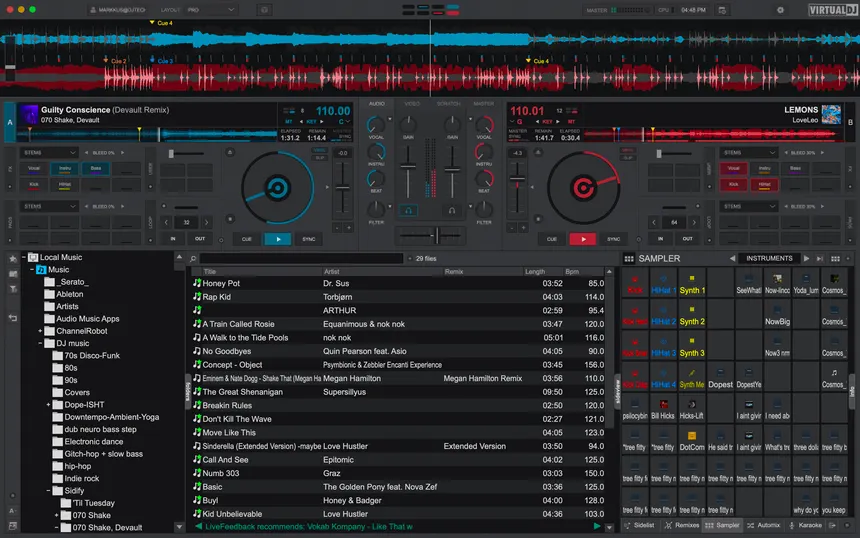
This ability to manipulate tracks at a component level, even on entry-level standalone units, transforms the creative potential of the Standalone DJ System, allowing for advanced MIDI mapping and creativity that rivals the desktop environment.
Screen Real Estate: Is a Laptop Display Always Better?
A laptop screen is undeniably larger, but a standalone unit’s touchscreen is purpose-built. Modern standalone screens are optimized for touch control, browsing, and quick visual access to essential information like synchronized waveforms. They are also positioned lower and closer to the decks, encouraging the DJ to focus less on the screen and more on the mix and the crowd.
Customization and Third-Party Software Integration
The laptop/controller setup excels at infinite customization, allowing DJs to map any function and integrate numerous VSTs or production tools. While standalone systems are more limited in external VST integration, their built-in effects, dedicated performance pads, and native software (like the latest features in professional DJ software) are constantly evolving to meet the most demanding creative needs.
Advanced Looping, Sampling, and Performance Pad Layouts
Standalone units are hardware-optimized for finger drumming and complex performance routines. The dedicated performance pads are mapped directly to the internal operating system, guaranteeing instant and reliable response, unlike a USB-connected controller that can suffer from small latency delays.
Decoding the True Cost of Your DJ System Investment
The initial price tag of a quality Standalone DJ System is significantly higher than an entry-level controller. However, this comparison often overlooks the total cost of ownership (TCO) over a three-to-five-year lifespan.
Hidden Costs: Laptop Upgrades, Software Licenses, and Dongles
The hidden cost of laptop DJing is the requirement for a performance-grade laptop. This means ensuring your machine meets the minimum CPU, RAM, and SSD requirements of your DJ software. Over a few years, a laptop needs to be replaced or upgraded, costing hundreds or even thousands of dollars. Furthermore, professional software like Serato or Rekordbox often requires paid licenses, expansion packs, and hardware unlock dongles.
The All-in-One Value of Standalone DJ System
A standalone unit is a complete system: controller, mixer, sound card, and computer, all in one box.
While the upfront cost is higher, you eliminate the constant need for laptop investment and software subscriptions (as essential digital production tools are included), making it a surprisingly more economical choice in the long run.
Calculating the Long-Term ROI for Club Standard DJ Gear
Investing in club standard DJ System gear that mimics the layout and workflow of professional equipment (like Pioneer CDJs) is a form of career investment. The familiarity gained from practicing on a standalone unit directly translates to confidence and ease of use in a professional club booth, accelerating your career progression and maximizing your long-term ROI.
Entry-Level Standalone vs. Mid-Range Laptop Controller
Entry-level standalone units like the Numark Mixstream Pro Go now exist in the price range of mid-range laptop controllers, completely eroding the budget argument. For the same price, you can now choose between a controller that requires an expensive laptop, or a self-contained unit that requires only a USB drive.
The Portability and Setup Speed Factor
Mobile DJs, wedding DJs, and open-format professionals value portability and rapid setup above almost all else. The standalone unit is the undisputed winner in this category.
The Five-Minute Setup: Standalone DJ Systems on the Road
A standalone setup is plug-and-play. Connect power, plug in your speakers, and insert your USB. You can be mixing in under five minutes. This rapid deployment minimizes downtime between sets and reduces stress on the job.
The Laptop Bag Burden: Controllers, Stands, and Wires
A laptop DJ has to manage a bulky controller, a laptop, a laptop stand, numerous USB cables, power supplies, and external hard drives.
The physical baggage of a laptop setup is often the most complained-about aspect by working DJs. Choosing a dedicated Standalone DJ System immediately reduces weight, size, and logistical hassle.
Optimal Footprint: DJ Booth Space Management
Many DJ booths are cramped, and finding space for a laptop stand and the laptop itself is often a challenge, especially in older venues. The compact, all-in-one design of a standalone unit minimizes the required footprint, making it the perfect portable DJ setup 2025 solution for tight spaces.
The Battery-Powered Revolution: Portable DJ Setup 2025
Some standalone units, like the Denon Prime Go, come with built-in rechargeable batteries. This enables true, cord-free portability for impromptu sets, backyard parties, or simply practicing without being tied to a wall socket.
Mastering the Workflow: Library Management and Preparation
The criticism that standalone units are difficult to manage is outdated. Modern preparation software has streamlined the process to a seamless experience.
Engine DJ vs Rekordbox: Preparing for a Standalone Environment
All standalone units rely on dedicated desktop software—Engine DJ for Denon units and Rekordbox for Pioneer—to prepare and analyze music before the gig.
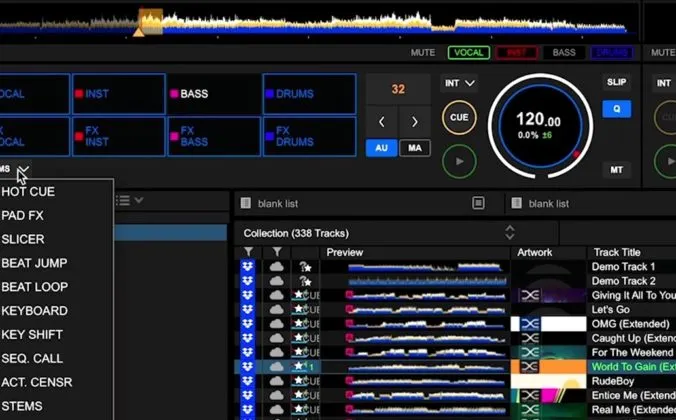
This process ensures that all waveforms, beat grids, cue points, and metadata are ready to load instantly on the hardware. This upfront organization promotes a more focused and less distracted approach to DJing, fostering a modern music production workflow that is clean and efficient.
On-the-Fly Downloads and Library Searching: The Laptop Advantage
One area where a laptop still holds a theoretical edge is library searching (via a full keyboard) and the ability to instantly download a requested track during a set. However, modern Standalone DJ Systems have closed this gap with:
- Integrated Streaming: Built-in Wi-Fi allows direct access to streaming services like Beatport Link and Tidal, removing the need for a laptop to access new tracks.
- Touchscreen Search: Optimized virtual keyboards and large touchscreens make browsing and searching far faster than early generations of hardware.
Cloud Sync and Streaming Services Integration
Engine DJ OS and Rekordbox are fully integrated with cloud storage, allowing DJs to sync their entire library across devices without the need for physical hard drives. This cloud-based preparation is a significant step forward, making library management just as flexible as a laptop-based setup.
Club Transition: Bridging Your Home Setup to the Pro Booth
If your goal is to play in clubs, your home practice setup must replicate the professional environment.
The Industry Standard: CDJs and the Standalone Workflow
The layout, jog wheel feel, and workflow of standalone controllers are explicitly designed to emulate the industry standard Pioneer CDJ and DJM mixer combination. Practicing on a standalone unit provides the muscle memory and mental comfort required to walk into any pro booth and start mixing immediately. This is far more beneficial than learning on a controller with a wildly different layout.
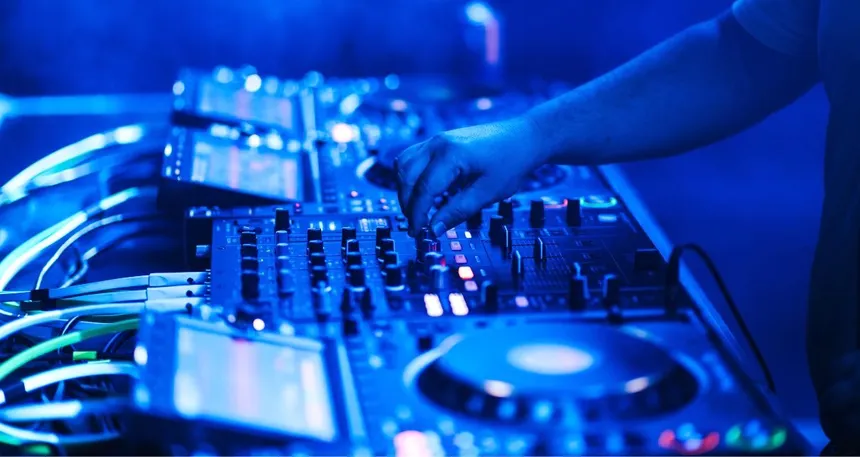
The transition to professional mixing and mastering techniques is seamless when your home gear mirrors the gear in the club.
Controller Mode: Using Your Standalone as a Laptop Controller
The best modern standalone units offer a “hybrid” mode. They can operate without a laptop, but they can also be switched into controller mode to control professional software like Serato DJ Pro or Rekordbox. This gives you the best of both worlds—club-standard hardware with software flexibility.
DVS and Timecode Control Compatibility
Many high-end standalone systems are also DVS (Digital Vinyl System) compatible, allowing you to connect turntables and use timecode vinyl to control the digital music loaded from your USB drive.
The Visual Element: Audience Perception and DJ Flow
The final, often overlooked, benefit is how a Standalone DJ System changes the DJ’s relationship with the audience.
Less Screen Staring: Connecting with the Crowd
DJs who constantly look down at a glowing laptop screen can appear distracted and disconnected. The standalone unit encourages a “less screen time” approach. With all the necessary information contained on the hardware’s smaller, lower screen, the DJ naturally looks up more often, making eye contact and connecting with the crowd. This is a huge factor in the success of any performance.
Aesthetic Value: The Look of a Professional Standalone DJ System
A sleek, all-in-one console looks undeniably professional, conveying confidence and authority. It gives the appearance of a focused performance setup, unlike a controller and laptop, which can sometimes look cluttered and less “pro.”
Final Verdict: Who Should Choose Standalone vs Controller in 2025?
The definitive choice depends entirely on your primary DJ goals.
The Professional Mobile DJ
Verdict: Standalone
- Reason: Reliability, five-minute setup, and minimal footprint are non-negotiable for paid gigs.
The Bedroom Hobbyist and Livestreamer
Verdict: Laptop/Controller (Hybrid)
- Reason: Maximum flexibility for streaming overlays, video mixing, and VST usage is paramount. Look for a controller that can operate in hybrid mode.
The Aspiring Club DJ
Verdict: Standalone
- Reason: Club readiness, muscle memory, and direct pathway to using industry standard equipment is the fastest path to the booth.
The Open-Format and Turntablist DJ
Verdict: Standalone (Hybrid Mode)
- Reason: The best hardware offers DVS compatibility and a club-style mixer section, combined with the reliability of a Standalone DJ System.
The 2025 market has unequivocally favored the standalone unit, transforming it from an expensive alternative into the new professional standard. The superior reliability, streamlined portability, and closed feature gap make the Standalone DJ System the ultimate choice for any DJ serious about their performance career. Make the right choice for your DJing career today.
FAQ: Your Standalone vs. Laptop Questions Answered
1. What is the main difference between a Standalone DJ System and a controller?
A Standalone DJ System is an all-in-one unit that contains its own internal computer, operating system, and sound card, allowing it to mix music from a USB drive without a laptop. A controller is just a hardware interface that requires a laptop and DJ software to function.
2. Do I still need a laptop to prepare music for a standalone setup?
Yes. While the system operates without a laptop, you still need a computer to organize, analyze, tag, and export your music library using preparation software like Engine DJ or Rekordbox before transferring it to the USB drive.
3. Are standalone controllers too expensive for a beginner DJ?
Not anymore. While high-end models are costly, entry-level standalone units are now available at competitive prices, offering a more reliable and complete solution than a controller that requires an additional, expensive laptop.
4. Which brands make the best standalone DJ controllers in 2025?
Pioneer DJ (AlphaTheta) and Denon DJ are the two dominant players. Pioneer’s XDJ and Opus-Quad lines focus on club standard emulation, while Denon’s Prime series (e.g., Prime 4+) is known for cutting-edge features like built-in stems and streaming.
5. What is the biggest reliability risk with a laptop DJ setup?
The biggest risk is the operating system (OS) failure. General-purpose OSs (Windows/macOS) are prone to crashes, driver conflicts, background process interruptions, and unexpected updates that can cause the music to stop mid-set.
6. Can a standalone unit be used as a controller with Serato or Rekordbox?
Yes, most professional Standalone DJ Systems include a ‘Controller Mode’ that allows you to plug the unit into a laptop and use it as a high-end, dedicated controller for popular software like Serato DJ Pro or Rekordbox.
7. What kind of storage media is best for standalone DJ systems?
High-speed USB 3.0 or better drives, or fast SD cards, are recommended. It is essential to use quality, reliable drives from reputable brands, as they must handle high-speed data transfer throughout your performance.