
Struggling with ADHD Music Production? Implement these 5 proven workflow hacks to defeat Creative Distractions, find your Music Production Flow State, and start Finishing Songs consistently.
Introduction (ADHD Music Production)
For the producer with ADHD, music creation is often a paradox. The initial surge of an idea triggers a beautiful state of hyper-focus, allowing for rapid, brilliant bursts of creativity. However, this same neurotype is easily derailed by the immense complexity of a Digital Audio Workstation (DAW), leading to endless tweaking, starting new projects, and the constant frustration of never Finishing Songs. It’s not a lack of talent; it’s a lack of system.
ADHD doesn’t mean less talent; it means needing a different, more structured system. We will show you how to channel that creative energy into completed tracks.
This guide breaks down 5 highly effective, proven workflow hacks and strategies developed by and for ADHD Music Production beatmakers, to structure your sessions, conquer Creative Distractions, and finally bridge the gap between “brilliant loop” and “finished track.”
H2: Hack 1: The Rule of Three (Limitation Spurs Creativity)
The ADHD brain thrives on novelty but crumbles under option paralysis. The vast, infinite library of sounds, VSTs, and presets in a modern DAW is a catastrophic distraction generator. The solution is radical, deliberate limitation.
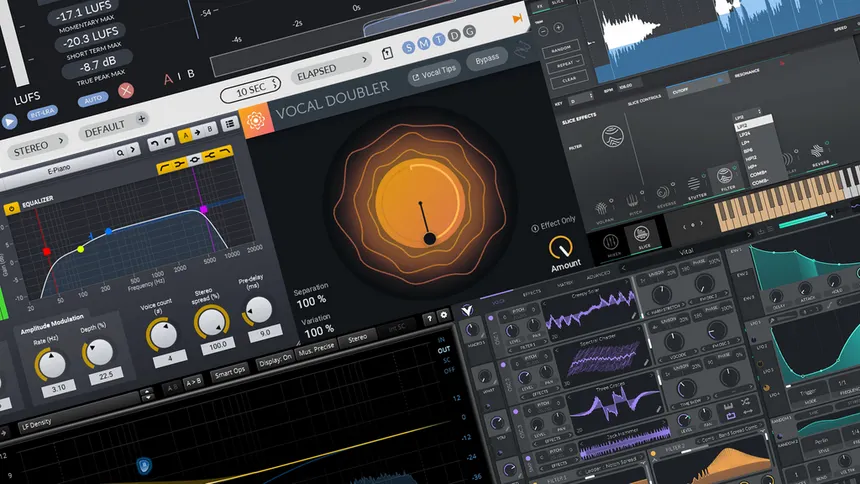
Limit VST Instruments and Plugins (The “3-Plugin” Max)
In any given session, strictly Limit VST Instruments to a maximum of three core tools:
- A Primary Synth: For leads, pads, and main melodies.
- A Secondary Synth/Sampler: For basslines or auxiliary counter-melodies.
- A Drum Machine/Rack: For all percussion.
When you feel the urge to browse for a new reverb or a different compressor, remind yourself of the rule. This forces you to explore the depth of a single tool rather than the breadth of your library, channeling hyper-focus into sound design, not resource browsing. This is the fastest way to get to work.
The “Three Project Rotation” to Beat Boredom
The moment the initial thrill fades on one track, an ADHD Music Production brain immediately jumps to a new idea, resulting in a graveyard of 8-bar loops. Instead of starting a new project, maintain a small queue of three songs at a time.
When Song A becomes boring, jump to Song B. When Song B hits a wall, jump to Song C. When all three are boring, take a physical break. This rotation satisfies the brain’s need for novelty while keeping the focus narrow, forcing you to channel your creative energy into existing, actionable projects and maximizing your chance of Finishing Songs ADHD.
Create the ‘ADHD Music Production Studio Setup’
Chaos outside equals chaos inside. Minimize Creative Distractions in your physical space:
- The Spartan Desk: Remove all non-essential items. No bills, mail, or half-finished projects.
- Out of Sight, Out of Mind: Place your phone on Airplane Mode in a drawer or another room. Use a physical note-taking pad instead of a digital one.
- Immediate Accessibility: Keep your primary instrument (MIDI controller, guitar) visible and powered on to lower the activation energy required to start.
H2: Hack 2: Separate Creation from Correction (The Two-Phase System)
The greatest killer of ADHD Music Production flow is mixing production (creation) with mixing (correction). Tweaking a hi-hat sound for 45 minutes while the creative juice is flowing is a monumental loss of momentum.
Produce First Mix Later: Don’t Edit the First Draft
Adopt a strict “No Editing During Creation” rule. Your first session’s sole goal is to get the ideas out of your head and into the arrangement window, regardless of how bad the sounds are.
- Generic Sounds are Fine: Use basic piano, synth, and drum kit presets.
- Rough Quantization: Don’t perfectly align every note. If the intention is there, move on.
- No Loop Tweak: If the 8-bar loop is working, stop tweaking the loop and start sketching the arrangement horizontally.
Sketch the Arrangement Roughly (The Bird’s-Eye View)
The arrangement phase, where you build the structure of the track (Intro, Verse, Chorus, etc.), provides the visual progress and structure the ADHD Music Production brain craves. Instead of perfecting the sound, focus on the map:
- Copy and paste your main loops/sections into a full timeline.
- Use volume automation or simple filters to create rudimentary transitions.
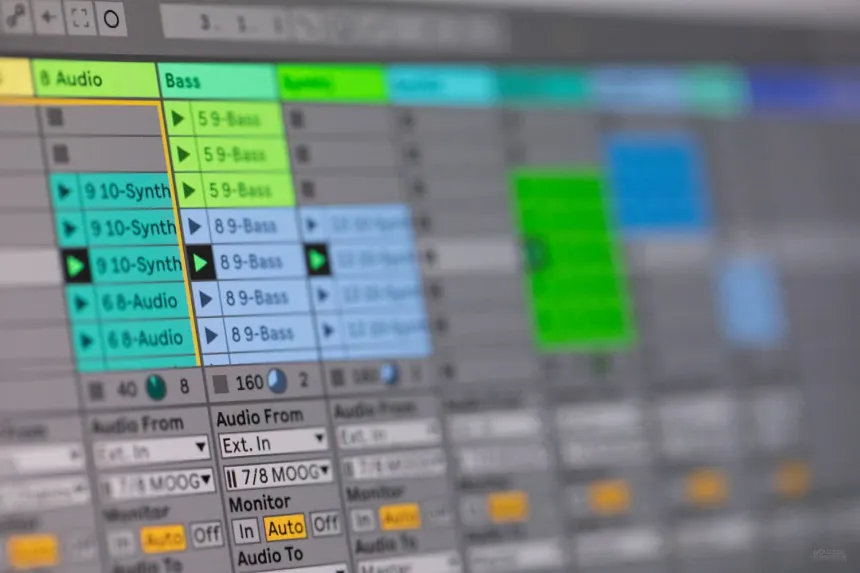
- Color-code the sections (e.g., Green for Chorus, Yellow for Verse) to create a visual roadmap for the later, more methodical mixing phase.
The “T-Rex Arms” Rule: Keep Hands Off the EQ/Compressor
As in ADHD Music Production, During the creative phase, treat your effects rack like it has “T-Rex Arms”—you can’t reach the knobs. Only use necessary creative effects (reverb for ambiance, delay for rhythm). Do not engage with corrective tools like EQ, compression, or multiband dynamics until you have a fully sketched arrangement. This hack forces you to prioritize structure and musicality over technical perfection.
H2: Hack 3: The Dopamine Timebox (Urgency and Accountability)
The ADHD brain seeks novelty and urgency. We can artificially create both using timers and external systems to sustain the ADHD Music Production Flow State.
The 45/15 Pomodoro Hack for ADHD Music Production Flow State
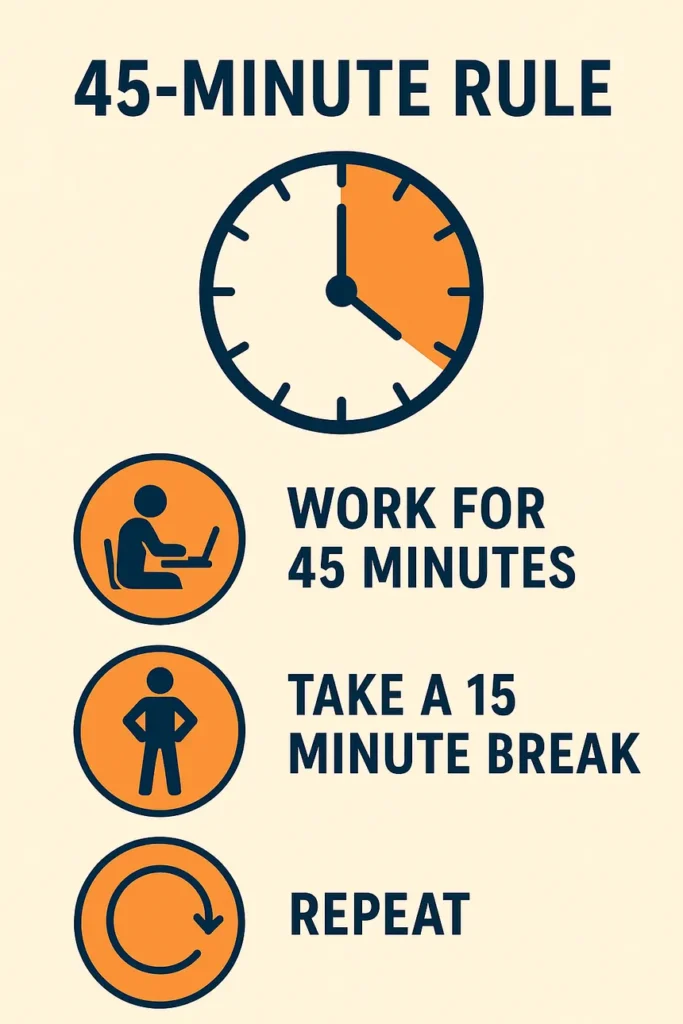
The classic 25-minute Pomodoro is often too short for deep creative work. Instead, use a modified 45/15 split: 45 minutes of laser-focused work, followed by a mandatory 15-minute break.
- 45 Minutes: No checking phone, no browsing presets. Work only on the task defined in your checklist.
- 15 Minutes: Get up, stretch, walk, or check your phone. Crucially, do not listen to or analyze your music during the break.
The timer creates the deadline/urgency that triggers dopamine, helping you initiate and sustain the task. The long break is a necessary dopamine reset.
Micro-Goal Checklists (The Small Dopamine Wins)
Before starting the 45-minute block, create a micro-checklist of no more than three, extremely specific goals.
- Bad Goal: “Work on the bassline.”
- Good Goal: “Write and record a 4-bar bassline for the verse.” / “Create the transition FX for the intro.”
Checking off these small, concrete tasks provides a quick, satisfying hit of dopamine, reinforcing the positive feedback loop and fueling momentum toward Finishing Songs.
The “Body Double” Technique (External Accountability)
The presence of another person (even a virtual one) can dramatically increase focus for ADHD Music Production Beatmakers. A Body Double is someone who works alongside you, even if they are doing a completely different task.
- In-Person: Work with a roommate or spouse in the same room.
- Virtual: Join an online focus group or simply share your screen with a friend on a muted call. The mere awareness that someone else is “watching” or that you have shared your goal creates sufficient external accountability to combat the internal Creative Distractions.
H2: Hack 4: The Instant Start Template (Bypass the Friction)
Starting a new session is a major source of friction. The time spent setting up tracks, finding favorite VSTs, and routing buses is prime time for the ADHD Music Production brain to get sidetracked.
Pre-Load Your Core Sound Design Toolkit (Avoid Decision Fatigue)
Create and save a custom DAW template that opens instantly with your preferred setup:
- Drums: A drum rack with all sounds already loaded and mapped.
- Synths: Your 3 core, limited VST Instruments already loaded on separate MIDI tracks.
- Effects: A pre-routed reverb, delay, and parallel compression send track.
This removes the decision-making process required for setup, allowing you to bypass the initial hurdle and jump straight into music making.
Color-Code and Name Everything (Visual Cues for the ADHD Music Production Brain)
The ADHD Music Production brain is highly visual. Use your DAW’s color-coding system aggressively.
- Color-Code: Drums are always blue; Bass is always red; Melodies are always green.
- Label Everything: Name every track, every MIDI clip, and every automation lane immediately.
This simple step creates immediate context when you return to a project, minimizing the feeling of being overwhelmed (the “where was I?”) and drastically reducing Creative Distractions.
Automation Lanes and Send Tracks Pre-routed for ADHD Music Production
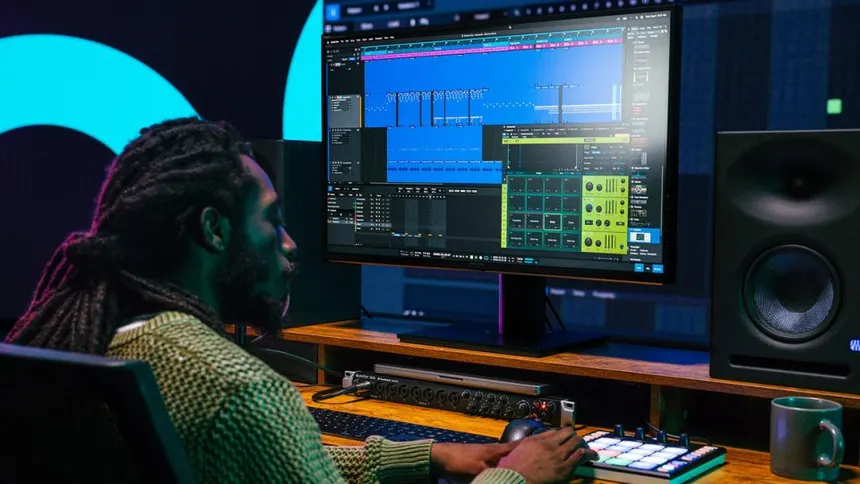
Ensure all your master buses and send tracks (e.g., Delay, Reverb, Distortion) are pre-named and pre-routed in your template. This eliminates the need to dive into complex routing menus when inspiration hits, keeping the focus entirely on the music.
H2: Hack 5: Embrace Imperfection (Progress Over Polishing)
Perfectionism is a form of procrastination, particularly devastating to the ADHD Music Production process. The search for the “perfect kick drum” is a distraction from Finishing Songs.
Done is Better Than Perfect: The 80% Rule
If you Struggle with ADHD Music Production, Your goal should be to get a track 80% finished and then move on. That final 20% of polishing often takes 80% of the total time and usually isn’t even noticed by the listener. Train your mind to value progress (a finished arrangement) over microscopic detail (a perfectly tuned snare). Once a song is done, it is done.
The “One-Touch” Automation Rule
When you decide to automate a parameter (e.g., a filter sweep), automate it once and move on. Don’t spend five minutes smoothing out every automation curve. If it sounds generally right, keep it. This prevents the creative impulse from descending into a microscopic editing rabbit hole.
Using Imperfections to Your Advantage (Humanizing Grooves)
Often, the slight timing imperfections that an ADHD Music Production; producer initially records are what give a track its unique character and groove. Don’t auto-quantize everything. Embrace the slightly off-kilter rhythm or the subtly mistimed note. These “imperfections” are the human element that connects the listener to the track.
H2: Creating Your Personal ADHD Music Production Studio Setup
Hardware vs. Software (Choosing the Right Stimulant)
Some ADHD producers find hardware synths more stimulating because of the tactile feedback (turning a knob physically) and the enforced limitation (fewer presets, less menu diving). Others find software’s flexibility easier. Experiment to see if the physical stimulation of hardware helps you maintain a Music Production Flow State better than the visual stimulation of a screen.
Controlling the Auditory Environment (Focus Music)
Your auditory environment directly affects your ability to focus—especially if you have an ADHD Music Production brain that constantly searches for stimulation. As in ADHD Music Production, When working on high-concentration tasks such as mixing, sound design, arranging, or detailed editing, avoiding music with lyrics is essential, as words instantly activate the language-processing areas of your brain and pull attention away from your work.
Instead, choose sounds that provide steady, non-intrusive stimulation, giving your mind something to anchor to without overwhelming your cognitive bandwidth. Many producers with ADHD find that Lo-fi beats, ambient music, classical compositions, soft piano, nature textures, or binaural beats are ideal because they create a sense of calm motion—just enough stimulation to satisfy the restless part of your brain, while still allowing your analytical and creative systems to operate at full capacity.
You can even experiment with frequency-based focus tracks, such as alpha waves for relaxed productivity or beta waves for sustained attention. The goal is to build an atmosphere that quiets internal noise and removes external distractions, helping you slip into long stretches of effortless focus.
The right background sound doesn’t just support concentration—it becomes part of your workflow, signaling to your brain that it’s time to create, refine, and stay locked in.
The Power of Ritual and Consistency
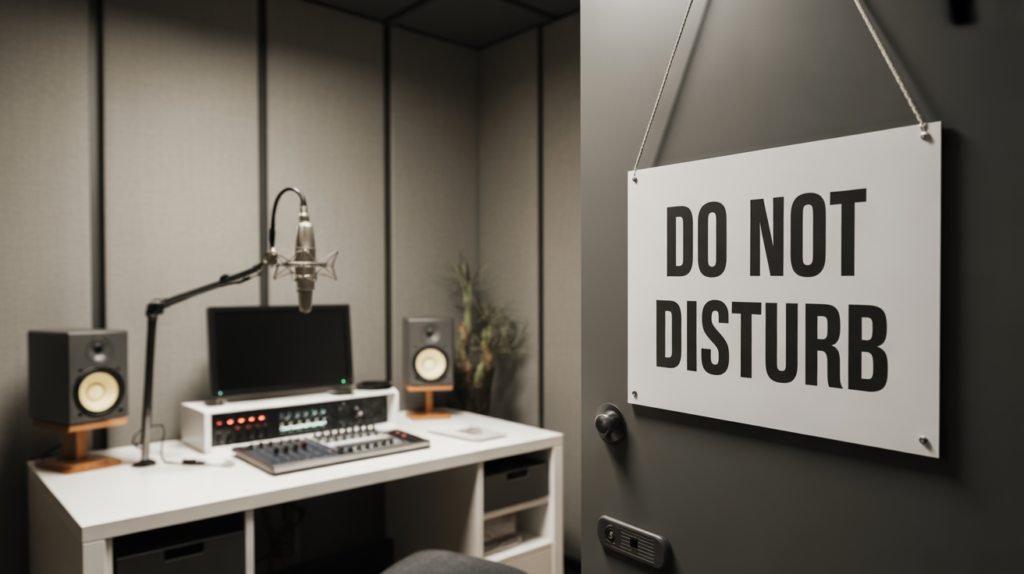
The ADHD Studio Setup benefits greatly from routine. Create a simple pre-production ritual:
- Clear desk and open template (5 minutes).
- Write the 3 micro-goals for the session (2 minutes).
- Set the 45-minute timer (1 minute).
This ritual cues your brain that it is “Focus Time,” lowering the resistance to starting the session.
Conclusion
ADHD Music Production is a superpower waiting to be unlocked. When you learn how your brain works—and build a workflow around it—you stop fighting yourself and start creating with clarity, speed, and confidence. Your brain’s natural ability for hyper-focus, rapid idea generation, pattern recognition, and emotional intuition becomes an advantage instead of an obstacle. When properly channeled, this focus can lead to explosive bursts of creativity, faster idea development, and a production style that feels uniquely yours.
By implementing these 5 workflow hacks—The Rule of Three, The Two-Phase System, The Dopamine Timebox, The Instant Start Template, and The Embrace of Imperfection—you create the structure necessary to defeat Creative Distractions, reduce overwhelm, and eliminate the constant loop of starting and never finishing. These systems work with your brain, not against it. They remove friction, simplify decisions, and give your mind a clear path to follow, which is exactly what ADHD creativity needs to thrive.
These hacks don’t just help you produce more—they help you produce better. They transform chaotic bursts of inspiration into finished songs, consistent improvement, and a workflow that feels sustainable rather than draining. You begin to trust your process. You stop judging yourself for being “unfocused,” and instead learn how to shape that energy into something powerful.
Remember: the most important hack you can ever apply is self-acceptance and systemization. You’re not broken—you simply need the right environment and structure for your creativity to shine. You can master your workflow, sharpen your strengths, and enjoy music production without burnout or frustration.
Start small. Implement Hack 1 (The Rule of Three) in your next session, track your progress, and watch how quickly your productivity and confidence begin to shift. Your ADHD Music Production is not a weakness—it’s the engine behind your most brilliant ideas.
FAQ Section
Q: Why is it so hard for people with ADHD Music Production to finish tracks?
A: The main reasons are option paralysis (too many VSTs/sounds creating decision fatigue) and the lack of dopamine reward for complex, long-term tasks like arrangement and mixing. Hacks that break the process down and provide small, frequent wins (like checklists) directly address this.
Q: How does limiting my VST Instruments help my focus?
A: Limiting your VST Instruments (The Rule of Three) prevents you from falling into the “browsing loop,” where you spend hours searching for a sound instead of creating. It forces you to get creative with the limited tools you have, channeling hyper-focus into sound design rather than library management.
Q: What is the best kind of music for an ADHD Music Production Studio Setup focus?
A: Instrumental music with a steady, repetitive beat is best. Lo-fi, ambient electronic music, chillstep, or classical Baroque pieces (which have complex but predictable structures) are commonly recommended, as they provide the necessary background stimulation without distracting the language centers of the brain.
Q: Should I force myself to stick to the same genre?
A: No. The Three Project Rotation (Hack 1) is a better strategy. If you get bored on a House track, switch to a Hip Hop beat within your three-song limit. Forcing yourself to stay on a genre you are temporarily unexcited about is a guaranteed way to trigger procrastination and lose your Music Production Flow State.
Q: What’s the easiest way to find an ADHD Music Production Flow State?
A: The easiest way is to remove the initial friction. Use Hack 4 (The Instant Start Template) to immediately jump into a creative task. The brain naturally enters flow when the challenge level meets the skill level; the template ensures you start creating immediately, making flow state initiation much faster.