
AI Music Production
The music industry is undergoing a silent, revolutionary shift. For years, the creative process—from composing a beat to the final mastering—has been a grueling, time-consuming marathon. This is changing. Are you struggling with creative block, slow mixing times, or finding your tracks lack that professional polish? The future of music production demands faster, smarter workflows that leverage cutting-edge technology. The key to unlocking this new era is embracing AI Music Production.
This comprehensive guide reveals the 10 ultimate, proven strategies to integrate artificial intelligence into your music-making process and achieve explosive results in 2025. We’ll move beyond simple generative music to show you how AI acts as a sophisticated collaborator, eliminating tedious tasks and maximizing your creative genius.
The Ultimate Power of AI Music Production in 2025
Artificial Intelligence is no longer a futuristic concept—it’s a fundamental component of the modern studio. The integration of AI has done more than just create a new set of tools; it has fundamentally altered the economics, efficiency, and creative potential of the music ecosystem. According to a recent academic study on AI in creative fields (Research/Academic Study), AI-assisted music is experiencing a surge in adoption, with professionals citing efficiency gains of up to 40% in core tasks like mixing and sound design. This is more than a trend; it’s a paradigm shift.
Redefining the Role of the Modern Producer
The producer’s role is evolving from a technical operator into a visionary curator. Instead of spending hours meticulously EQing a snare, you can leverage AI to handle the technical heavy lifting, allowing you to focus on the emotion and narrative of your track. This shift empowers the artist to spend more time on arrangement, unique sound design, and creative direction.
The Core Benefits: Speed, Creativity, and Quality
Speed: AI dramatically accelerates repetitive, complex processes like mastering, vocal tuning, and beat variations.
Creativity: When you hit a creative wall, AI can generate endless generative music ideas, chord progressions, and rhythmic patterns as a starting point.
Quality: AI tools, like those used for AI mastering, have been trained on vast libraries of commercially successful tracks, allowing them to instantly apply industry-standard quality checks and polishes.
Key AI Milestones and Industry Adoption Rates
The growth of the digital music market (Global Music Industry Data Source) is directly fueling the need for faster content creation. From intelligent noise reduction in mixing to full-scale song generation platforms, AI is proving its utility. Major labels and independent artists alike are using AI-powered mixing tools, sound segregation, and intelligent sampler instruments to gain a competitive edge.

Mastering AI-Powered Beat & Idea Generation
The initial spark—the foundation of a great track—is where many producers face the most resistance. AI has become the ultimate collaborator for overcoming this hurdle, specifically in the realm of creating compelling rhythmic and melodic ideas.
Breaking Creative Block with Generative Music
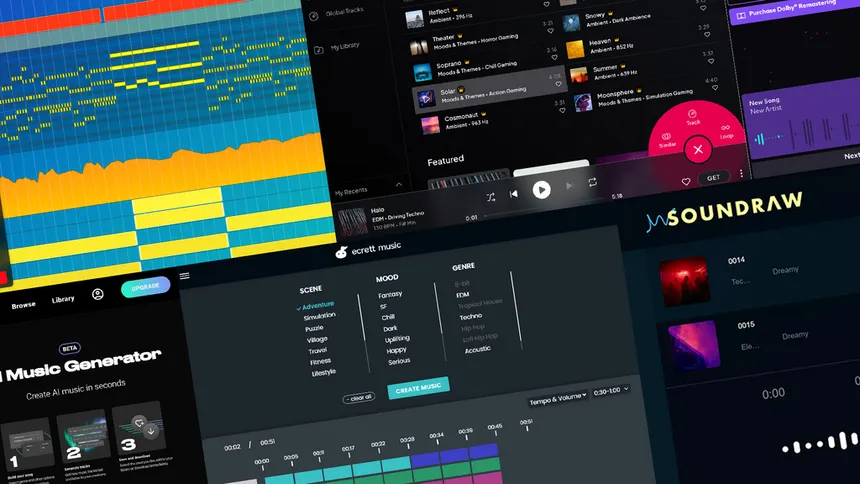
When you’re stuck, generative music tools can be a game-changer. By inputting parameters like genre, mood, tempo, and key, the AI can instantly produce a fully formed musical sketch. This provides a fresh, objective starting point that can pull you out of repetitive creative habits. Use the AI’s output as raw clay—not the finished sculpture.
Choosing the Best Beat Generation Software
Selecting the right beat generation software is crucial. Some tools are excellent for simple, royalty-free background music, while others offer deep customizability for professional-level tracking. Look for software that allows you to export MIDI and stems, giving you granular control over the AI’s output.
Advanced Techniques for Prompt-Based Composition
The key to great AI-assisted composition is the prompt. Don’t just ask for a “Trap Beat.” Use highly descriptive, evocative language: “A moody, lo-fi hip-hop beat with a vinyl crackle, a muted electric piano chord progression, and a driving, slightly swung 90 BPM rhythm.” The more specific your prompt, the more usable the AI’s musical idea will be. For more structured ideas, pairing AI output with organized tools like elevating your production workflow with MIDI kits can dramatically increase efficiency.
Essential AI Music Production Tools: The 10 Must-Haves
To truly achieve an explosive workflow, you need the right arsenal. The best tools balance powerful automation with human-level tweakability.
AI Mastering Suites (e.g., LANDR, iZotope Ozone)
These tools use machine learning to analyze your mix, compare it against a vast database of commercially released music, and apply appropriate EQ, compression, limiting, and stereo width adjustments. This one-click AI mastering service (Leading AI Mastering Tool) can provide a professional, radio-ready final touch in minutes, not hours.
Melodic and Harmonic Generators (LSI: AI composition)
Platforms specializing in AI composition can create complex, genre-bending chord progressions and lead melodies. These are excellent for songwriters looking to break the “four-chord loop” and inject unexpected emotional depth into their music.
AI Mixing and Vocal Processing Plugins (LSI: AI-powered mixing)
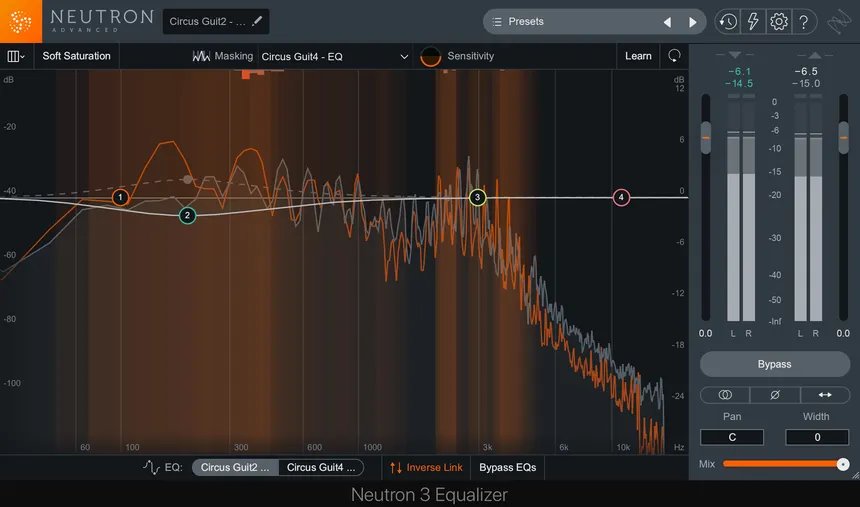
The most exciting tools are in the AI-powered mixing realm. Plugins can listen to a track, identify all instrument groups, and suggest optimal settings for EQ, compression, and reverb. This is especially useful for setting a solid foundation, which you can then fine-tune manually.
The AI-Powered Mixing and Mastering Workflow
Mastering is the dark art of music production—the final 10% that makes an 80% mix sound 100%. AI has demystified this process for the average producer.
Utilizing AI for Smart Gain Staging and EQ
AI-powered plugins can perform an “initial audit” of your mix. They check for proper gain staging, identify clashing frequencies, and suggest initial EQ curves. This prevents the common mistake of working with an unbalanced mix from the start, saving hours of corrective work.
Achieving Professional Polish with AI Mastering
Once your mix is balanced, a dedicated AI mastering platform can take over. The process involves:
Reference Analysis: AI analyzes a reference track you provide (or one from its database).
Adaptive Processing: It applies multi-band compression, limiting, and stereo field adjustments based on its analysis.
Final Polish: The result is a high-loudness, high-impact track ready for distribution.
Remember: AI can handle the initial pass, but human engineers must apply genre-specific nuance.
Common Pitfalls of Over-Reliance on AI
While AI is a powerful tool, it should not replace your ears. The biggest pitfall is accepting the AI’s default output without any human intervention. Every track is unique; the AI provides a great suggestion, but it’s your taste that provides the unique character. Use the AI to accelerate your process, not automate your artistry.
Step-by-Step Guide to Integrating AI into Your DAW
Integrating AI successfully is about strategic placement within your existing music production workflow.
Setting Up Your AI Plugins for Max Efficiency
Treat AI plugins like any other high-quality tool:
- Analysis First: Run the AI’s analysis function on the full track or individual stem before making any manual adjustments.
- Group Placement: Place AI mixing tools on Bus/Group channels (e.g., a “Drum Bus” or “Vocal Group”) to maintain global consistency.
- A/B Test: Always A/B test the AI’s suggestions against your human-made settings.
Automating Repetitive Tasks
AI is brilliant at eliminating grunt work. Consider using it for:
- Vocal Tuning: Automated pitch correction and de-essing.
- Noise Reduction: Cleaning up background noise in samples or live recordings.
- Panning: Intelligent stereo widening or micro-panning to add movement.
Creating Hybrid Human-AI Compositions
The most successful producers treat AI Music Production as a collaboration. Use the AI to generate the loop (the “idea”), then strip it down to its core elements (e.g., the bassline and rhythm). Then, add your own melody, custom drum samples, and unique arrangement. This hybrid approach, like making trap beats like a professional, ensures a track has both professional quality and a distinctive human voice.

Elevating Your Sound Design with Artificial Intelligence
Beyond composition and mixing, AI is opening up entirely new frontiers in sound design, allowing for the creation of sounds that were previously impossible.
AI-Driven Wavetable Synthesis and Sample Generation
Some advanced AI tools can create entirely new wavetables or one-shot samples based on text prompts or an audio input. Imagine dropping in a recording of a breaking glass and having the AI instantly generate a new, rhythmic synth patch based on its sonic characteristics. This is the future of customized sound design.
Using AI to Mimic Real-World Instrument Performances
AI can analyze the subtle, human performance nuances—the slight timing imperfections, the velocity changes—of a professional musician and apply those characteristics to MIDI tracks. This can transform a robotic, sequenced instrument into a believable, expressive performance.
Creative Sound Design: Exploring New Sonic Textures
The sheer volume of unique textures the AI can generate is a massive asset. Use AI for exploration when you need a specific texture but don’t know how to create it. For example, generating a “metallic, underwater choir” sound can lead to a completely new and unique patch for your chorus.
Future-Proofing Your Music Career with AI
The most successful producers will be those who adapt fastest. Integrating AI into your workflow is not just about efficiency; it’s about business longevity.
The Ethical and Copyright Landscape of Generative Music
As generative music becomes more prevalent, the ethical landscape is evolving. Understanding the licensing model of the AI tool you use is paramount. Some companies require you to give up a percentage of royalties, while others grant you 100% ownership. Stay informed on the complexities of music copyright in the age of generative music.
Monetizing Your AI Music Production
AI can increase your output capacity, allowing you to take on more clients for scoring, jingles, or sync licensing. By speeding up your music production workflow, you become a more competitive, higher-capacity service provider with more AI music production tools.
AI Music Production as a Collaboration Tool, Not a Replacement
Ultimately, AI is a tool, no different than a piano, a microphone, or a DAW. It cannot replace the human experience, emotional depth, or unique artistic intent. It can only augment it. The artist who learns to co-pilot with AI will be the one who dominates the next decade of music.
Top 7 Critical Mistakes to Avoid in AI Music Production
Even the pros can stumble when adopting new technology. Avoiding these pitfalls is essential for maintaining high-quality output.
- Ignoring Manual Tweakability and Humanization: AI output is often mathematically “perfect.” Use humanization features or manual adjustments to add subtle imperfections (e.g., small velocity deviations) to bring it to life.
- The Trap of Generic, Uninspired AI Output: If you use the default settings and prompts, your music will sound generic. Treat AI Music production tools as a rough draft generator, not a finished product factory.
- Failing to Update Your AI Music Production Toolkit: AI technology is moving fast. The best tool this year might be outdated next year. Regularly audit your plugins and explore new solutions.
- Over-Processing with Too Many AI Music Production Tools: Running multiple AI plugins can lead to sonic conflicts and a muddy mix. Start with one, then add another only if necessary.
- Not Analyzing the AI’s Decisions: Don’t blindly trust the algorithm. If an AI mixing tool suggests a deep cut at 200 Hz, understand why it made that choice. This is how you learn and grow.
- Using AI for All Instruments: If you are a guitarist, keep your guitars human. Use AI to fill in the areas you are less proficient in, such as orchestral arrangements or complex bass lines.
- Overlooking Your Samples: Even the best beat generation software is limited by the quality of the samples it uses. Ensure your sample library is high-quality.
Case Studies: How Top Producers Use AI music production tools to Dominate
Real-world application is the best proof of AI’s power.
Example 1: Speeding up Film Scoring with AI
A composer is given a 48-hour deadline for a documentary. Instead of manually scoring the ambient cues, they use AI composition software to generate 15 different two-minute ambient beds in 30 minutes. The composer then spends the remaining time perfecting the main theme and key transitional scores, dramatically increasing their output.
Example 2: Creating a Viral Hit with AI-Assisted Vocals
An independent artist uses an AI music production tool such as vocal processing plugin to automatically tune, de-ess, and compress their lead vocal. This one-click solution provides a near-professional vocal chain that would have taken hours to dial in manually, allowing them to focus on the song’s marketing.
Example 3: The Independent Artist’s Ultimate Music Production Workflow
A producer uses AI music production tools such as beat generation software to quickly sketch a rhythm. They then use an AI mastering tool for the final polish. The entire music production workflow is accelerated, saving them thousands in studio time and freeing up more time for creative revisions and experimenting with top-tier VST plugins and tools.
Beyond the Basics: Advanced AI music production Techniques for Expert Producers
For the elite producer, AI offers highly specialized, cutting-edge advantages.
Training Custom AI Models on Your Own Catalog
Some advanced platforms allow you to train an AI music production tool on your existing body of work. The AI music production DAW then learns your unique melodic tendencies, harmonic preferences, and rhythmic style, enabling it to generate new ideas that sound authentically you. This is the ultimate tool for scalable, signature sound design.
Generative Adversarial Networks (GANs) in AI music production
GANs involve two neural networks—a generator and a discriminator—pitted against each other. In AI music production, the generator creates new music while the discriminator critiques it for “authenticity” until the generated music is indistinguishable from human-created work. This technology, exploring Generative Adversarial Networks, is the frontier of realistic generative music.
Predictive Analytics for Genre Trend Spotting
AI can analyze millions of data points on streaming platforms to predict which sonic elements are trending up or down. Producers can use this to make informed, strategic decisions about which genres or sound designs to focus on in their next project.
Conclusion
AI Music Production is a game-changer that has democratized high-quality sound and revolutionized the music production workflow. It is not a threat to human creativity but a powerful new instrument to be mastered. By strategically adopting the 10 ultimate, proven strategies—from leveraging AI mastering for professional polish to using beat generation software to crush creative blocks—you position yourself at the forefront of the industry. The future belongs to the producer who collaborates with the machine.
Start experimenting with your first AI tool today and transform your tracks from ordinary to extraordinary.
FAQ Section
- What are the best AI music production tools for beginners?
The best tools for AI music production beginners are all-in-one solutions like AI mastering suites (e.g., LANDR) or simple generative music platforms (e.g., Soundraw or Boomy) that require minimal musical theory or technical knowledge to produce a usable track. - Can AI truly replace a human mixing engineer?
No. While AI can handle the technical heavy lifting, such as providing an excellent starting point and consistency checks, it lacks the human ear for emotional impact, genre nuance, and the subtle artistic choices that define a world-class mix. - Is AI-generated music royalty-free?
It depends entirely on the platform and subscription tier. Some free versions retain full copyright, while paid professional tiers grant you 100% of the mechanical and publishing royalties. Always check the Terms of Service in any AI music production website. - How do I use AI for better vocal processing?
Use AI-powered plugins for automated pitch correction, de-essing, noise gating, and intelligent compression. The AI can quickly set up a clean, controlled vocal chain, allowing you to focus on creative effects like delay and reverb and more AI music production stuff. - What is the ideal AI mastering chain for AI music production?
An ideal AI mastering chain involves using a high-quality limiter, followed by a multiband compressor, with a final AI analysis tool (like an intelligent EQ or maximizer) at the end. The AI tool should always be the last step, setting the final loudness. - How much does professional AI music production software cost?
Costs vary widely. Standalone beat generation software and basic AI mastering subscriptions can range from $5 to $30 per month, while professional-grade AI mixing and production suites can cost several hundred dollars for a perpetual license. - What is the difference between AI music production and algorithmic music?
Algorithmic music follows rigid, pre-set mathematical rules defined by a human. AI composition uses machine learning models trained on vast datasets of existing music to generate new music that is statistically and contextually similar, often resulting in more human-like, unpredictable, and complex