
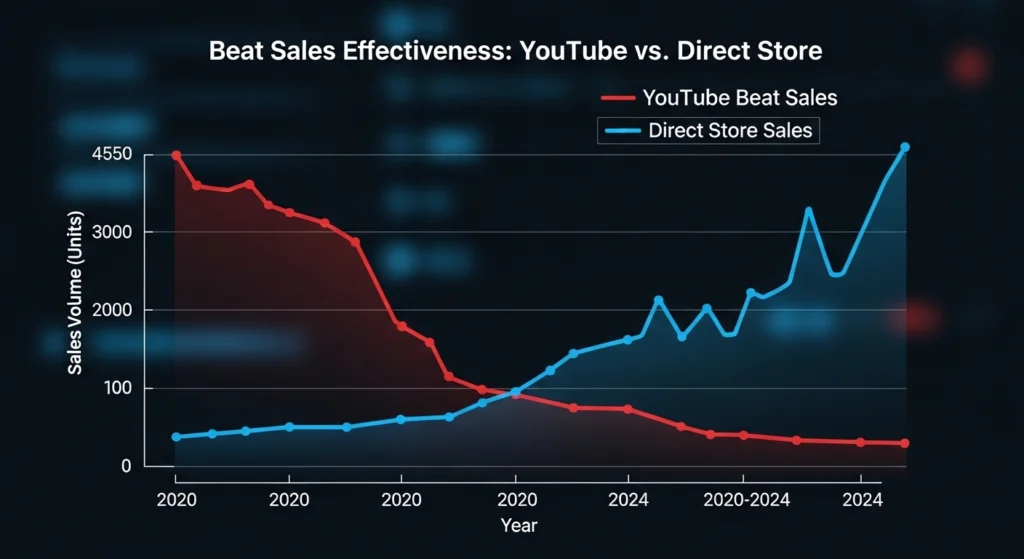
The beat selling landscape has transformed dramatically. What worked in 2020—posting type beats on YouTube and hoping for the best—now delivers diminishing returns for producers who haven’t adapted.
You’ve probably experienced this frustration: spending hours crafting the perfect beat, optimizing your YouTube tags, uploading consistently, yet watching the sales trickle in at a disappointing rate. The platform is saturated. Algorithms have changed. Buyer behavior has evolved.
Beat selling tips that actually generate income in 2026 require a fundamentally different approach. This isn’t about quick tricks or viral hacks. It’s about building sustainable systems that attract serious buyers, command premium prices, and create recurring revenue.
After analyzing hundreds of successful producers and studying what works in today’s market, I’ve identified 7 proven strategies that separate six-figure beat sellers from those struggling to make their first $100.
Let’s dive into the exact methods you need to implement starting today.
Why Traditional Beat Selling Strategies No Longer Work in 2026
The numbers tell an uncomfortable story. According to Music Business Worldwide, YouTube’s music content saturation has reached critical mass. Over 120,000 new tracks upload daily, with type beats constituting a significant percentage.
Here’s what’s changed:
The discovery algorithm shifted. YouTube now prioritizes watch time and session duration over clicks. When viewers bounce from your beat after 30 seconds, the algorithm stops recommending your content, regardless of how many tags you optimized.
Buyer expectations evolved. Today’s artists aren’t just looking for “a Drake type beat.” They want production that sounds commercially ready, includes stems, and comes with clear licensing terms. The casual browser who might impulse-buy a $30 lease has been replaced by more discerning customers.
Competition exploded. Every bedroom producer now has access to the same sample packs, the same YouTube tutorials, and the same distribution platforms. Standing out requires more than decent beats—it requires strategic differentiation.
The producers still thriving in 2026 have abandoned the “post and pray” model. They’ve built systems that capture leads, nurture relationships, and close sales consistently.
Let’s explore exactly how they do it.
Beat Selling Tips #1: Master Non-Exclusive Licensing Models
If you’re still selling beats with a single “lease” option, you’re leaving serious money on the table. Modern beat selling requires sophisticated licensing structures that accommodate different buyer budgets and usage scenarios.
Understanding Exclusive vs. Non-Exclusive Rights
Before diving into pricing, you must understand the legal foundation. Our comprehensive guide to music licensing fundamentals breaks this down in detail, but here’s the essential distinction:
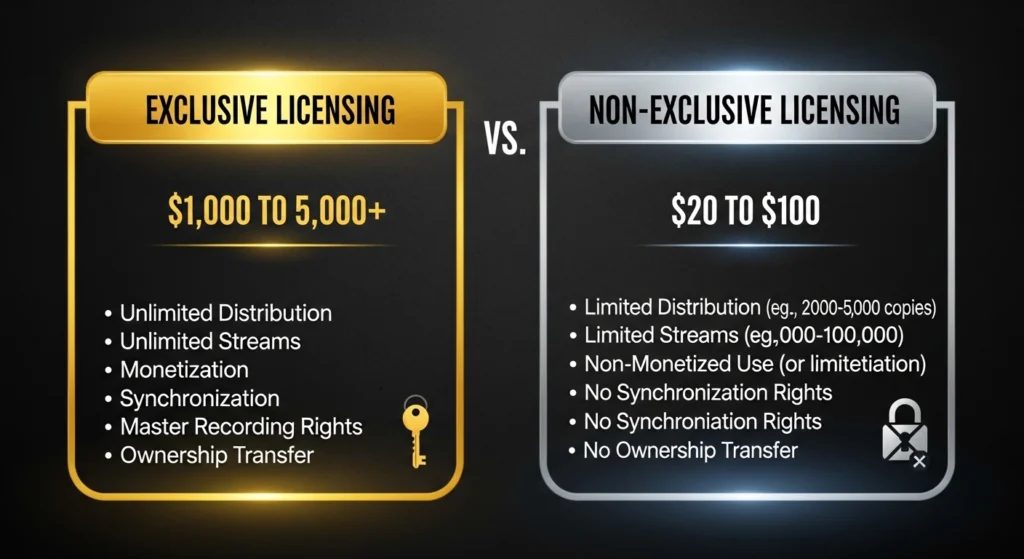
Exclusive rights transfer ownership completely. The buyer pays a premium (typically 10x-20x your standard lease price) and becomes the sole owner of that beat. You can never sell it again.
Non-exclusive licenses grant usage rights while you retain ownership. Multiple artists can purchase the same beat with different usage parameters.
Beat Selling Tips: Pricing Tiers
Successful beat sellers in 2026 offer 3-5 distinct licensing tiers:
Basic Lease ($30-50): MP3 only, unlimited streams, limited copies (typically 5,000), non-commercial use only. This captures budget-conscious beginners.
Premium Lease ($80-120): WAV + MP3, trackouts/stems, unlimited streams, up to 10,000 copies, radio-ready files. This is your volume seller.
Unlimited Lease ($150-250): All formats, unlimited copies and streams, commercial use, sync rights included. For serious independent artists.
Exclusive ($500-2,000+): Complete ownership, beat removed from your store, all rights transferred. For artists with label budgets or serious investments.
Beat Selling Tips: Lease Agreements
Never sell a beat without a written contract. The U.S. Copyright Office provides basic guidance, but your lease agreements should specify:
- Usage limitations (streaming numbers, physical copies)
- Credit requirements
- Royalty splits if applicable
- Termination conditions
Beat Selling Tips: Pricing Strategy
Decide your positioning: Are you selling 50 beats at $50 each, or 10 beats at $250 each? Both models work, but they require different marketing approaches. Volume sellers need constant new content. Premium sellers focus on quality and relationship building.
Beat Selling Tips #2: Optimize Your Beat Store for Conversion
Your store is your 24/7 salesperson. If it’s confusing, slow, or unprofessional, buyers leave—often permanently.
Platform Selection: BeatStars, Airbit, or Your Own Site?
Each platform offers distinct advantages:
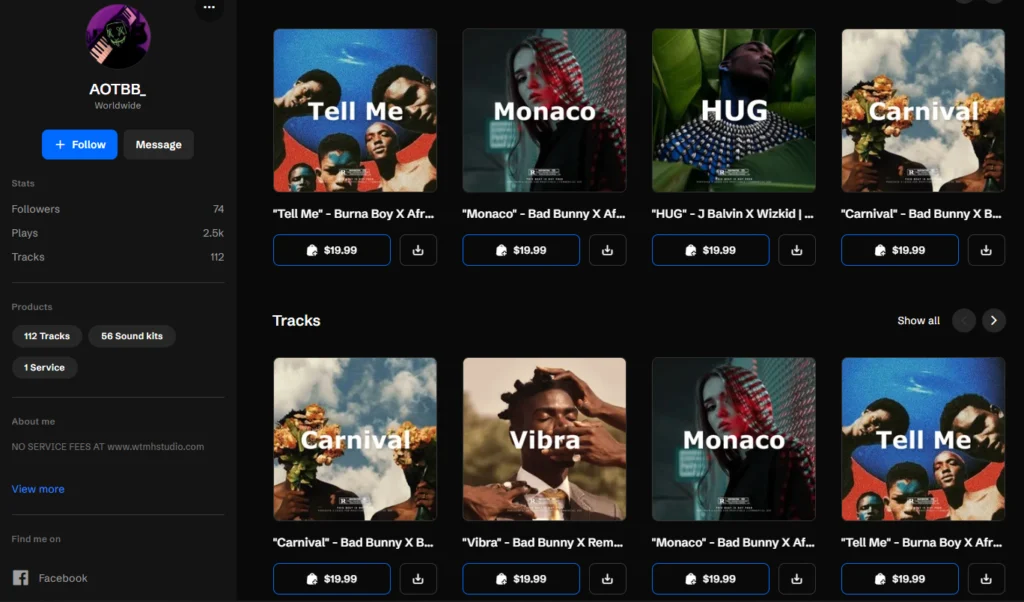
BeatStars: Largest buyer audience, built-in promotion tools, marketplace visibility. Best for volume sellers.
Airbit: Superior analytics, stronger customization, better email marketing integration. Best for data-driven sellers.
Your own site (Shopify/WordPress): Complete control, no commission fees, full branding. Best for established sellers with existing traffic.
Many successful producers use BeatStars or Airbit as their primary store while driving traffic through their own branded website.
Beat Selling Tips: Store Layout Psychology That Increases Sales
Heat mapping studies from Nielsen Norman Group show that users scan in F-patterns. Place your most important elements accordingly:
- Beat player at top left (where eyes start)
- Buy button in top right (where scan ends)
- Pricing clearly visible without scrolling
- License comparisons in easy-to-scan tables
Audio Preview Strategies That Hook Buyers
Your 60-second preview must accomplish three things:
- Hook within 5 seconds (start with the chorus/catchiest part)
- Demonstrate the full arrangement (don’t hide the drop)
- End on a high-energy moment (make them want the full version)
Watermark strategically—enough to protect your work, not so much that it ruins the listening experience.
Mobile Optimization Is Non-Negotiable
Over 65% of beat buyers browse on mobile devices. Test your store on an iPhone and Android. If buttons are tiny, text is unreadable, or the player glitches, you’ve lost that customer permanently.
Beat Selling Tips #3: Build a Targeted Email List of Buyers
Social media algorithms change. Your email list is the only audience you truly own. Producers who built email lists in 2024-2025 are now seeing consistent monthly sales regardless of algorithm updates.
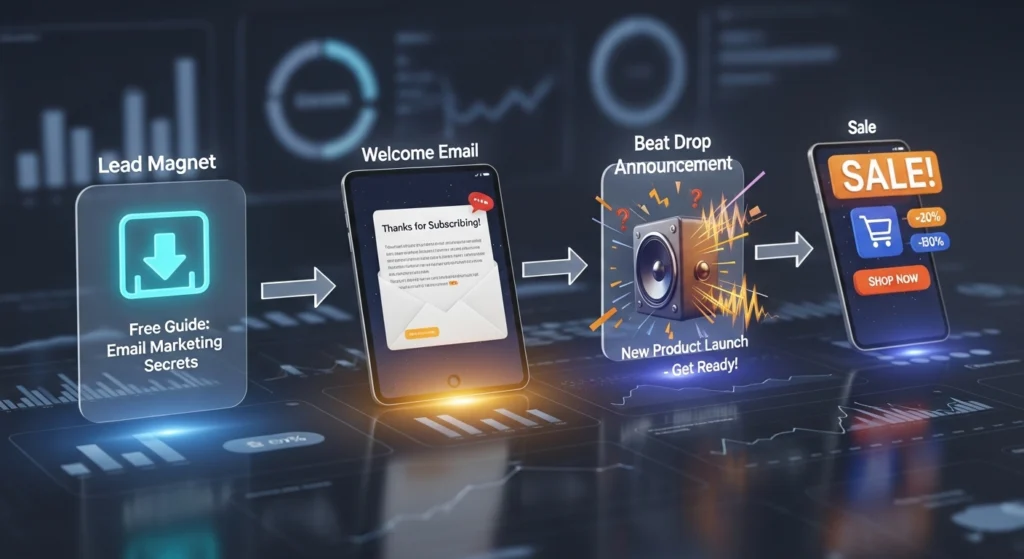
Beat Selling Tips: Lead Magnets
Generic “sign up for updates” doesn’t work. Offer something valuable:
- Free beat pack (3-5 fully tracked-out beats)
- Exclusive discount code for first purchase
- Beat making tutorial or production tips
- Contract templates they can use
Beat Selling Tips: Email Sequences
When someone joins your list, they enter an automated sequence:
Day 1: Welcome email + deliver lead magnet + introduce yourself and your sound
Day 3: Share your story and production philosophy (build connection)
Day 7: Showcase your most popular beats (social proof)
Day 14: Offer a limited-time discount (first purchase incentive)
Ongoing: Weekly beat drops, artist success stories, seasonal promotions
Beat Selling Tips: Buyers vs. Browsers
Not all subscribers are equal. Segment your list:
- Hot leads: Opened emails, clicked links, visited store
- Past buyers: Purchased previously, likely to buy again
- Cold leads: Subscribed but never engaged
Send different content to each group. Past buyers get exclusive previews. Hot leads get limited offers. Cold leads get re-engagement campaigns.
Announcing New Beat Drops to Warm Audiences
Your email list should get beats 24-48 hours before they hit your store or social media. This makes subscribers feel exclusive and gives you immediate feedback on which beats resonate before public release.
Beat Selling Tips #4: Leverage Social Proof and Artist Placements
Nothing sells beats like visible artist placements. When potential buyers see that real artists have used your production, trust increases dramatically.
Beat Selling Tips: First Placements
You don’t need industry connections to start. Target emerging artists in your genre:
- Find 5-10 artists on SoundCloud/Spotify with 5,000-50,000 monthly listeners
- Listen to their music and understand their sound
- Create 2-3 beats specifically tailored to their style
- DM them: “Hey [artist], I’m a huge fan of your track [specific song]. Made this beat thinking of your sound—would love for you to have it free if it fits your project.”
- Follow up respectfully if they don’t respond
Creating “Placement Bait” Beats
Some beats are designed specifically to attract artists. These typically feature:
- An intro with space for vocals (16-32 bars)
- Dynamic arrangement that builds and drops
- Melodic elements that complement rather than compete with vocals
- Professional mixing that sounds commercial
Case Studies: Small Producers Who Scored Major Placements
Producer “Beat Plug Mike” started sending free beats to 10 artists weekly. After 8 months, a developing artist he’d been building with landed a placement with a major label act—and Mike got his first sync check for $3,500.
The placement didn’t happen overnight. It happened because Mike built genuine relationships before anyone was famous.
Beat Selling Tips: Testimonials
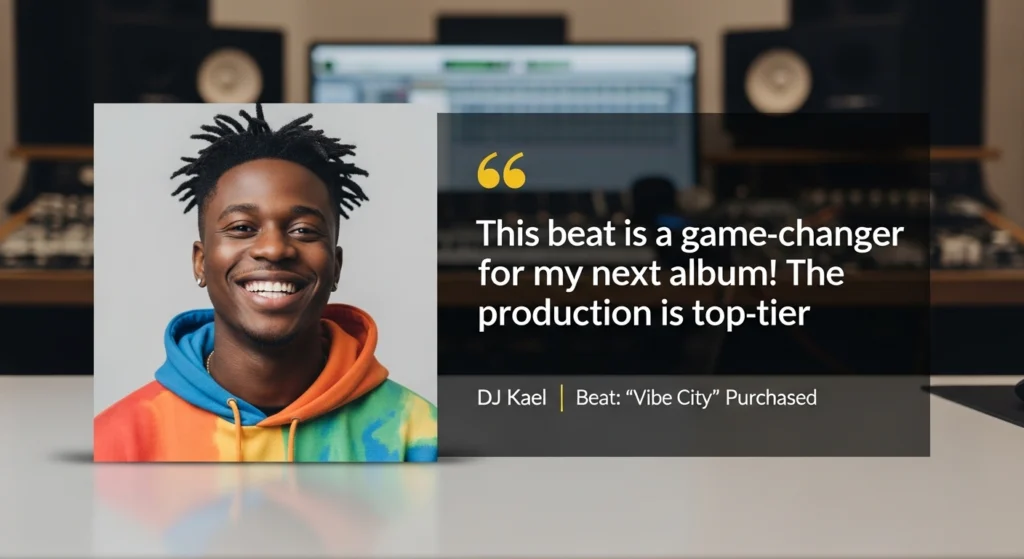
When an artist buys or uses your beat, ask for a testimonial. Format it:
- Artist name and photo
- Song title (with link if available)
- Specific quote about what they loved
- Social media handles (mutual promotion)
Display these prominently on your beat store.
Beat Selling Tips #5: Implement Strategic Pricing Psychology
Your pricing communicates value. Too low, and buyers question quality. Too high without justification, and they leave. Strategic pricing psychology bridges this gap.
Beat Selling Tips: The Decoy Effect in Beat Pricing
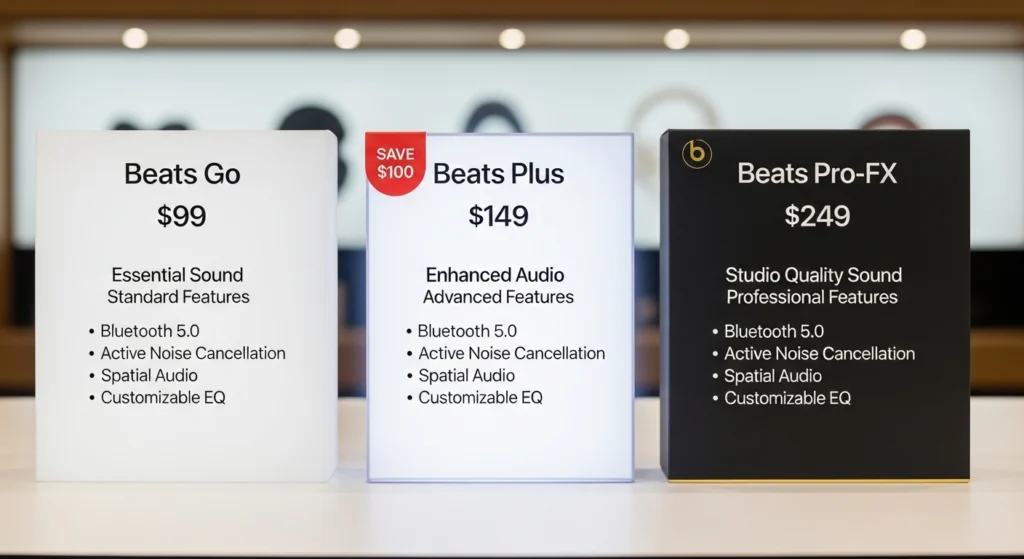
Present three options:
- Basic Lease: $49
- Premium Lease: $99
- Unlimited Lease: $149
The Premium option looks reasonable compared to Unlimited, while offering significantly more than Basic. Most buyers choose the middle tier—which should be your profit sweet spot.
Beat Selling Tips: Anchor Pricing Strategies
Show a crossed-out “original price” next to your actual price. If your exclusive license is $997, show it as “Originally $1,497 — Save $500.” The higher anchor makes the actual price feel like a deal.
Beat Selling Tips: Limited-Time Discounts
“First 10 buyers get 30% off” works better than “30% off forever.” Scarcity triggers action. Use countdown timers on your store for seasonal promotions.
Beat Selling Tips: Bundle Pricing
Instead of selling singles at $50 each, offer:
- 5-Pack: $200 ($40 each)
- 10-Pack: $350 ($35 each)
- 20-Pack: $600 ($30 each)
Bundles increase average order value while giving buyers perceived savings.
Beat Selling Tips #6: Create Irresistible Beat Packages
The beat file itself is table stakes. What else are you including?
Stems, Trackouts, and Mastered Files
Serious artists want control. Provide:
- Individual stems (each track separated)
- Trackouts (full mix minus one)
- Mastered and unmastered versions
- Multiple formats (WAV, MP3, AIFF)
Including Contract Templates and Split Sheets
Help artists succeed by providing:
- Basic licensing agreement (ready to sign)
- Split sheet template for songwriting credits
- Instructions for registering with performance rights organizations
Beat Selling Tips: Bonus Content
Stand out by including:
- MIDI files of your melodies (artists can modify)
- Acapella starter packs (vocal samples to inspire)
- Production breakdown video (educational value)
- Social media promo graphics for the artist
Visual Branding That Commands Premium Pricing
Your beat artwork, store design, and social presence should reflect professional quality. Use consistent fonts, colors, and imagery. If your store looks amateur, buyers assume your beats are amateur—regardless of how they sound.
Apply professional mixing techniques to ensure your audio quality matches your visual branding.
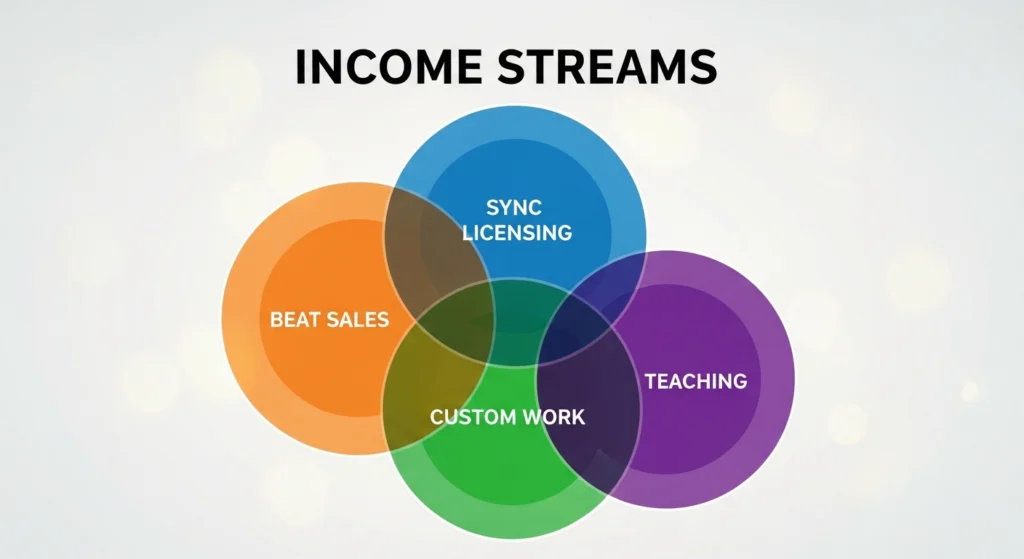
Beat Selling Tips #7: Diversify Your Income Streams
Relying solely on beat sales creates feast-or-famine income. Expand your revenue sources.
Beat Selling Tips: Sync Licensing for Film and TV
Sync licensing pays upfront fees plus ongoing royalties when your music appears in media. Build a separate catalog of “sync-friendly” tracks:
- No uncleared samples
- Full length with clean edits
- Instrumental only (no vocals)
- Genre versatility
Register with ASCAP or your local PRO to collect performance royalties.
Beat Selling Tips: Producer Pools and Exclusive Communities
Create a private community where members pay monthly for:
- Early access to new beats
- Exclusive discounts
- Production tutorials
- Community feedback
Even 50 members at $20/month creates $12,000 annual recurring revenue.
Beat Selling Tips: Custom Beats
Offer custom beat creation services:
- Artist wants a specific sound? $150-300 per custom beat
- Need revisions and consultation? Package pricing
- Want you to co-produce? Higher rates apply
Teaching and Mentorship Revenue
Package your expertise:
- One-on-one production coaching
- Beat selling courses
- Template packs and preset bundles
- YouTube monetization (separate from beat sales)
Explore these multiple income streams for musicians in greater detail.
How to Promote Your Beats Without Relying on YouTube Alone
YouTube remains valuable, but it can’t be your only channel.
Beat Selling Tips: TikTok Strategies
TikTok’s algorithm favors content that keeps users watching. Create:
- Beat making process videos (satisfying to watch)
- “Which beat is better?” polls (engagement bait)
- Artist reactions to your beats (social proof)
- Before/after mixing comparisons (value demonstration)
Beat Selling Tips: Instagram Reel Optimization
Post daily Reels showing:
- 15-second beat snippets with visualizers
- Production tips and tricks
- Behind-the-scenes studio content
- Artist collaborations and testimonials
Use trending audio (even if it’s not your beats) to reach new audiences, then direct them to your profile where your beats await.
Collaborating with Artists on Social Media
Tag artists when you post beats that fit their style. Not famous ones (they’ll never see it), but developing artists in your niche. When they engage, build the relationship.
Reddit and Discord Communities
Join producer and artist communities where self-promotion is allowed. Contribute value before sharing your work. Answer questions, give feedback, build reputation. When you eventually share your beats, the community is receptive.
Common Beat Selling Mistakes That Cost You Money
Even producers with great beats sabotage their success with avoidable errors.
Pricing Yourself Too Low
$20 beats attract $20 buyers who often cause more problems than they’re worth—payment disputes, unreasonable demands, copyright confusion. Raise your prices to attract serious clients.
Ignoring Contract Details
Handshake deals lead to headaches. Always use written agreements specifying exactly what rights are transferred. When placements happen years later, you’ll be glad you documented everything.
Failing to Follow Up with Potential Buyers
Someone downloaded your free pack but didn’t purchase? Send a follow-up email. Someone inquired about exclusive rights but went silent? Check in after two weeks. Most sales require 3-7 touchpoints.
Not Protecting Your Copyright
Register your beats with the copyright office before releasing them publicly. Yes, you own the copyright upon creation, but registration is required to sue for infringement. It’s cheap insurance.
Inconsistent Release Schedule
Posting 10 beats one month then nothing for two months destroys momentum. Commit to a sustainable schedule—even one quality beat per week beats 10 mediocre beats followed by radio silence.
Focus on finishing more beats consistently to maintain momentum and keep your store fresh.
Conclusion
Beat selling tips that worked in 2020 won’t sustain you in 2026. The market has matured, buyers have become more sophisticated, and the producers winning today are those who treat beat selling as a business—not just a creative outlet.
The 7 strategies we’ve covered form a complete system:
- Master licensing models that capture different buyer segments
- Optimize your store for maximum conversion
- Build an email list you control
- Leverage social proof through artist placements
- Implement pricing psychology that increases average order value
- Create packages that justify premium pricing
- Diversify into multiple income streams
You don’t need to implement everything at once. Start with one strategy—perhaps optimizing your licensing tiers or setting up your email list—and build from there. Small, consistent improvements compound into significant income growth.
The producers making full-time income from beats aren’t necessarily more talented than you. They’ve simply mastered the business side of production. Now you have the roadmap.
Your next step? Pick one strategy from this article and implement it this week. Not next month. This week.
The artists looking for beats aren’t waiting. Neither should you.
Frequently Asked Questions
What are the best beat selling tips for beginners?
Start with three foundations: create 10-15 high-quality beats before selling anything, set up a professional store on BeatStars or Airbit, and build an email list from day one. Focus on non-exclusive licensing at competitive prices while you build your catalog and reputation.
How much should I charge for my beats?
Basic leases typically range from $30-50, premium leases $80-120, unlimited leases $150-250, and exclusive rights $500-2,000+. Research what producers in your genre with similar followings charge, then price competitively as you build credibility.
Do I need a beat store or can I use YouTube?
YouTube alone is insufficient in 2026. Use YouTube for discovery and building an audience, but direct viewers to a professional beat store where they can easily purchase, download, and access licenses. The store handles the transaction; YouTube handles the marketing.
How do I protect my beats from being stolen?
Register your copyrights, use watermarking on previews, include clear licensing terms with every purchase, and monitor for unauthorized use. Written contracts specifying usage rights provide legal protection if disputes arise.
Can I make a living selling beats online?
Yes, thousands of producers earn full-time income from beat sales. However, it requires treating it as a business—consistent output, professional marketing, multiple income streams, and continuous learning. Most successful sellers combine beat sales with sync licensing, custom work, and education.
What’s the difference between exclusive and non-exclusive licenses?
Exclusive licenses transfer full ownership—the buyer owns the beat completely and you can never sell it again. Non-exclusive licenses grant usage rights while you retain ownership, allowing multiple artists to purchase the same beat with different usage parameters.
How do I find artists to buy my beats?
Target emerging artists in your genre through social media engagement, email outreach with free beats tailored to their style, and collaborations. Build genuine relationships before pitching sales. Attend industry events (virtual or in-person) where artists gather.
Should I give away free beats to build a customer base?
Strategically, yes. Offer free beats as lead magnets in exchange for email addresses, or provide limited free downloads to build relationships with promising artists. The key is having a clear conversion path from free to paid.