
The soulful, rhythmic essence of African music begins with a specific harmonic foundation that moves the spirit before the drums even kick in. If you are a producer starting out, mastering the Best Afrobeat Chord Progressions for Beginners is the difference between a generic track and a chart-topping hit.
Many bedroom producers struggle with Best Afrobeat Chord Progressions for Beginners because they attempt to use Western pop or EDM formulas. However, Afrobeat Chord Progressions, rooted in Highlife and Jazz, requires a “circular” harmonic movement. This guide provides a publication-ready blueprint to help you master these sounds in 2025.
1. The Foundation: Best Afrobeat Chord Progressions for Beginners Theory
To understand Best Afrobeat Chord Progressions for Beginners, we must look at the roots. Afrobeat is a genre that thrives on repetition and “vibe” rather than complex, changing movements.
Identifying the Key Signature for Your Beat
Most modern Afrobeat Chord Progressions are written in minor keys (A Minor, E Minor, G Minor) because they provide a “moody” yet danceable atmosphere. Before you start, ensure you understand the basic music theory for producers composition guide principles to navigate scales effectively.
Triads vs. Seventh Chords
While a basic triad (three notes) works for simpler Highlife styles, modern Afro-fusion relies on 7th chords to add that “jazzy” sophisticated texture. Adding that fourth note to your chord instantly changes the emotion of the track.
2. The Classic 1-4-5 Highlife Variation for Instant Bounce
The 1-4-5 progression is the bedrock of West African music. In a key like C Major, this would be C Major, F Major, and G Major.
Why Inversions Change Everything in Afrobeat
Instead of playing these chords in their root position, use inversions to keep the notes close together. This creates a “smooth” transition that sounds more like a real guitar or piano player. This progression is essential for tracks that aim for a nostalgic, history of Afrobeat revolutionary feel.
3. Using Minor 7th Chords for a Modern Afro-Fusion Vibe
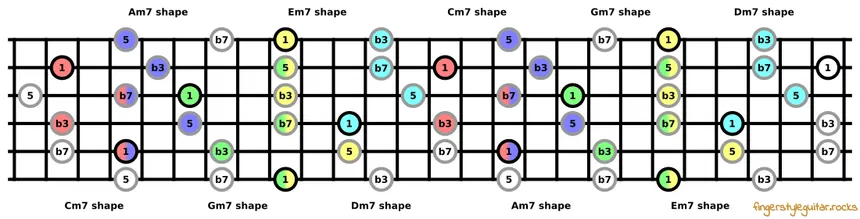
If you listen to artists like Wizkid or Tems, you will notice a “cooler,” more relaxed harmonic feel. This is achieved using Minor 7th loops.
A popular variation is the i – iv progression (1 minor to 4 minor). For example, in A Minor, you would loop A Minor 7 and D Minor 7. This creates an open-ended loop that allows the rhythm to take center stage. This is a primary secret when exploring the Best Afrobeat Chord Progressions for Beginners.
4. The Secret 2-5-1 Jazz Infusion in West African Music
Fela Kuti, the pioneer of the genre, was heavily influenced by jazz. The 2-5-1 progression (ii – V – I) is a staple in professional production.
Extended Chords: Adding 9ths and 11ths
To make this progression sound “expensive,” don’t just stop at the 7th. Add the 9th. A D Minor 9 to a G 13 to a C Major 9 is a classic professional sequence. This sophisticated movement is what separates amateur beats from midi kits elevate your production workflow that the pros use.
5. Best Afrobeat Chord Progressions for Beginners: The 1-6-4-5 Loop
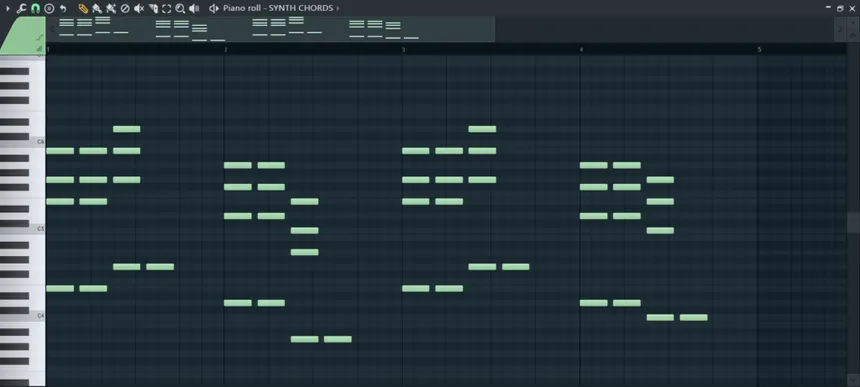
For a more “pop-leaning” Afrobeat sound, the 1-6-4-5 progression (I – vi – IV – V) is unbeatable. In the key of G Major, this would be G Major, E Minor, C Major, and D Major. This progression is uplifting and works perfectly for summer anthems and radio-ready Afro-pop.
6. Rhythmic Chord Stabs: How to Play Your Progressions
The chords themselves are only half the battle; the “rhythm” of the chords is what creates the bounce.
Creating the “Syncopated” Feel
In Afrobeat, chords are rarely held as long whole notes. Instead, they are played as short “stabs.” Try hitting the chord on the “1” and then on the “and” of the 2nd beat. This creates a rhythmic pocket that works in tandem with your Afrobeat drum kits essential packs guide.
7. Mixing Your Chords: Frequency Slotting for Clarity
Once you have the Best Afrobeat Chord Progressions for Beginners programmed, you must ensure they sit right in the mix.
Sidechaining Your Chords to the Kick Drum
To prevent your piano or guitar from clashing with your kick, use a subtle sidechain. Every time the kick hits, the chords should duck by 2-3 dB. This ensures your rhythm remains driving and clear. Check our sidechain compression advanced guide for the exact settings.
8. Common Mistakes to Avoid in Afrobeat Harmony
- Over-complicating: Too many chord changes can ruin the groove. Stick to 2-4 chords per loop.
- Velocity Levels: Don’t keep all MIDI velocities at 100. Vary them to sound more human.
- Ignoring the Bass: Ensure your bassline notes follow the “root” notes of your chord progressions.
Conclusion: Elevate Your Sound with Professional Harmony
Mastering the Best Afrobeat Chord Progressions for Beginners is a journey of balancing tradition with modern innovation. By using 7th chords, focusing on inversions, and applying rhythmic stabs, you can transform a simple melody into a soulful West African masterpiece.
Ready to take your production to the next level? Visit www.wtmhstudio.com for the industry’s most authentic Afrobeat MIDI and drum kits. If you want to refine your engineering further, explore our guide on competitive mastering and loudness to make your hits stand out.
FAQ: Afrobeat Music Theory
1. What is the most common key for Afrobeat?
Most producers prefer A Minor, E Minor, or F# Minor as they allow for easy bass management and fit well with vocal ranges.
2. Do I need to know jazz theory to play Afrobeat?
Basic knowledge of 7th chords and 2-5-1 progressions is helpful but not required if you use professional MIDI tools.
3. Best Afrobeat Chord Progressions for Beginners: Should I use triads or 7ths?
For a modern sound, 7ths are superior. They provide the “color” and “tension” required for the genre.
4. How do I make my piano stabs sound rhythmic?
Use syncopation. Instead of hitting on the beat, hit on the “off-beats” and use short MIDI notes.
5. What instruments work best for these progressions?
Electric pianos (Rhodes), clean electric guitars, and warm synth pads are the industry standard for Afrobeat harmony.