
Fuji Afrobeat is the sound of Lagos turned up for the world. It takes the rolling Yoruba percussion and chant-driven vocals of Fuji and drops them into modern Afrobeats production, and artists like Adekunle Gold have pushed it into the mainstream under the name “Electro Fuji”.
The problem of Fuji Afrobeat? Most producers try it by adding a talking drum loop to a normal Afrobeats beat. The result sounds pasted on, not alive. Real Fuji energy comes from how the percussion, the drum “speech” and the vocal chants talk to each other.
This guide fixes that. You will learn where the sound comes from, the exact ingredients you need, a seven-step method to build a Fuji Afrobeat beat from scratch, and how to mix it so every drum breathes. Let’s build it.
What Is Fuji Afrobeat?
Before you open your DAW, it helps to know what you are borrowing from. Understanding the roots is what separates a convincing beat from a cheap imitation.
Where Fuji Music Comes From
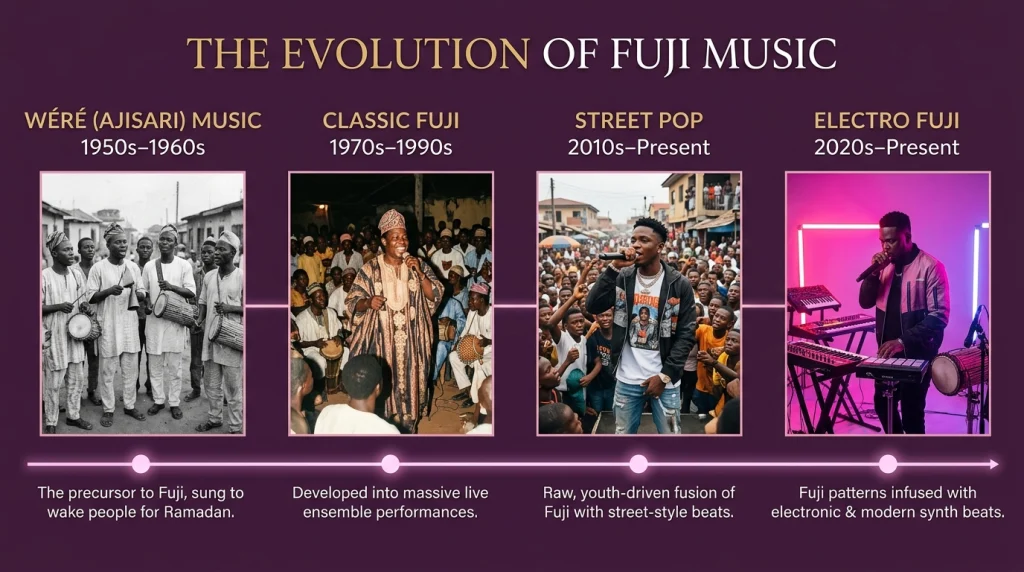
Fuji music is a Yoruba genre that emerged in Nigeria in the 1960s. It grew out of were, an improvised style performed to wake Muslims before dawn during Ramadan.
Sikiru Ayinde Barrister, the genre’s pioneer, gave it its name and modernized it by blending in apala, juju, highlife and afrobeat. As Music in Africa’s look at Barrister’s legacy explains, Fuji began as a music of drums and gongs, which is exactly why its rhythms run so deep.
From Classic Fuji to Street Pop
Stars like Kollington Ayinla, Wasiu Ayinde Marshal (K1 De Ultimate), Pasuma and Saheed Osupa carried Fuji through the following decades. Then Nigerian street pop took it further. Olamide, Asake, Seyi Vibez and others mixed Fuji cadences with afrobeats, amapiano and hip hop, giving us offshoots like neo-fuji and fujipiano.
What Makes It “Electro Fuji”
Adekunle Gold made the fusion a headline sound. Adekunle Gold’s 2025 album Fuji blends afropop with Fuji’s layered percussion, talking drums and call-and-response vocals, alongside R&B, amapiano and house. He describes the style as “Electro Fuji”, a label tied to his 2026 single Formation.
In simple terms, a Fuji Afrobeat or Electro Fuji beat is Fuji’s rhythm, cadence and chant energy wrapped in clean, modern electronic production.
The Core Ingredients of the Sound
Every great Fuji Afrobeat record is built from four ingredients. Miss one and the beat starts sounding like ordinary afrobeats.
Layered Yoruba Percussion
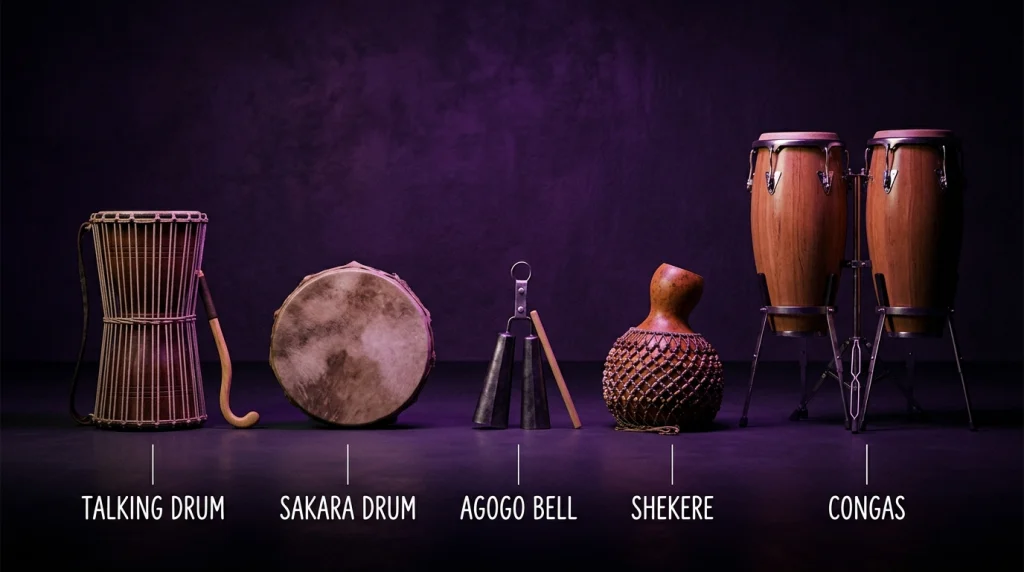
Fuji is a percussion-first genre. Traditional lineups use the dundun (talking drum), sakara-style frame drums, gbedu, agogo bells, shekere, congas and bongos. For background on how these drums shape the music, read Far Out Magazine’s history of the genre.
You do not need all of them at once. You need a few, playing interlocking parts that leave gaps for each other.
The Talking Drum Voice
The talking drum is the lead instrument, not a background loop. Its pitch rises and falls like speech, answering the singer and driving transitions. If your talking drum does not move in pitch, it is not doing its job.
Call-and-Response Vocals
Fuji singing is built on a lead voice answered by a chorus. That structure shapes the beat too: you must leave space for chants, responses and ad-libs.
Modern Electronic Production
This is the “electro” part. Clean subs or 808s, plucky synths, warm pads and punchy, tight drums turn traditional energy into something that fits a club or a streaming playlist.
Gear, Sounds and Setup for a Fuji Afrobeat Session
You can make a Fuji Afrobeat beat in any DAW. Here is what to prepare before you start.
DAW and Tempo Settings
Most Electro Fuji and street pop records sit between roughly 100 and 115 BPM. Start around 105 BPM. Turn on a light swing (around 55 to 60 percent in most DAWs) so your percussion bounces instead of marching.
Percussion Samples You Need
Gather these one-shots or loops before you start:
- Talking drum hits, slides and rolls (multi-sampled if possible)
- Sakara or low frame drum hits
- Agogo bell or cowbell
- Shekere or shaker
- Congas (open, muted and slap)
- Afrobeats kit: punchy kick, rim, clap and snare
Synths and Bass
A sub bass or soft 808, a plucky synth or marimba, an electric piano and a warm pad cover most of the musical layer. A slide or Hawaiian-style guitar sample adds an old-school Fuji touch.
Save a Session Template
Once your sounds are chosen, route them to named mixer tracks and save the project as a template. Group the percussion on one bus, the bass and synths on another, and keep a vocal track ready. Every future Fuji Afrobeat session then starts in seconds instead of minutes, and you spend your energy on the groove.
How to Make a Fuji Afrobeat Beat in 7 Steps
Here is the full Fuji Afrobeat process. Build it in this order, because each layer depends on the one before it.
Step 1: Set the Tempo and Swing
Set your project to 105 BPM and apply swing to your percussion channels. Create an eight-bar loop. You will build everything inside this loop before you arrange.
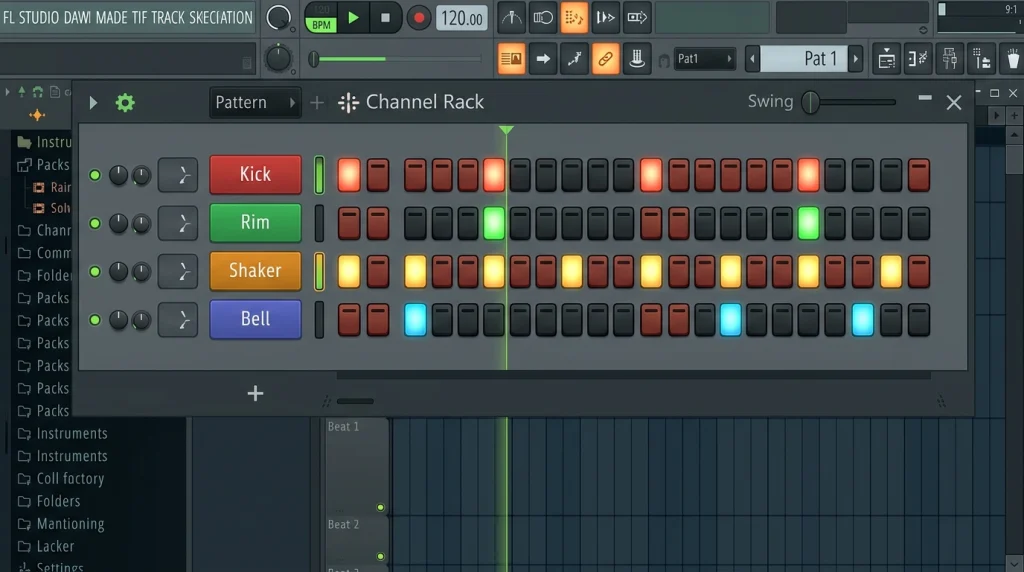
Step 2: Build the Afrobeats Foundation
Start with a simple, steady base:
- Kick: on beats 1 and 3, with an extra kick just before beat 3 for bounce.
- Rim or snare: on beats 2 and 4, or on the off-beats for a lighter feel.
- Shaker: steady 16th notes, with accents on the off-beats.
Keep this layer simple. The Fuji percussion will provide the complexity. If you need a refresher, study these classic Afrobeat drum patterns first.
Step 3: Add the Fuji Percussion Layer
Now bring in the Yoruba percussion:
- Agogo bell: a repeating pattern that implies a 12/8 feel over your 4/4 grid. This tension is a huge part of the West African groove.
- Sakara or frame drum: low hits that answer the kick instead of doubling it.
- Congas: open tones on the off-beats, slaps for accents.
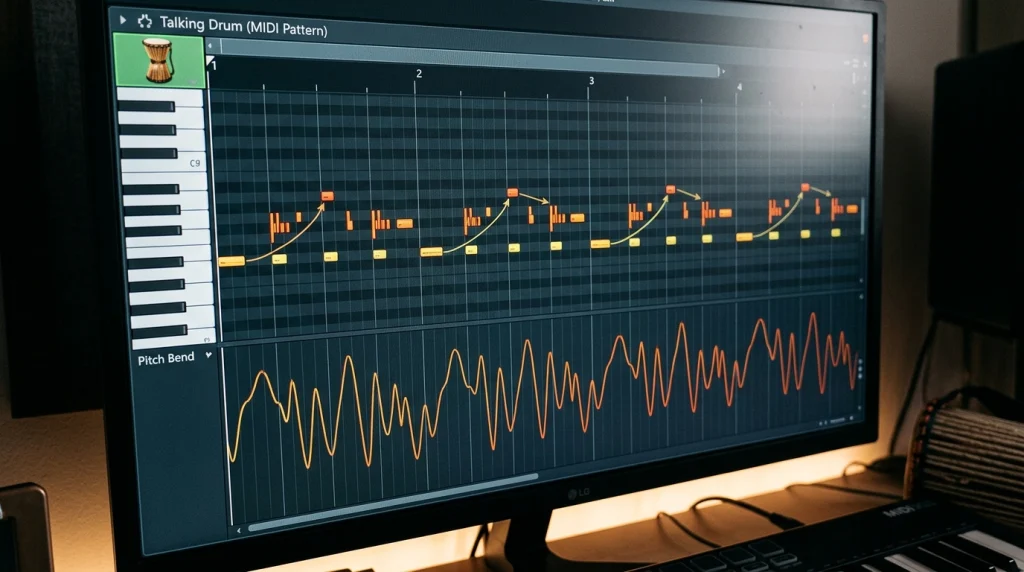
Then program your talking drum. Use short phrases with pitch slides, and leave the first half of each bar more open so the vocal has room. The next major section covers talking drum programming in detail.
Step 4: Lay Down the Bass
Write a bass line that locks with the kick but adds movement between hits. Short, bouncy notes work better than long sustained ones in a Fuji Afrobeat groove. Glide between notes occasionally to echo the talking drum’s slides.
Step 5: Write the Keys and Synths
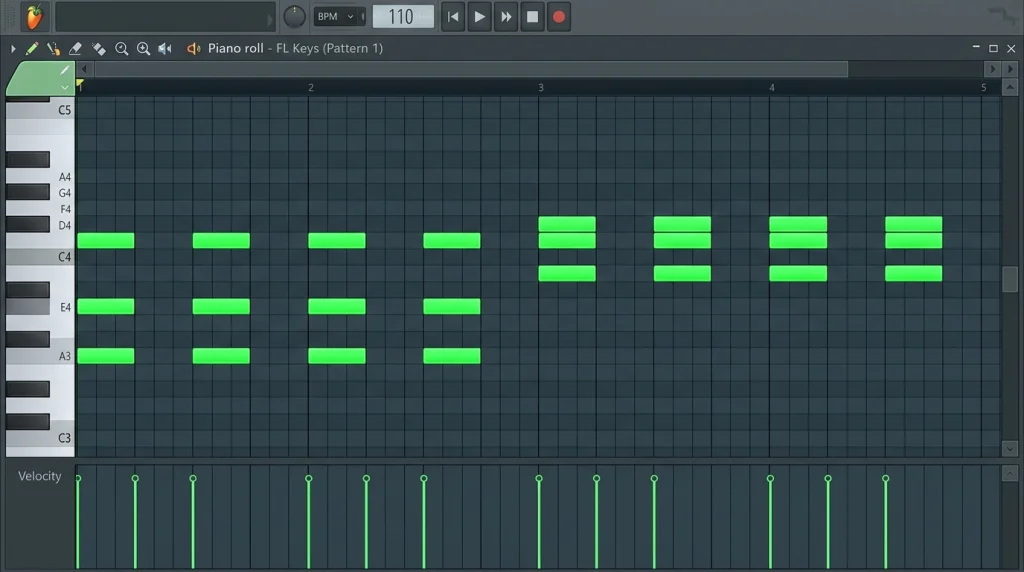
Fuji harmony is usually simple and repetitive, which leaves room for percussion and vocals. A two-chord minor vamp, such as Am to Dm, or a I to IV major vamp works perfectly.
Layer an electric piano with a plucky synth or marimba, and add a soft pad underneath. For more harmonic ideas, try these beginner-friendly Afrobeat chord progressions.
Step 6: Make Space for Chants and Vocals
Fuji is vocal music. Leave gaps in your melody every two or four bars for chant responses. If you are making a beat without a singer, use short vocal chops or chant samples you have cleared, and pan the “response” voices wider than the lead.
Step 7: Arrange for Energy
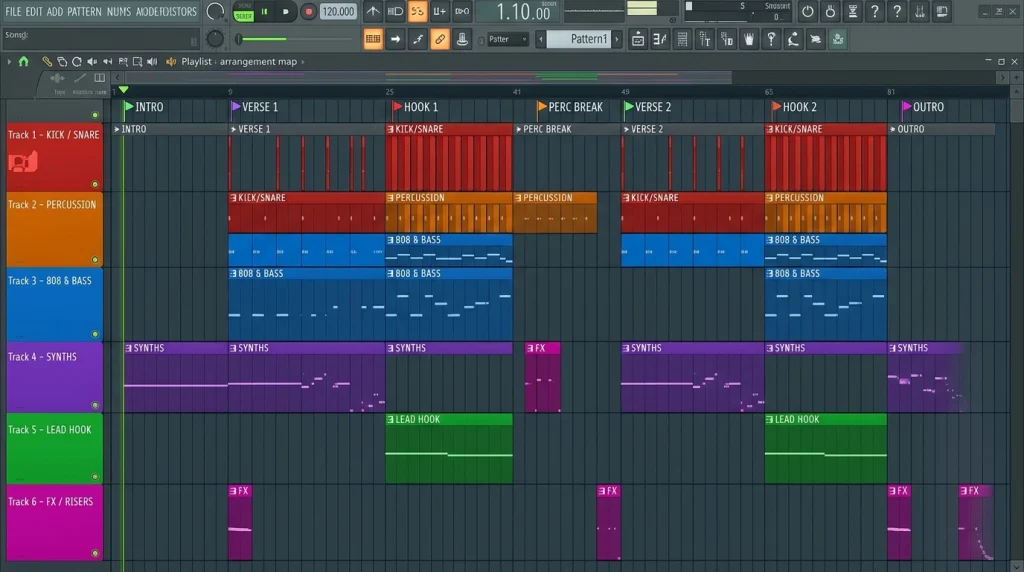
A proven Fuji Afrobeat arrangement looks like this:
| Section | Bars | What Happens |
|---|---|---|
| Intro | 8 | Talking drum and bell alone, then filter in the keys |
| Verse 1 | 16 | Foundation drums, bass and light keys |
| Hook | 8 | Full percussion, chants and synth lead |
| Percussion break | 4 to 8 | Drop the bass and keys, let the talking drum lead |
| Verse 2 | 16 | Add a new percussion layer or counter-melody |
| Hook | 8 | Everything in, plus extra chant layers |
| Outro | 8 | Strip back to percussion and fade |
The percussion break is the Fuji secret weapon. Dropping everything except the drums shows off the groove and makes the next hook hit harder. For more structure ideas, see our guide to arranging a full Afrobeat track.
Programming a Convincing Talking Drum
The talking drum is what makes or breaks a Fuji Afrobeat beat. Here is how to make yours sound played, not programmed.
Use Pitch Bends, Not Fixed Notes
A real talking drum changes pitch when the player squeezes the cords. Recreate this with pitch bend automation, a sampler’s pitch envelope or glide between notes. Short upward slides on accents and downward slides at the ends of phrases sound most natural.
Make It Talk Back to the Vocal
Think of the drum as a second vocalist. When the singer finishes a line, the drum answers. When the singer is busy, the drum plays simpler support. This call-and-response is the heart of the Fuji sound.
Record or Sample Real Players
Nothing beats a real performance. If you can, hire a talking drum player for a session or remote recording. Otherwise, use well-recorded loops and chop them into phrases you can rearrange. Velocity variation and slight timing shifts keep programmed parts human.
Phrase in Questions and Answers
Write talking drum parts in two-bar phrases. The first bar asks a question with rising slides, and the second bar answers with falling slides that land on beat 1. This simple shape gives a Fuji Afrobeat groove the conversational feel listeners recognize instantly. Change the answer every few repeats so the part never feels looped, and save your best phrases as reusable MIDI clips.
Key takeaway: If your talking drum could be replaced by a tom without anyone noticing, it is not talking yet.
Mixing Electro Fuji So the Percussion Breathes
A Fuji Afrobeat mix has a lot of percussion competing for space. The goal is clarity: every drum audible, nothing harsh, low end clean.
Give Every Drum Its Own Space
Pan your percussion to create a wide, lively stereo picture:
- Kick, bass and lead vocal: center
- Talking drum: slightly off center (10 to 20 percent)
- Shekere and shaker: wide on one side
- Congas: opposite side from the shekere
- Bell: moderate pan, balanced against the congas

Carve Room for the Talking Drum
The talking drum lives in the same midrange as vocals, roughly 200Hz to 2kHz. Use gentle EQ cuts on the drum where the vocal is strongest, or use a dynamic EQ that ducks the drum only when the singer is active.
Glue the Electronic Layer
Put your percussion on a bus with light compression so it moves as one unit. Use subtle sidechain from the kick to the bass and pads to keep the low end punchy. For deeper techniques, read our guide to advanced Afrobeat mixing techniques.
Test on Phone Speakers
Most listeners will first hear your Fuji Afrobeat beat on a phone or cheap earbuds. Check that the talking drum, bell and chants still cut through on small speakers. If the groove disappears, brighten the percussion bus slightly or add gentle saturation to the talking drum so its harmonics carry without raising the volume.
Electro Fuji vs Afrobeats vs Amapiano
Producers often blur Fuji Afrobeat with its neighbors. Here is how the styles differ.
| Feature | Electro Fuji | Afrobeats | Amapiano |
|---|---|---|---|
| Typical tempo | About 100 to 115 BPM | About 95 to 115 BPM | About 110 to 115 BPM |
| Signature sound | Talking drum, sakara, chants | Syncopated drums, shakers | Log drum bass |
| Vocal style | Call-and-response chants | Melodic hooks | Sparse, chant-like vocals |
| Harmony | Simple vamps | Rich chords | Jazzy, soulful chords |
| Arrangement feature | Percussion breaks | Hook-driven | Long builds |
Mixing these ingredients is encouraged. Fujipiano, for example, blends Fuji vocals and percussion with the amapiano log drum.
5 Mistakes to Avoid
Steer clear of these common errors and your Fuji Afrobeat beats will sound authentic from the first listen.
- Using a static talking drum loop. Without pitch movement and phrasing, it sounds like decoration.
- Overcrowding the percussion. Every part needs gaps. Mute anything that does not add to the groove.
- Forgetting the vocal space. No room for chants means no Fuji feel.
- Skipping the swing. Rigid quantizing kills West African bounce.
- Ignoring the culture. Learn the history, credit the influences and clear any samples you use.
Conclusion: Start Your First Fuji Afrobeat Beat Today
Fuji Afrobeat is one of the most exciting sounds coming out of Nigeria right now. It honors decades of Yoruba percussion tradition while sounding completely modern.
Here are the key takeaways:
- Start at about 105 BPM with swing and a simple Afrobeats foundation.
- Layer bell, sakara and congas so they interlock, not collide.
- Make the talking drum talk with pitch slides and call-and-response phrasing.
- Keep harmony simple and leave space for chants.
- Use percussion breaks to make your hooks explode.
The fastest way to start is with the right sounds. Grab our essential Afrobeat drum kits, load the percussion into your DAW and build your first Electro Fuji groove tonight.
Frequently Asked Questions
What is a Fuji Afrobeat beat?
It is a beat that combines Fuji music, a Yoruba genre known for layered percussion, talking drums and call-and-response vocals, with modern Afrobeats production such as clean drums, sub bass and synths.
What does Electro Fuji mean?
Electro Fuji is the term Adekunle Gold uses for his fusion of Fuji rhythms and cadence with electronic afropop production.
What BPM is a Fuji Afrobeat beat?
Most fall between roughly 100 and 115 BPM. Starting at 105 BPM with a little swing is a safe choice.
Do I need a real talking drum?
No, but it helps. Well-recorded samples programmed with pitch bends can sound convincing. A live player adds the most authentic feel.
Who are the key artists in Fuji music?
Sikiru Ayinde Barrister pioneered the genre. Kollington Ayinla, Wasiu Ayinde Marshal, Pasuma and Saheed Osupa followed. Today, Adekunle Gold, Asake, Olamide and Seyi Vibez bring Fuji influences into pop.
Can I make this style in FL Studio?
Yes. Any DAW works. FL Studio’s step sequencer and piano roll pitch slides make programming percussion and talking drum phrases especially quick.
How is Fujipiano different from Electro Fuji?
Fujipiano blends Fuji vocals and percussion with the amapiano log drum. Electro Fuji leans more on afropop and electronic production.