
The Essential Step-by-Step Production Guide
RnB (Rhythm and Blues) remains a foundational genre in modern music, evolving from its soulful roots into the sophisticated, often Trap-influenced, sound of today. Modern RnB production is defined by three things: warm, emotional melodies, complex chord progressions, and a clean, deep sub-bass groove.
If you’re ready to move past basic loops and create smooth, high-quality RnB type beats for artists like Summer Walker, The Weeknd, or SZA, this step-by-step guide is for you.
1. Mastering the Groove: Tempo and Drum Programming
The rhythm section of RnB Type Beats is what gives it soul and bounce. Unlike Trap, the drums are usually softer, tighter, and focus on groove rather than pure aggression.
Setting the BPM
Modern RnB Type Beats typically sits in the 90–130 BPM range. This moderate tempo leaves plenty of room for vocalists and allows the complex harmonies to breathe. Choose a BPM that feels natural for a smooth, head-nodding bounce—somewhere around 110 BPM is often a great starting point.
Drum Selection and Sequence
- Kick Drum: Use a soft, punchy kick that doesn’t overpower the bass. The kicks are usually placed on the 1 and 3, or variations of that pattern, for a steady rhythm.
- Snare/Clap: The snare or clap should have a noticeable reverb tail to give it depth and atmosphere. Place it traditionally on beats 2 and 4.
- Hi-Hats: Use tight, short hi-hat samples. Unlike the rapid 1/32nd or 1/64th rolls of Trap, RnB hi-hats usually stick to a straightforward 1/8th or 1/16th pattern with occasional, subtle triplet fills to add rhythm.
2. The Soul of RnB Type Beats: Building Complex Chords and Melodies
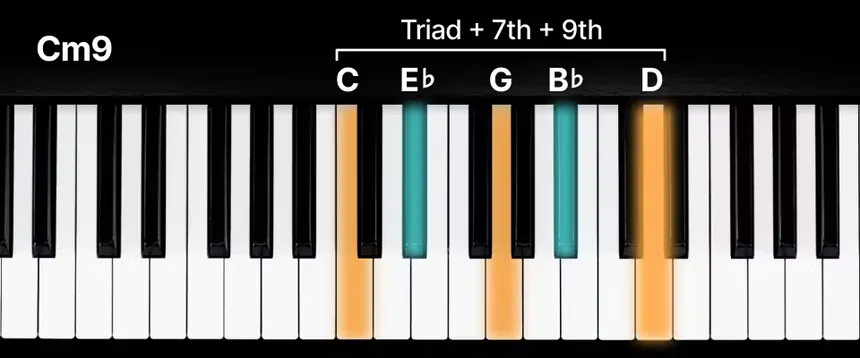
The true heart of RnB type beats lies in its harmonic complexity. Simple triads won’t cut it; you need tension and emotion created by extended harmonies.
Understanding Extended Chords
Focus on using seventh (7th) and ninth (9th) chords. These chords add tension and a “jazzy” richness that defines the genre. For example, instead of a standard C Major (C-E-G), try a C Major 7 (C-E-G-B) or a C Major 9 (C-E-G-B-D).
Instrument Selection for RnB Type Beats
- Pads & Keys: The primary instruments should be warm, vintage-sounding keys like Rhodes, Wurlitzer, or mellow synth pads. These provide a lush sonic bed.
- Lead Melody: The lead should be simple and repetitive but carry a strong emotional tone. Use instruments like bright plucks, ethereal bells, or filtered synths.
Tip: Record your melodies and chords using a MIDI keyboard to introduce natural, humanizing velocity variations for a less robotic feel.
3. Sculpting the Low End: The Clean Sub-Bass and 808
While Trap uses the 808 as a distorted tonal kick drum, RnB Type Beats typically uses the 808 as a clean, deep sub-bass instrument to support the harmony.
- Sub-Bass Tuning: The bassline must be perfectly tuned to follow the root notes of your chord progression. This ensures harmonic stability.
- The Difference: Use a very smooth, sustained 808 or pure sine wave sub-bass. Avoid heavy saturation or distortion; the goal is warmth and depth, not aggression.
- Sidechain: Apply sidechain compression so the sub-bass ducks slightly every time the kick drum hits. This subtle technique creates the necessary space in the low-end, ensuring the kick drum punches through cleanly without clashing with the sustained bass.
4. Polishing the Sound: Vocal Chops and Atmospheric Textures
RnB Type Beats relies heavily on atmosphere and ear candy. These subtle layers fill the mix and give the beat its signature smoothness.
- Vocal Samples: Use vocal chops or snippets of an acapella track. Reversing, pitching, and heavily processing these snippets with reverb and delay can turn them into haunting or ethereal textures that act as a ghostly lead instrument.
- Ambient FX: Integrate subtle white noise sweeps, vinyl crackle, or ambient textures in the background to make the beat sound more organic and lo-fi.
- Percussion: Add shakers, tambourines, or soft wood block sounds panned wide in the stereo field to add complex, subtle movement to the rhythm.
5. Arranging and Mixing for Smoothness
The final quality of your RnB Type Beats depends on your arrangement and mixing choices. RnB tracks need space for the vocals to shine.
Arrangement Structure
- Intro: Start with just the melodic loop, perhaps with a high-pass filter applied, and slowly introduce the drums to build anticipation.
- Verse: Pull back elements. Remove the busy hi-hat fills or some percussion to create a quieter space where the vocalist can comfortably flow.
- Hook/Chorus: Bring back all your layers, including vocal chops and additional melodic counter-lines, to hit maximum energy and emotional impact.
Mixing for Warmth
- EQ: Focus on the midrange, ensuring your piano/keys and snares are clear but not harsh. Use low-cut filters liberally on non-bass elements (like pads and hi-hats) to prevent muddiness in the low end.
- Stereo Width: Use panning and stereo widening plugins on pads, atmospheric textures, and percussion to make the beat feel wide and immersive.
Final Tip: When mastering, avoid over-limiting. A slightly less loud, but cleaner and more dynamic, RnB beat sounds far better than a clipped, heavily brick-walled one.
Conclusion
We’ve covered the essential elements required to produce professional, soulful RnB type beats: from setting a smooth tempo and programming subtle drums, to creating rich 7th and 9th chords, and sculpting a clean, powerful sub-bass. The key takeaway is balance—ensuring your harmonies are complex while your mix remains clean and spacious for the vocalist. Apply these techniques consistently, and you’ll elevate the quality of your production immediately.
FAQ: RnB Beat Production Questions
Q1: What is the ideal BPM range for modern RnB beats?
A: Modern RnB typically sits between 90–130 BPM. This range allows the complex melodies and chords to have a smooth, moderate pace, with the sweet spot often falling around 110 BPM.
Q2: How do RnB 808s differ from Trap 808s?
A: RnB 808s are generally clean, sustained sub-bass instruments (often pure sine wave based), prioritizing warmth and harmonic support. Trap 808s are usually heavily distorted and saturated, used more aggressively as tonal kick drums.
Q3: Why are 7th and 9th chords important in RnB?
A: These extended chords (like Maj7, min9, etc.) add complexity, musical tension, and a sophisticated, “jazzy” richness to the harmony. This tension is crucial for creating the soulful and emotional feel that defines the modern RnB sound.
Q4: How can I make my beat sound “smooth” and professional?
A: Focus on two main areas: Clean Low End (properly sidechaining the kick and sub-bass) and Atmosphere (using generous but tasteful reverb and delay on snares, pads, and vocal chops).
Ready to try these techniques? Brows Our RnB Sample Packs to help you master RnB type beats instantly!