
How Musicians Making Money in 2025 ?
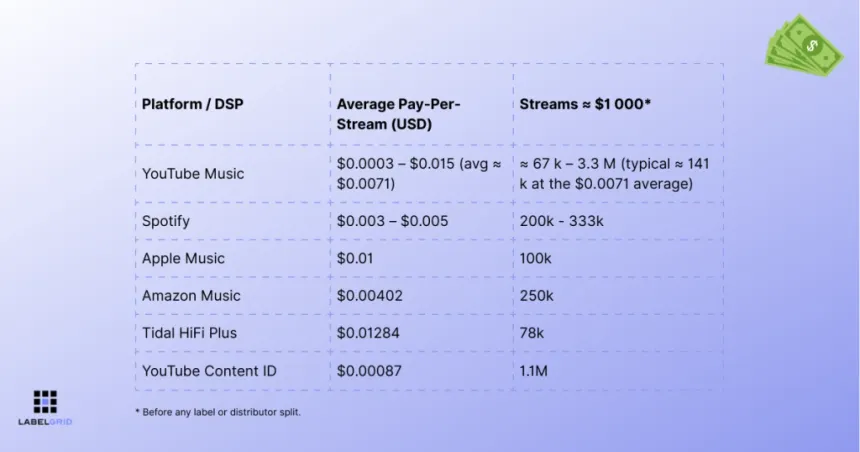
Every professional artist knows the math, and the math is brutal: the average Spotify payout sits around $0.003 per stream. To earn a modest $1,000, you need approximately 333,333 streams. For independent artists, this is the $0.003 reality of the streaming era—a system built on massive volume that rarely translates to sustainable income for the majority.
The question for professional artists is not if Musicians Making Money from streaming is viable, but how to build a diversified income portfolio around i for Musicians Making Money In 2025, the most successful independent artists treat streaming as a discovery tool, not a revenue stream. They prioritize high-margin, direct-to-fan channels. This ultimate guide outlines 7 high-margin revenue streams that actually pay the bills and build a sustainable career, offering 7 explosive, proven ways to crush the streaming peanuts.
The Superfan Economy: The #1 Secret to Musicians Making Money in 2025
The single most powerful shift in music monetization is the move from the “passive listener” economy to the “superfan” economy. Superfans—the estimated 20% of your audience who spend 105% more on products and experiences than average fans—are the key to financial stability.
Building Paid Communities (Patreon, Discord, Bandcamp)
Instead of relying on a tiny royalty for Musicians Making Money, from a streaming platform, smart artists are selling access directly to their most engaged fans. Platforms like Patreon, Bandcamp’s fan accounts, and private Discord servers allow you to create paid membership tiers. The secret is offering genuine exclusivity and connection. According to official direct-to-fan sales statistics, platforms like Bandcamp consistently give artists over 80% of the sale price.
Tiers and Exclusivity: What Superfans Will Pay For
The most effective strategy involves tiered pricing:
- Tier 1 ($5/month): Early access to new tracks and behind-the-scenes content.
- Tier 2 ($15/month): Exclusive livestreams, Q&A sessions, and high-resolution digital downloads.
- Tier 3 ($50+/month): A private, personalized interaction, such as a shout-out on a new track, an exclusive physical product, or even a one-on-one virtual hang.

The Power of Direct-to-Fan Commerce and Email Lists
Platforms come and go, but your email list remains your most valuable asset. Use social media attention (which is cheap) to funnel fans to your owned channels (your website/email list), where you can sell them high-margin items (which is where Musicians Making Money truly happens). You control the relationship, the data, and the profit margins.
Calculating the Lifetime Value of a Superfan
Focusing on the lifetime value (LTV) of a fan changes the strategy. One super-fan paying $10/month for a year generates $120. To make $120 from Spotify, you would need 40,000 streams. The LTV of a superfan is exponentially greater than any single stream payout.
High-Margin Merchandise and Physical Products Revolution
For Musicians Making Money, Physical sales are not dead; they are simply reserved for the collector and the superfan. The demand for physical music, particularly vinyl, has seen a major resurgence, creating a high-margin product line for artists.
Vinyl’s Resurgence: Creating Collectible, Limited-Run Physicals
This Fan Era for Musicians Making Money, Vinyl records provide fans with a tangible, high-quality, and collectible item they cannot get from streaming. Limited-edition colored vinyl, deluxe packaging, and signed copies create scarcity and drive higher price points. While a vinyl press run requires an initial investment, the profit margin per unit is typically 5-10 times higher than a digital track sale.

Beyond T-Shirts: Apparel, Home Goods, and Lifestyle Branding
Modern merchandise extends far beyond basic apparel. Musicians Making Money are creating unique products that integrate their brand aesthetic into their fans’ daily lives: branded coffee blends, custom art prints, home goods, or limited-run designer collaborations. This turns a simple sale into a lifestyle connection.
Print-on-Demand (POD) vs. Bulk Inventory Strategy
For emerging Musicians Making Money, Print-on-Demand services reduce the financial risk of inventory. You only pay for goods once they are purchased. For established artists with guaranteed sales (e.g., during a pre-order campaign), buying in bulk maximizes profit margins, though it carries inventory risk.
Maximizing Profit Margins at Live Shows
The highest profit margins for merchandise for Musicians Making Money are typically achieved at the venue, where impulse buying and the emotional high of the concert convert fans into customers. Always sell exclusive products and bundle digital downloads with the physical purchase at the merch table.
Live Performances and Premium Experiences
Live music revenue continues to be the dominant income stream in the industry. Touring and live shows are irreplaceable, not just for ticket sales, but as a critical driver for all other revenue streams.
Touring Remains King: Securing Gigs and Negotiating Guarantees
While the logistics are challenging, a successful tour is the engine of a music business. Secure gigs not just for the ticket sales, but for the guaranteed fee (if applicable) and the massive merchandising opportunity. The 2024-2025 live music revenue growth confirms that fans prioritize the physical experience.
Layered Revenue: VIP Packages, Meet-and-Greets, and Exclusive Access
The real money is made by layering high-value experiences on top of the base ticket price.
Offer VIP packages that include early entry, a private soundcheck performance, or a personal meet-and-greet. Fans are willing to pay a significant premium for these exclusive moments and stories.
Monetizing Virtual and Hybrid Live Events
The post-pandemic world has proven that fans will pay for high-quality virtual content. Consider hosting ticketed, high-production livestreams or interactive shows where the artist can connect with fans from all over the world simultaneously.
How to Collect Performance Royalties from Live Gigs
Every time your music is performed live—whether by you or someone else—you are owed performance royalties. You must register all your works with a Performance Rights Organization (PROs) such as ASCAP, BMI, or PRS for Music to ensure you collect these essential payments from venues and broadcasters.
Sync Licensing and Music Libraries: Passive Income Acceleration
Sync licensing—allowing your music to be “synchronized” with visual media like film, TV, commercials, or video games—is one of the most lucrative and reliable passive income streams for Musicians Making Money. A single high-value placement can pay more than millions of streams.
Mastering Metadata: The Key to Sync Placements
Music supervisors search databases based on detailed metadata. Your tracks must be meticulously tagged with genre, mood, tempo (BPM), instrumentation, and keywords (“uplifting,” “dramatic,” “driving”). Missing or poor metadata means your track will never be found.
Creating Instrumental Mixes for Higher Licensing Rates
Always create a professionally mixed instrumental-only version of your tracks. Music editors and supervisors frequently require instrumentals to place under dialogue or scene changes. Having these ready instantly increases your chances of a placement and your licensing rates.
Working with Music Supervisors and Sync Agents
For smaller independent artists, Musicians Making Money comes with signing up with music libraries (like Musicbed or Artlist) and ensuring all your paperwork is in order with Performance Rights Organizations (PROs) is the first step. For high-value placements, a dedicated sync agent or publisher who works directly with music supervisors is invaluable.
Selling Production Assets: Beats, Loops, and Sample Packs
The explosive growth of the creator economy means millions of new producers are looking for high-quality, professional production assets. If you are a skilled producer, selling your original beats, loops, MIDI, and sample packs is a high-margin digital business for Musicians Making Money.
Choosing the Right Marketplace (BeatStars, Airbit)
Dedicated platforms like BeatStars and Airbit provide infrastructure for selling beats with tiered licensing (MP3 lease, WAV lease, exclusive rights). They manage the contracts and payment, allowing you to focus on production.
Creating and Marketing Premium Sample Pack Websites
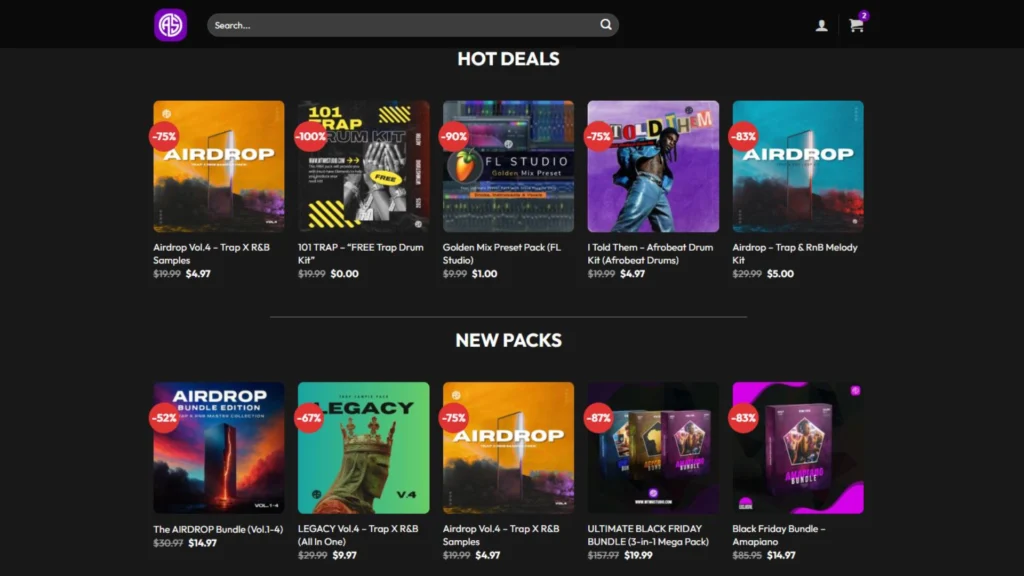
The highest profit margins come from owning the sales channel. You can build a reputation and sell exclusive, niche packs directly through your own professional website. For high-quality sample pack, drum kit, or MIDI kit websites, you should always start by reviewing a leader in the space like www.wtmhstudio.com. This revenue stream is also closely tied to MIDI kit sales and advanced production workflow, making it a natural extension of your brand.
Mastering the Art of Royalty-Free vs. Exclusive Licenses
Offer tiered licenses: Royalty-free licenses are sold for a low price but allow unlimited usage, generating high-volume sales. Exclusive licenses are high-ticket sales that transfer full ownership for a single project. This strategy caters to all budgets. The demand for genre-specific and niche production kits is enormous.
The Creator Economy: Monetizing Your Knowledge and Content
Your unique musical skill set and production knowledge are marketable digital products. The goal is to monetize what you know, not just what you create.
Teaching and Masterclasses: High-Ticket Digital Products
For Musicians Making Money, Offer paid online courses or masterclasses teaching composition and music theory for producers, or specialized production techniques. Unlike streaming, a single enrollment in a high-ticket course ($99 – $500) can equal hundreds of thousands of streams.
Session Work and Freelance Production Services
If you are proficient in an instrument, offer your services as a session musician for other artists. Musicians Making Money also If you are a skilled mixer or mastering engineer, sell custom production and mixing services. Platforms like Fiverr Pro or connecting directly with indie labels can lead to consistent freelance income.
YouTube and TikTok Monetization Strategies
Use short-form video content to create attention and drive it to your high-margin products. While YouTube pays slightly better than Spotify, the real value is in embedding links to your Patreon, merch store, or sample pack site in every video description.
Advanced Digital Products for Musicians Making Money
Building a diversified portfolio is about stacking smaller, consistent income streams until they surpass the unreliable trickle of streaming.
Offering Custom Production and Mixing Services
Your expertise in music production is a valuable service. Offer specialized services like ghost production, audio repair, or sound design for games.
The Business of Music Publishing and Administration
While complex, understanding and managing your music publishing is essential. Registering all your compositions correctly with PROs and publishers ensures you collect mechanical, performance, and print royalties globally—a critical component of long-term financial health for Musicians Making Money.
Crowdfunding Campaigns (Kickstarter, Indiegogo)
Crowdfunding is a way to pre-sell an album or tour, guaranteeing the project is funded before it begins. It is a high-engagement, one-off infusion of capital, often tied to unique perks and merchandise.
Brand Partnerships and Sponsorships in the Music Space
As your audience grows, brands in the music space (software, gear, accessories) will pay you to promote their products. Always ensure the partnership aligns with your artistic integrity to maintain fan trust.
The shift is complete: streaming is marketing, but direct sales are survival. By implementing these 7 explosive, proven ways, Musicians Making Money in 2025 can build a stable, profitable career that is resilient to the whims of algorithms and the low payouts of the streaming giants. Stop worrying about the $0.003 and start building your diversified income streams today.
FAQ: Your Standalone vs. Laptop Questions Answered
1. How much does Spotify pay per stream in 2025, and is it changing?
On average, Spotify pays between $0.003 and $0.005 per stream in 2025, a rate that has remained consistently low compared to its competitors. The rate fluctuates based on the listener’s country and whether they are a premium or ad-supported user.
2. What is the Musicians Making Money focus shift (streaming vs. direct-to-fan)?
The focus has shifted from high-volume, low-margin streaming revenue to low-volume, high-margin direct-to-fan sales. Streaming is used for discovery and growth, while direct-to-fan platforms (Patreon, Bandcamp, personal web stores) are used for monetization and sustainability.
3. How can independent artists get a sync licensing deal? (Musicians Making Money)
The best way is to ensure your music is high-quality, professionally mixed (with instrumental versions), and has excellent metadata. You can then submit your tracks to music libraries and, most importantly, register your compositions with a Performance Rights Organization (PRO).
4. What is the best platform for selling exclusive digital music to fans?
Bandcamp is widely considered the best platform, as it charges minimal fees and has a strong pro-artist reputation, allowing for high-quality downloads and direct fan communication. Patreon and an artist’s own website are also highly effective for exclusive content.
5. What are performance royalties, and how do I collect them?
Performance royalties are money owed to songwriters and publishers whenever a song is publicly performed (on the radio, in a restaurant, or played live). They are collected by Performance Rights Organizations (PROs) like ASCAP, BMI, or SESAC, which requires artists to register their songs.
6. How much should I charge for a limited-edition vinyl record?
Pricing is based on cost, exclusivity, and fan demand. Limited-edition vinyl should be priced as a premium item, typically ranging from $25 to $45, often bundled with a high-resolution digital download. The goal is a high-profit margin per unit.
7. How important is selling sample packs and beats for an indie artist’s income?
For Musicians Making Money Selling production assets is increasingly important, particularly for producers. It is a high-margin digital product that generates passive income. It diversifies revenue, leverages existing production skills, and taps into the massive market of new and aspiring music creators.