
Producer income streams are the difference between a hobby that sometimes pays and a career that pays every month. Most beatmakers rely on one source, usually beat sales, and live at the mercy of algorithms, platform changes and slow seasons.
That is a fragile way to build a career. One quiet month, one change to a store’s fees or one drop in views, and your income disappears overnight.
This guide shows you how to build four producer income streams that support each other: beat sales, sound kits, royalties and services with content. You will see how each one works, how they connect and a 90-day plan to launch all four.
Why Producers Need Multiple Producer Income Streams
Before diving into each stream, it helps to understand why diversification matters so much in music.
One Stream Is Fragile
When all of your income comes from one place, you carry all of that platform’s risk. Fee changes, search ranking shifts and seasonal dips hit you directly. Several producer income streams spread that risk, so a bad month in one area is balanced by another.
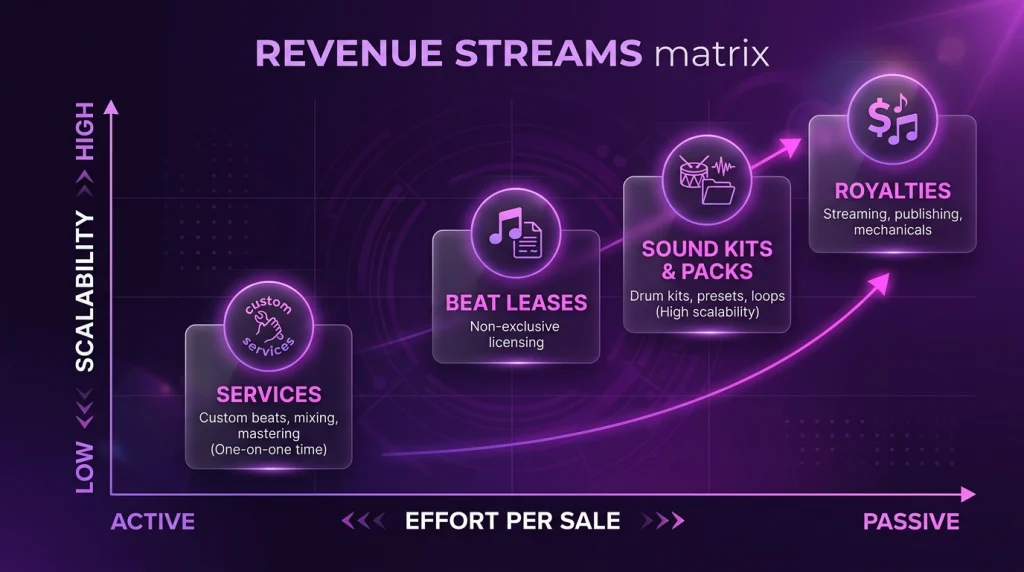
Active vs Passive Income
Some income is active: you get paid only when you work, such as mixing or custom beats. Some is closer to passive: you build once and earn repeatedly, such as sound kits and royalties. A healthy mix uses active income for cash flow now and passive income for long-term growth.
Streams That Feed Each Other
The best producer income streams are connected. Your YouTube content sells beats. Your beat buyers become kit buyers. Your placements earn royalties. Each stream makes the others stronger.
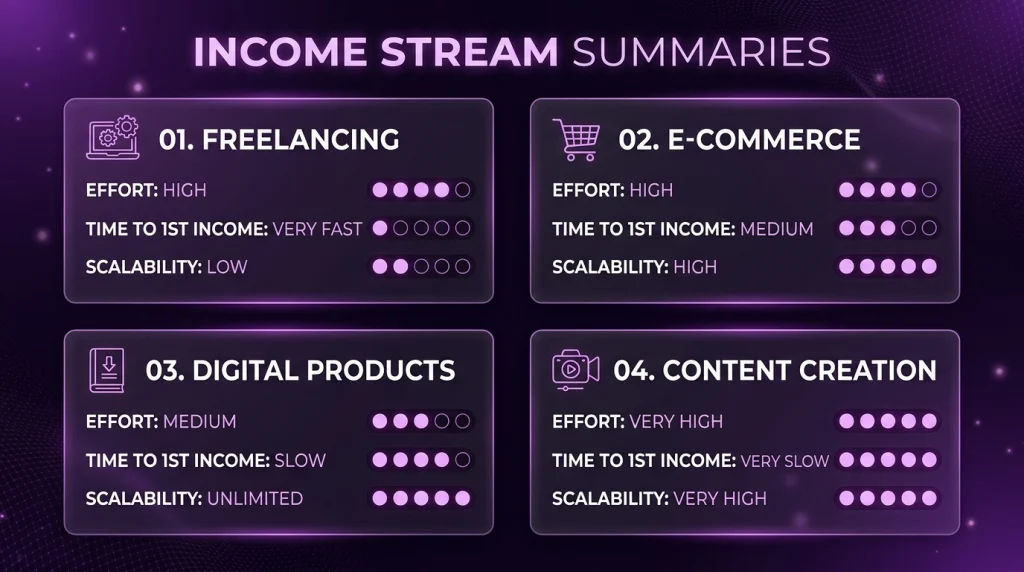
The 4 Producer Income Streams at a Glance
| Stream | Type | Effort per Sale | Time to First Income | Scalability |
|---|---|---|---|---|
| 1. Beat sales and leasing | Mostly passive after upload | Low to medium | Weeks to months | Medium |
| 2. Sound kits and sample packs | Passive | Very low after launch | Weeks | High |
| 3. Royalties and publishing | Passive, delayed | Low | Months to years | High with hits |
| 4. Services and content | Active and passive | High for services, low for content | Days for services | Medium |
Stream 1: Beat Sales and Leasing
Beat sales are the foundation for most producers, and the stream that brings in your first customers.
Leases vs Exclusives
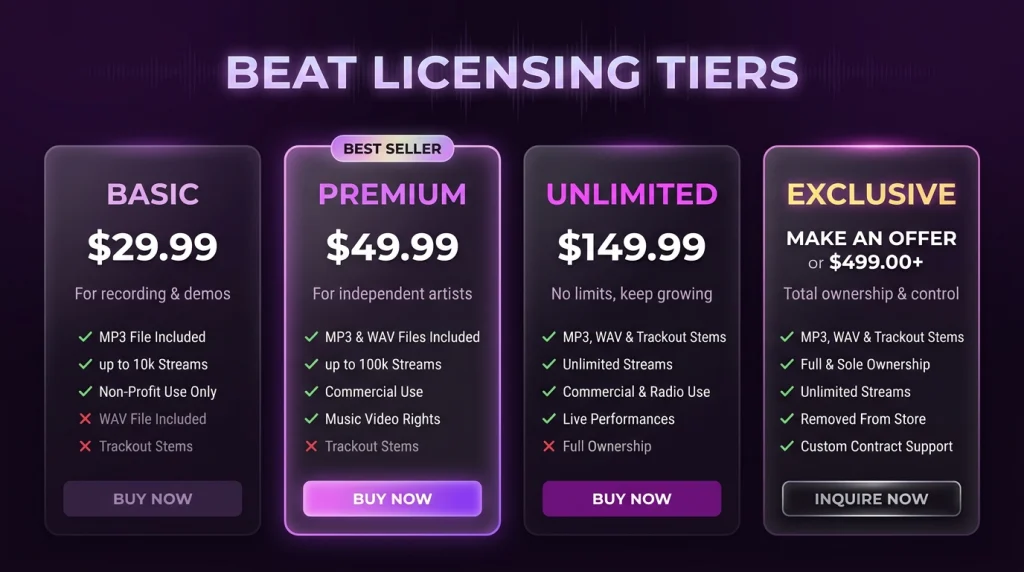
A lease is a non-exclusive license: many artists can use the same beat under set limits. An exclusive transfers broader rights to one buyer, usually for a higher price. Leases build volume, while exclusives deliver bigger single payments.
Price With Clear Tiers
Offer simple tiers, such as a basic MP3 lease, a premium WAV lease, an unlimited lease with stems and an exclusive. Clear tiers make it easy for artists to upgrade. Learn how to set prices that convert in our guide to the psychology of beat pricing.
Where to Sell
Sell from your own website for the best margins and full control over your customer list, and use marketplaces like BeatStars for extra reach. For a complete sales strategy, read our proven strategies to sell type beats online.
Keep a Release Schedule
Consistency matters more than volume. Upload new beats on a fixed schedule, such as two or three a week, and keep each upload properly tagged with BPM, key and mood. A steady schedule keeps your store fresh, gives returning artists something new to hear and trains search engines and marketplaces to show your catalog more often.
Stream 2: Sound Kits and Sample Packs
Sound kits turn your sounds into a product other producers buy again and again. It is one of the most scalable producer income streams, because one kit can sell to hundreds of buyers without extra work.
What to Sell First
Start with a focused drum kit of 50 to 100 original, polished sounds in a clear niche, such as Afrobeat percussion or amapiano log drums. Add loop kits, MIDI kits and preset banks as your audience grows.
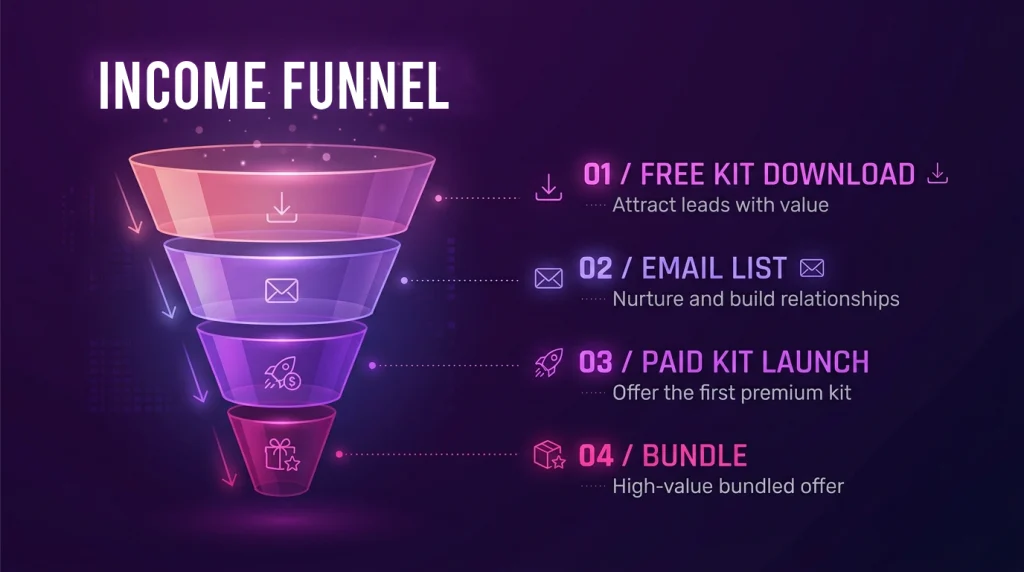
Use a Free Kit as a Funnel
Give away a small free kit in exchange for an email address. That list becomes your launch audience for paid kits, new beats and services.
Distribute Through Platforms
Beyond your own store, sample platforms and labels can put your kits in front of large audiences. See how we distribute our packs on LANDR Samples, Tracklib and ADSR for a real example.
Price Your Kits
Many producers price a first drum kit at an accessible level, then charge more for bigger kits that include loops, MIDI and stems. Bundles of older kits raise your average order value and keep the catalog selling. Kits are among the most dependable producer income streams once you have a few releases, because each new kit also promotes the older ones.
Stream 3: Royalties and Publishing
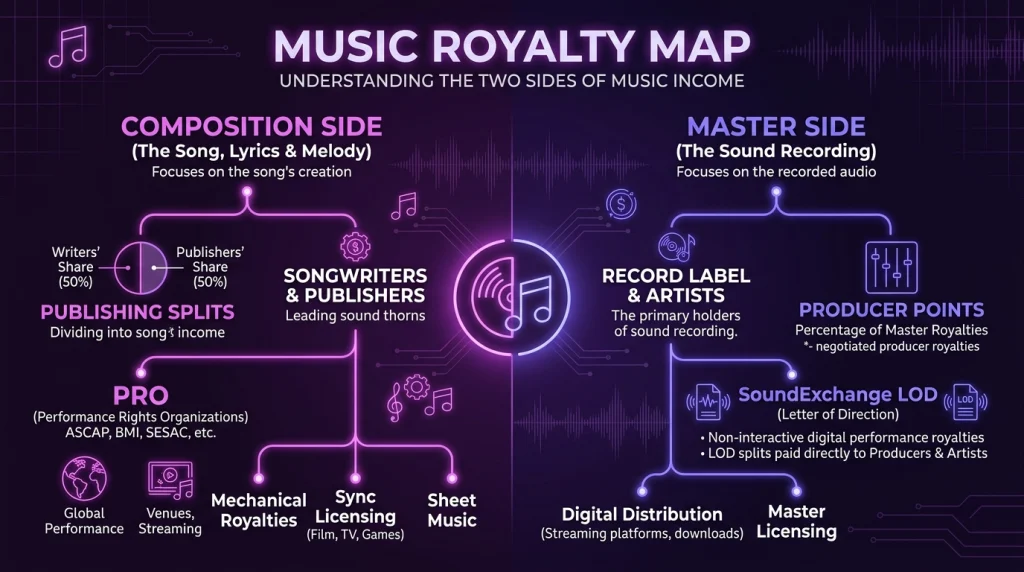
Royalties are the slowest of the four producer income streams to build, but they can pay for years. They come from two separate copyrights. The US Copyright Office explains that a musical composition and a sound recording are distinct works, and producers can earn from both. For the basics of rights, read our guide to music licensing explained.
Split Sheets on Every Song
When an artist records on your beat, agree on writing splits before release and put them on a signed split sheet. Your share of the composition is the basis of your publishing income.
Register With a PRO
A performance rights organisation, such as ASCAP or BMI in the United States or PRS in the United Kingdom, collects royalties when music is performed publicly and pays them to writers and publishers. Register as a writer and register every song you co-write.
Producer Points and SoundExchange
On the master side, producers often negotiate “points”, a percentage of master royalties. In the United States, artists can also share their digital performance royalties with producers through a SoundExchange Letter of Direction, where the featured artist assigns a percentage of their share to the producer. Ask for this in writing on every serious placement.
Keep Records of Every Placement
Royalties can arrive months or years after a release, so documentation is everything. For every placement, save the split sheet, the agreement, the release date, the ISRC and any producer royalty terms in one folder. Good records make it far easier to claim missing money, and they turn this slow stream into one of your most reliable producer income streams over time.
Sync as a Bonus
Sync licensing, placing music in ads, games and TV, sits on top of this stream. It pays upfront fees plus performance royalties when music airs. Once your catalog is clean and organized, pitching for sync is a natural next step.
Stream 4: Services and Content
Services bring fast cash, and content brings long-term attention. Together they make the most flexible of the producer income streams.
Mixing and Custom Production
Offer mixing, custom beats, vocal tuning or full song production to artists who already like your sound, starting with the artists who have already leased your beats. Services pay quickly, and every happy client is a source of referrals and future placements.
Package Services Clearly
Artists buy faster when they know exactly what they get. Create simple packages, such as “Mix only”, “Mix and master” and “Custom beat with two revisions”, each with a fixed price, delivery time and number of revisions. Clear packages reduce back-and-forth, protect your time and make it easy for satisfied clients to rebook.
Lessons and Coaching
If you can explain your process, you can teach it. One-on-one sessions, group workshops or recorded courses turn your experience into income without a new beat.
YouTube and Content Revenue
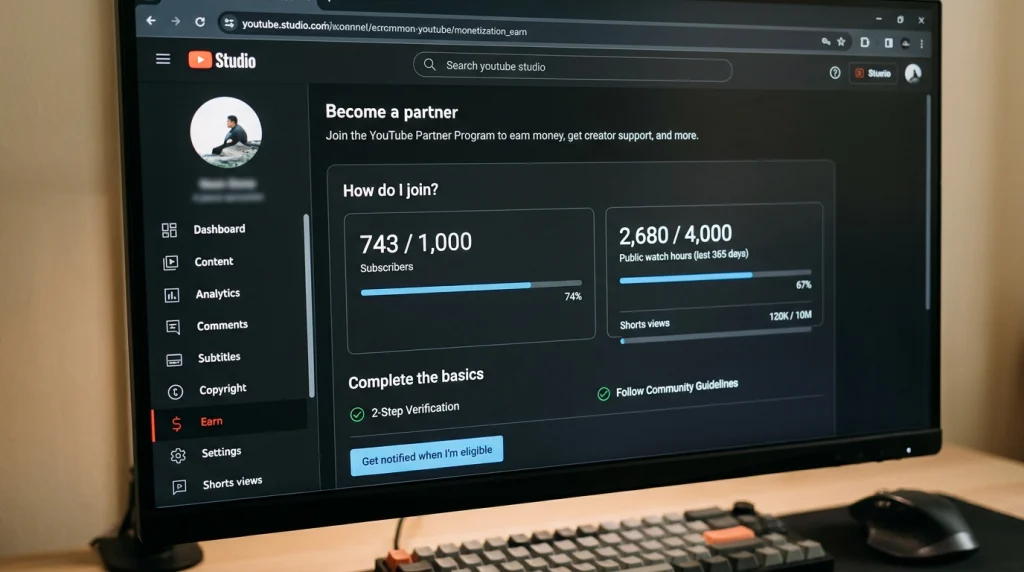
Beat videos, tutorials and breakdowns build an audience and can earn ad revenue. According to the YouTube Partner Program requirements, ad revenue sharing requires 1,000 subscribers plus either 4,000 qualified watch hours in the last 12 months or 10 million qualified Shorts views in the last 90 days. To grow faster, learn how to go viral on YouTube as a type beat producer.
How Your Producer Income Streams Work Together
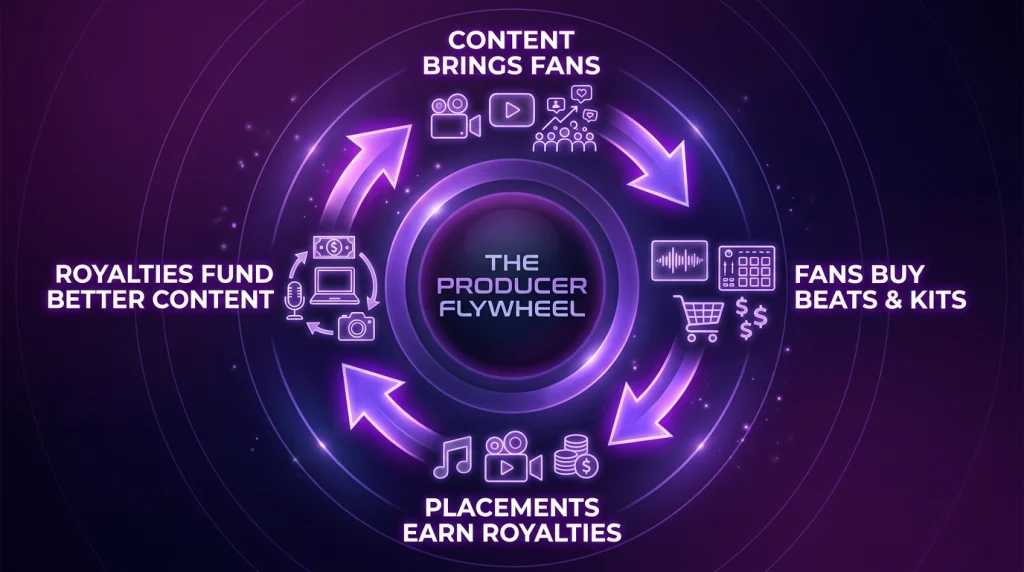
The real secret is not any single stream, it is the system. Here is how the four connect:
- Content attracts artists and producers to your channel and socials.
- Artists buy beats and hire you for services.
- Producers download your free kit and later buy paid kits.
- Placements from beats and services earn royalties.
- Royalties and sales fund better gear, more content and bigger releases.
Each loop around this flywheel grows every stream at once. That is why producers with four connected producer income streams often grow faster than those chasing one.
Your 90-Day Plan to Launch All Four
You do not need to launch everything at once. Use this phased plan.
| Weeks | Focus | Goal |
|---|---|---|
| 1 to 2 | Beat store | 10 to 20 beats live with clear license tiers |
| 3 to 4 | Royalties setup | PRO registration, split sheet template, registration of past songs |
| 5 to 7 | Sound kit | First kit built, packaged and launched with a free mini kit |
| 8 to 9 | Services | Services page live with prices and a booking form |
| 10 to 13 | Content | Two or three videos a week, linking to beats, kits and services |
At the end of 90 days, all four producer income streams are live. From there, the job is to improve and grow each one.
After Day 90
Once everything is live, review your numbers monthly. Double down on the stream that grows fastest, fix the weakest one, and add one improvement per month, such as a new kit, a better services page or a content series. Small, steady upgrades compound, and within a year your producer income streams can look very different from where they started.
Manage Your Money Like a Business
More streams mean more money to track. Treat your music like a business from day one.
Track Every Stream
Use a simple spreadsheet with one row per sale or payment and a column for each stream. Review it monthly to see which streams grow fastest and where to focus.
Separate and Reinvest
Open a separate account for music income. Reinvest a fixed share into gear, sounds, ads and education, and pay yourself the rest.
Plan for Taxes
Income from beats, kits, royalties and services is usually taxable. Keep receipts and set money aside, and speak with a qualified accountant about the rules where you live.
Build an Emergency Buffer
Music income is uneven. A placement might pay a large amount one quarter and nothing the next. Aim to keep several months of essential costs in savings before you rely on music alone. A buffer lets you turn down bad deals, wait for royalties to arrive and keep making music through slow months without panic.
5 Mistakes to Avoid
Avoid these and your producer income streams will grow steadily.
- Launching everything at once. Phase your launches so each stream gets proper attention.
- No split sheets. Unclear splits can cost you years of royalties.
- Skipping PRO registration. Unregistered songs mean uncollected money.
- Ignoring email. Your list is the one audience no algorithm can take away.
- Not tracking income. You cannot grow what you do not measure.
Conclusion: Build Your Producer Income Streams Today
Building producer income streams is how you turn talent into a stable career. Each stream protects you from the weaknesses of the others, and together they form a flywheel that keeps growing.
Here are the key takeaways:
- Beat sales bring your first customers and steady volume.
- Sound kits scale to many buyers with no extra work per sale.
- Royalties reward placements for years, so use split sheets, a PRO and written producer terms.
- Services and content bring fast cash and long-term attention.
- Follow the 90-day plan to launch all four, then track and improve.
Start with the stream closest to where you are today, then add the next one. Give each new stream at least a few months before you judge it, because most income in music builds slowly before it builds quickly. Keep learning, keep releasing and keep your records tidy. Your future self will thank you for building four producer income streams instead of one.
FAQ: Producer Income Streams
What are the best producer income streams?
The four strongest are beat sales and leasing, sound kits and sample packs, royalties and publishing, and services and content such as mixing, lessons and YouTube.
How can a producer Income Streams works as passive Income?
Sound kits, beat leases and royalties are the closest to passive income. You create them once and they can keep earning without extra work per sale.
How do producers get royalties?
Through publishing splits registered with a PRO, producer points on master royalties and, in the United States, a SoundExchange Letter of Direction from the featured artist.
How many subscribers do I need to make money on YouTube?
Ad revenue sharing requires 1,000 subscribers plus either 4,000 qualified watch hours in 12 months or 10 million qualified Shorts views in 90 days.
Which of the producer income streams should I start with?
Start with beat sales if you already make beats regularly, or services if you need cash quickly. Add sound kits and royalties next.
Do I need a split sheet for every song?
Yes. A signed split sheet records each writer’s share of the composition and protects your publishing income.
Are sound kits worth it for producers?
Yes. A well-made kit can sell to many buyers with no extra work after launch and introduces your sound to other producers.