
You just spent six hours crafting the perfect Drake type beat. The 808s hit hard, the melody sticks in your head for days, and the mix sounds professional. You upload it to YouTube with excitement, hit publish, and then… nothing. Three days later, you have 47 views. Two of them are from your mom.
This scenario plays out thousands of times daily across the producer community. The brutal truth is that making incredible beats is no longer enough. The market is saturated with talented producers uploading fire beats daily, all competing for the same listener attention. The difference between selling beats consistently and watching your channel stagnate comes down to one skill: type beat marketing.
Effective type beat marketing transforms your YouTube channel from a digital graveyard of unused beats into a sales-generating machine. This complete framework reveals seven proven secrets that successful producers use to dominate YouTube search, maximize visibility, and convert views into consistent beat sales.
Understanding the Type Beat Marketing Landscape
Before diving into tactics, you need to understand why type beat marketing has become essential. The way artists discover beats has fundamentally shifted over the past five years.
Why Traditional Beat Selling Methods Fail
Gone are the days when posting beats on SoundCloud or BeatStars alone would generate consistent sales. Artists now turn to YouTube as their primary discovery platform. According to industry data, over 70% of artists find beats through YouTube search before purchasing. If you are not visible on YouTube, you are invisible to the majority of potential buyers.
The traditional approach of simply uploading with basic titles like “Drake Type Beat 2025” no longer works. YouTube’s algorithm has evolved to prioritize content that demonstrates clear value, engagement potential, and viewer satisfaction.
Type Beat Marketing: YouTube Algorithm
YouTube’s algorithm operates on two primary objectives: maximizing viewer satisfaction and increasing watch time. For type beat marketing, this means your content must convince the algorithm that your videos deserve prominent placement in search results and recommendations.
The algorithm evaluates several factors before ranking your video:
- Click-Through Rate (CTR): The percentage of viewers who click after seeing your thumbnail
- Average View Duration: How long people actually watch your beat
- Engagement Signals: Likes, comments, shares, and saves to playlists
- Relevance Signals: How well your title, tags, and description match search queries
What Separates Successful Type Beat Channels from Forgotten Ones
The producers consistently selling beats through YouTube share common characteristics. They treat their channel as a business, understand their target artist audience, and have systematized their type beat marketing approach. Success comes not from occasional viral moments but from consistent execution of proven optimization strategies.
Type Beat Marketing: Type Beat Titles for Maximum Clicks
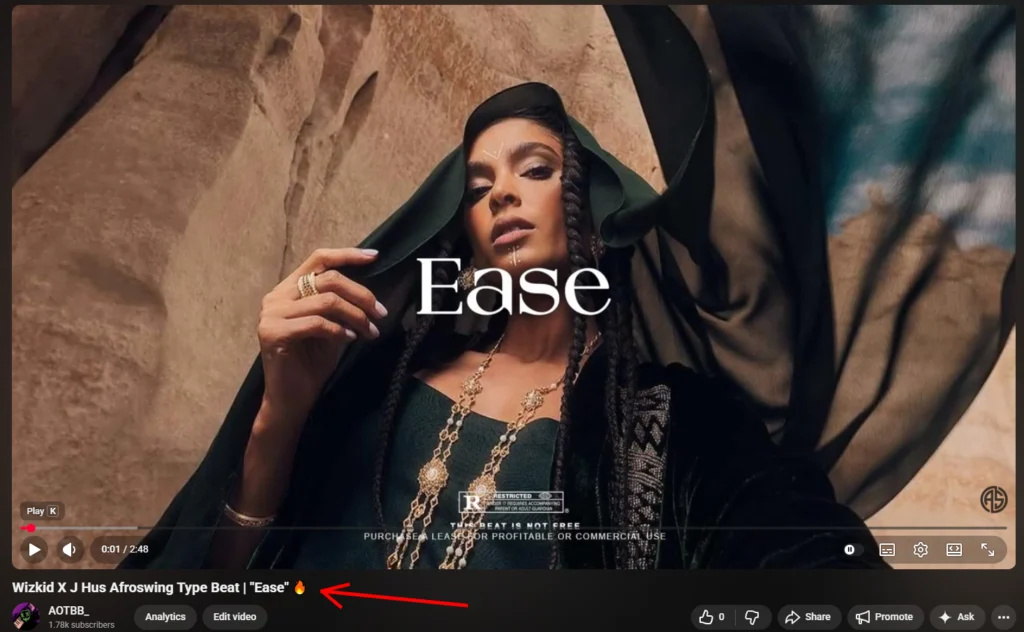
Your title is the first piece of information potential buyers see. It must accomplish two goals simultaneously: attract clicks from search results and accurately represent your beat.
The Proven Title Formula That Converts
Successful type beat titles follow a predictable pattern that balances SEO with psychological appeal. The formula looks like this:
[Artist Name] Type Beat – [Mood/Feeling] [Key Element] | [Unique Differentiator]
For example: “Drake Type Beat – Emotional Piano Melody | Sad Rap Instrumental 2025”
This structure works because it includes the primary search term (artist name type beat), adds descriptive elements that signal quality, and differentiates your beat from thousands of similar uploads.
Artist Name Placement Strategies
The artist name must appear prominently in your title. YouTube’s algorithm strongly associates type beat titles with the referenced artist. Place the artist name at the beginning of your title for maximum SEO impact.
However, you must balance SEO with uniqueness. Adding descriptive elements after the artist name signals to viewers that your beat offers something specific beyond generic imitation.
Avoiding Clickbait While Staying Compelling
Clickbait titles may generate short-term views but destroy long-term channel health. When viewers click expecting something they do not receive, they leave quickly, damaging your average view duration. YouTube interprets low view duration as low-quality content.
Instead, focus on accurately highlighting what makes your beat special. If your beat features unique sound selection, mention it. If the mix has exceptional clarity, state it. Authentic specificity outperforms exaggerated claims.
A/B Testing Your Titles for Performance
Smart type beat marketing involves continuous testing. After uploading a beat, wait 24-48 hours, then try modifying the title if performance lags. YouTube allows title changes without affecting the video URL.
Test different title structures on similar beats to identify what resonates with your audience. Document which formulas generate higher CTR and refine your approach accordingly.
Type Beat Marketing: Tag Optimization
Tags remain a crucial but frequently misunderstood component of type beat marketing. While not the primary ranking factor, properly optimized tags help YouTube understand your content and connect it with relevant searches.
The Science Behind YouTube’s Tag Algorithm
YouTube uses tags to verify the context provided by your title and description. Tags should reinforce your primary keywords and provide additional context about your beat’s characteristics.
The algorithm analyzes tags collectively to determine your video’s topic, style, and target audience. A strategic tag structure signals clear intent to YouTube’s ranking system.
How to Find High-Value, Low-Competition Tags
The most competitive type beat tags include only the artist name and “type beat.” While you must include these, you also need to identify less competitive tags that still attract buyers.
Use AI-powered tag research tools to discover tags with reasonable search volume and manageable competition. Look for tags that combine artist names with specific descriptors like “emotional,” “dark,” “melodic,” or “hard.”
Primary vs. Secondary Tags Strategy
Structure your tags in order of importance. The first five tags carry the most weight. Use these for your core terms:
- [Artist] type beat
- [Artist] type beat 2026
- [Artist] instrumental
- [Specific mood/feeling] type beat
- [Key production element] type beat
Secondary tags can include related artist names, genre descriptors, production technique tags, and long-tail keyword phrases that potential buyers might use.
Tag Tools Every Producer Needs
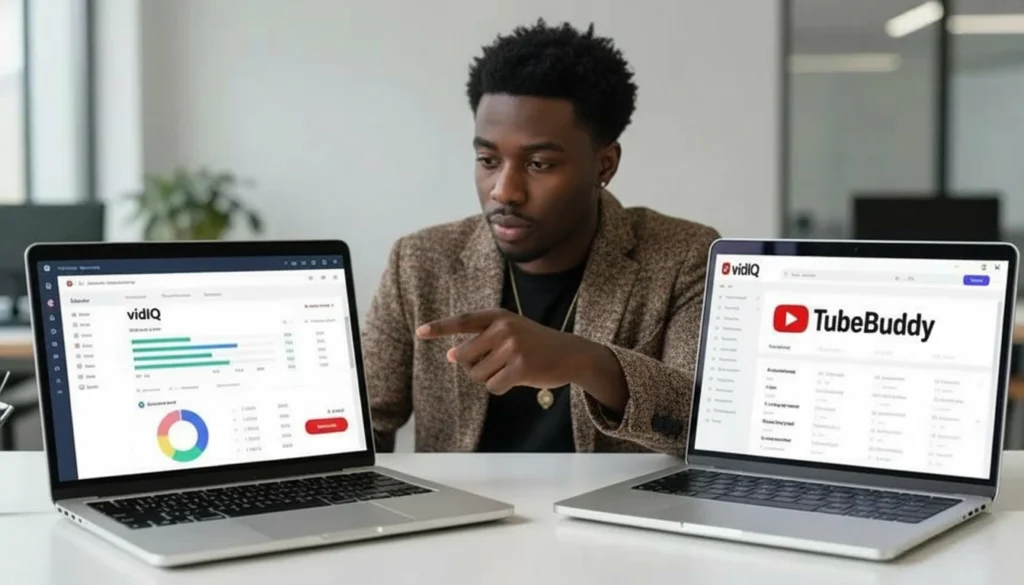
Several tools can streamline your tag research. YouTube’s search autocomplete provides real-time data on what users actually search. TubeBuddy and vidIQ offer tag suggestion features with competition scoring. These industry-leading YouTube optimization research tools help identify opportunities you might otherwise miss.
Type Beat Marketing: Thumbnail Psychology
Your thumbnail works in partnership with your title to generate clicks. While your title provides textual context, your thumbnail creates emotional appeal and visual differentiation.
The 3-Second Rule for Thumbnail Success
YouTube viewers decide whether to click within approximately three seconds of seeing your thumbnail. In that brief window, your thumbnail must communicate professionalism, relevance, and value.
Eye-tracking research on visual attention shows that faces, contrasting colors, and text overlays capture attention most effectively. Apply these principles to your type beat thumbnails.
Color Psychology in Type Beat Thumbnails
Different colors evoke different emotional responses and signal different beat styles:
- Dark colors with red accents signal hard, aggressive beats
- Blue tones suggest melodic, emotional instrumentals
- Purple conveys creativity and atmospheric qualities
- Yellow or orange attract attention in crowded feeds
Your thumbnail color scheme should align with the mood of your beat while standing out against YouTube’s predominantly white interface.
Text Overlay Formulas That Get Clicks
Text overlays provide additional context that complements your title. Keep text minimal—three to four words maximum. The text should reinforce your beat’s unique value proposition or create curiosity.
Effective text overlay examples:
- “HARD” for aggressive beats
- “EMOTIONAL” for melodic tracks
- “FREE DL” when offering free downloads
- “VIBE” for chill, atmospheric instrumentals
Case Study: Thumbnail A/B Test Results
A producer testing thumbnail variations found that adding a simple text overlay increased CTR by 18%. Another test revealed that thumbnails showing production equipment outperformed generic images by 12%. Test your own variations to discover what resonates with your specific audience.
Type Beat Marketing: Video Description Optimization
Your video description serves multiple functions in type beat marketing. It provides context for YouTube’s algorithm, delivers important information to potential buyers, and creates opportunities for additional engagement.
The First 200 Characters Matter Most
YouTube displays the first 200 characters of your description in search results and above the fold on your video page. This section must contain your primary keywords and clearly communicate what viewers will experience.
Open your description with a compelling hook that includes your target keywords. Follow with a brief description of the beat’s mood, key elements, and what makes it unique.
Structuring Descriptions for SEO and Sales
An optimized description follows a strategic structure:
- Hook (first 100 characters): Primary keywords plus compelling description
- Beat details (next 200 characters): BPM, key, mood, production techniques
- Purchase information: Links to beat store, license types, pricing
- Social links: Connect to other platforms
- Timestamps: Chapter markers for different beat sections
- Relevant tags: Long-tail keywords placed naturally
Call-to-Action Placement That Works
Place your most important call-to-action within the first 400 characters. Do not bury purchase links at the bottom of the description where viewers rarely scroll.
Effective CTAs include:
- “Purchase this beat with no tags: [link]”
- “Download the free MP3: [link]”
- “License this instrumental for commercial use: [link]”
Using Timestamps to Increase Watch Time
Timestamps serve two purposes: they improve user experience and increase watch time by encouraging viewers to explore different sections of your beat.
Structure timestamps to highlight your beat’s arrangement:
- 0:00 – Intro
- 0:16 – Verse
- 0:48 – Chorus
- 1:20 – Verse 2
- 1:52 – Bridge
- 2:24 – Outro
This structure signals to YouTube that your content has clear organization, which positively influences ranking.
Type Beat Marketing: Leveraging Playlists for Algorithm Boost
Playlists represent one of the most underutilized opportunities in type beat marketing. Strategic playlist organization creates additional discovery paths and increases overall channel watch time.
Creating Themed Playlists That Keep Viewers Watching
Organize your beats into themed playlists based on mood, artist style, or production style. Playlist titles should contain keywords your target artists search for.
Examples of effective playlist themes:
- “Emotional Drake Type Beats for Deep Lyrics”
- “Hard Trap Beats for Aggressive Flows”
- “Melodic Type Beats for Singing Rappers”
Playlist Titles and Descriptions for Discovery
Playlist titles and descriptions function similarly to video metadata. Include relevant keywords and provide clear context about what listeners will find.
Your playlist description should explain the theme, suggest who would enjoy these beats, and include a call-to-action encouraging viewers to explore your catalog.
The Autoplay Advantage
When viewers finish watching a video in your playlist, YouTube automatically plays the next video if autoplay is enabled. This feature significantly increases total watch time when viewers discover your playlist through search or recommendations.
Producers who structure playlists strategically often see 30-40% higher overall channel watch time compared to those who do not use playlists.
Type Beat Marketing: Consistency and Upload Schedule Strategy
Algorithm success rewards consistency. YouTube favors channels that demonstrate reliable upload patterns, signaling active management and regular content creation.
Finding Your Optimal Upload Frequency
Consistency matters more than volume. Uploading one quality beat weekly outperforms uploading five beats randomly when you feel motivated.
Consider your production capacity honestly. Can you consistently produce and optimize three beats weekly? If not, commit to one or two. Your audience and the algorithm value reliability.
Batch Production for Sustainable Content
Maintaining consistent uploads requires systematizing your production workflow. Productivity systems for producers can help maintain consistent upload schedules.
Batch your work by dedicating specific days to production, other days to mixing, and dedicated sessions for creating thumbnails, writing descriptions, and uploading. This approach prevents burnout while maintaining consistency.
Leveraging YouTube Shorts for Type Beat Marketing
YouTube Shorts offers additional discovery opportunities for type beat producers. Create 15-30 second snippets highlighting your best beats, using trending audio when relevant, and including clear calls-to-action to view the full beat.
Shorts can drive viewers to your main content while increasing your channel’s overall visibility in YouTube’s ecosystem. Producers using Shorts strategically often see faster channel growth than those relying solely on long-form content.
Type Beat Marketing: Analyzing Your Analytics for Continuous Improvement
Type beat marketing is not a set-and-forget strategy. Continuous analysis and refinement separate successful channels from stagnant ones.
Key Metrics That Actually Matter
Focus on metrics that directly impact your channel’s growth and sales potential:
- Click-Through Rate (CTR): Indicates thumbnail and title effectiveness
- Average View Duration: Reveals whether your beats hold attention
- Impressions: Shows how often YouTube suggests your content
- Traffic Sources: Tells you how viewers discover your beats
- Unique Viewers: Measures your channel’s reach
Understanding Click-Through Rate Benchmarks
A healthy CTR for type beat channels typically ranges from 4% to 10%. Below 4% indicates your thumbnail and title need optimization. Above 10% suggests strong appeal but may indicate your impressions are limited.
If your CTR exceeds 10% but impressions remain low, YouTube has not yet expanded your reach. This scenario suggests your content appeals strongly to a small audience but lacks broader discoverability signals.
Using Audience Retention Data to Improve Beats
Your audience retention graph reveals exactly where viewers stop watching. Analyze this data to improve your beat arrangements.
If viewers drop during your intro, your hook needs improvement. If they leave before the chorus, your buildup may be too long. Use retention data to refine your production approach for better engagement.
Advanced Type Beat Marketing Tactics
Beyond the seven core secrets, advanced strategies can accelerate your growth and diversify your income streams.
Collaborating with Other Producers
Collaborations expose your channel to new audiences. Reach out to producers with similar subscriber counts and complementary styles. Create joint beats, feature each other in videos, or cross-promote content.
Collaboration benefits both parties through audience sharing and increased engagement signals that please YouTube’s algorithm.
Leveraging External Traffic Sources
Do not rely solely on YouTube’s algorithm for discovery. Promote your beats on producer forums, Reddit communities, Discord servers, and social media platforms. External traffic signals to YouTube that your content attracts interest outside the platform, positively influencing rankings.
Email List Building from YouTube Traffic
Your YouTube channel should feed an email list you control. Include clear calls-to-action encouraging viewers to join your mailing list for free beats, exclusive discounts, or production tips.
An email list provides direct access to your audience independent of algorithm changes. Producers with email lists maintain stable income even when YouTube traffic fluctuates.
Common Type Beat Marketing Mistakes to Avoid
Even experienced producers fall into patterns that undermine their type beat marketing efforts. Avoid these common pitfalls.
Over-Optimizing and Keyword Stuffing
Keyword stuffing makes your titles, descriptions, and tags look spammy. YouTube detects unnatural keyword usage and may suppress your content. Use keywords naturally and prioritize readability.
Neglecting Audio Quality
All the optimization in the world cannot compensate for poor audio quality. Your beat’s mix must compete with professional productions. Invest time in mixing skills to ensure your beats sound polished and professional.
Inconsistent Branding Across Videos
Your channel branding should create recognition. Consistent thumbnail styles, intro sequences, and visual elements help viewers immediately identify your content. Strong branding builds trust and encourages returning viewers.
Type Beat Marketing: Conclusion
Type beat marketing represents the difference between producing beats for yourself and building a sustainable business selling beats to artists. The seven secrets outlined in this guide provide a complete framework for YouTube success.
Start by implementing one secret at a time. Master your title strategy this week. Next week, focus on tag optimization. Gradually build your skills until optimized uploads become second nature.
The producers who dominate type beat searches did not achieve success through luck. They systematically applied proven marketing principles to their craft. Your beats deserve to be heard. Your talent deserves to generate income. Begin optimizing today and watch your channel transform.
Ready to take your type beat marketing to the next level? Explore our complete building a sustainable production career guide for long-term strategies beyond YouTube optimization.
Type Beat Marketing: FAQ
What is type beat marketing?
Type beat marketing refers to the strategies and techniques used to promote instrumental beats on YouTube to attract artists who want to purchase or lease beats for their own music projects. It encompasses SEO optimization, thumbnail design, metadata strategy, and audience engagement tactics specifically tailored to the type beat niche.
How many tags should I use on my type beat videos?
YouTube allows up to 500 characters for tags. Focus on quality over quantity, using 15-25 well-researched tags that accurately describe your beat. Include primary tags like artist name type beat, mood descriptors, and production elements. Avoid stuffing irrelevant tags as this can negatively impact ranking.
Do tags still matter on YouTube in 2025?
Yes, tags remain relevant as a contextual signal for YouTube’s algorithm. While not the primary ranking factor, properly optimized tags help YouTube understand your content’s context and connect it with relevant searches. Tags work in conjunction with titles, descriptions, and viewer engagement to determine rankings.
How long should my type beat titles be?
Aim for 50-70 characters for type beat titles. This length provides enough space to include the artist name, mood descriptor, and unique differentiator without being truncated in search results. Ensure your primary keywords appear at the beginning of the title for maximum SEO impact.
What thumbnail size works best for YouTube?
Upload thumbnails at 1280×720 pixels with a 16:9 aspect ratio. This resolution ensures clarity across all devices and display sizes. Keep important visual elements and text within the center portion of the image to avoid cropping on mobile devices and different screen sizes.
How often should I upload type beats?
Consistency matters more than frequency. Upload at least one beat weekly to maintain algorithm favorability and audience engagement. Producers able to maintain higher quality output may upload 3-5 beats weekly, but prioritize consistency over volume to avoid burnout and maintain production quality.
Can I use the same tags for every beat video?
While you can reuse some core tags like your artist name and general genre tags, each beat deserves unique tags that reflect its specific mood, key, tempo, and production elements. Customizing tags for each beat helps YouTube properly categorize your content and connect it with relevant searches.
How do I know if my type beat marketing is working?
Monitor your channel analytics focusing on CTR, average view duration, impressions growth, and sales conversions. A consistently improving CTR above 4%, increasing impressions, and growing average view duration indicate effective type beat marketing. Track sales trends alongside view metrics for complete performance assessment.