
Amapiano subgenres are confusing on purpose. The scene moves fast, the names come from DJs and dancefloors instead of textbooks, and the same track can be called Sgija by one fan and tech piano by another.
That is a real problem for producers. If you make a soft, jazzy beat and tag it “Bacardi”, the right listeners never find it. Worse, if you do not understand what makes each style different, every beat you make lands somewhere in a vague middle that no DJ wants to play.
This guide clears it up. You will learn what Private School Piano, Sgija, Bacardi and tech piano actually are, where they came from, how they compare side by side, and exactly how to produce each one. Ready to pick your lane?
What Are Amapiano Subgenres?
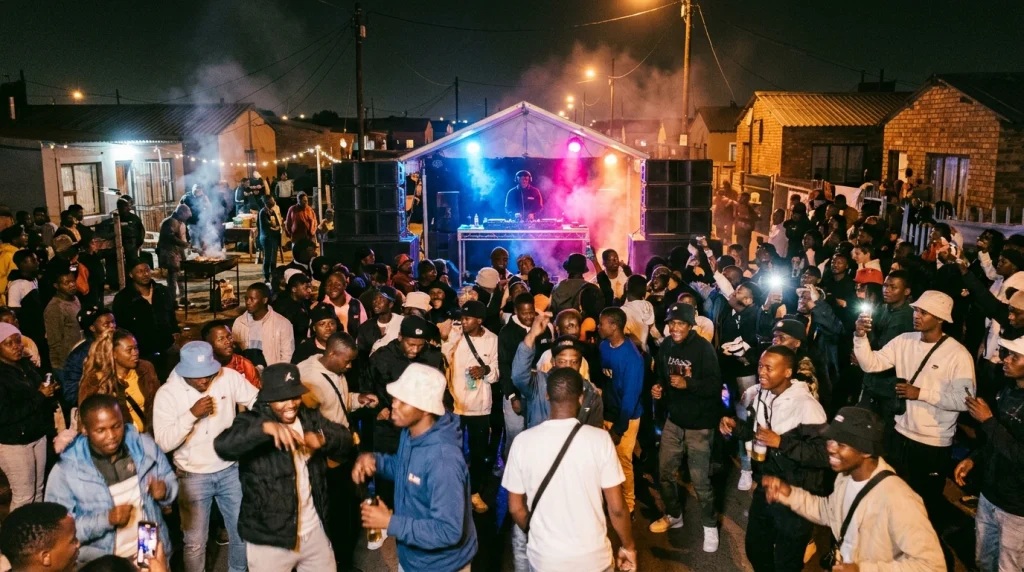
Amapiano subgenres are the distinct lanes that grew inside amapiano as producers pushed the sound in different directions. Some went softer and more musical. Others went harder and more percussive. A few reached back to older Pretoria styles.
A Quick History of Amapiano
According to amapiano’s documented history, the genre emerged in South Africa’s Gauteng townships in the mid-2010s. Its exact birthplace is disputed, with claims for both Johannesburg and Pretoria townships, and there is no single founder. The name comes from a Zulu word loosely meaning “pianos”.
If you want the full backstory, read our deep dive on why the amapiano sound is so addictive.
Why the Sound Split Into Lanes
As amapiano grew, it served very different rooms. Lounges and Sunday sessions wanted warm, musical records. Street parties and clubs wanted relentless drums. Producers in different cities also brought their own local traditions. These pressures created the amapiano subgenres we hear today.
The Shared DNA
Every style still shares the same core elements:
- The log drum: a wide, percussive, pitched bass sound that is amapiano’s signature.
- Shakers and percussion: a steady, swung bed that keeps bodies moving.
- Keys and pads: from deep jazz chords to a single stab.
- Long, patient arrangements: built for DJs to mix and for dancers to stay locked in.
What changes between amapiano subgenres is the balance between these elements.
Amapiano Subgenres at a Glance
Here is the quick comparison before we go deep on each style.
Side-by-Side Comparison
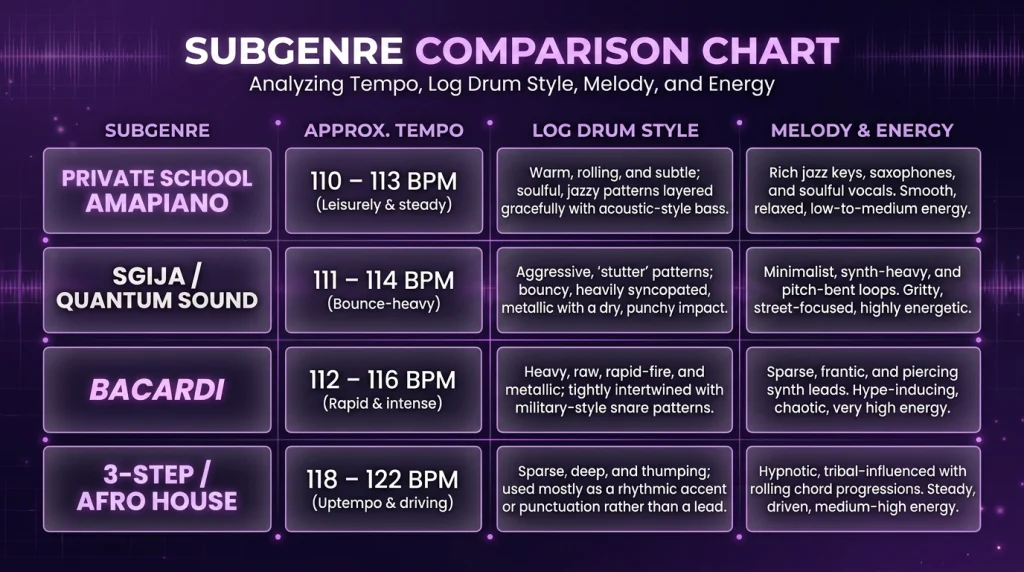
| Feature | Private School | Sgija | Bacardi (New Age) | Tech Piano |
|---|---|---|---|---|
| Energy | Smooth, mellow | Hard, driving | Bouncy, raw | Tight, electronic |
| Log drum | Soft, supportive | Loud, front and center | Punchy, rhythmic | Tight, techy |
| Melody | Rich jazz chords | Minimal | Simple stabs and synths | Stabs and snaps |
| Live instruments | Guitar, sax, trumpet, violin | Rare | Rare | Rare |
| Best setting | Lounges, chill sessions | Clubs, street parties | Pretoria street parties | Clubs, DJ sets |
| Approximate tempo | About 108 to 113 BPM | About 112 to 118 BPM | About 112 to 120 BPM | About 112 to 118 BPM |
A Note on Tempos and Labels
The tempo ranges above are typical, not rules. Sources disagree, and plenty of hits sit outside them. The labels are also fluid: artists, DJs and fans often use them differently. Treat the table as a starting map, then trust your ears and the records you love.
How to Hear the Difference
Play one Kelvin Momo record, then a hard Pretoria street record, back to back. Listen to three things only: how loud the log drum is, how many chords you hear, and how dry the percussion sounds. Those three clues separate the amapiano subgenres faster than any label. After a week of active listening, you will recognize each lane within the first eight bars.
Private School Piano: The Soulful Side
Private School Piano, also called soulful amapiano, is the refined, musical end of the spectrum. Think dinner party, not mosh pit.
The Sound
The style uses shakers, mellow log drums and progressive chord sequences, often with live guitar, saxophone, violin and trumpet. Drums are softer and leave room for harmony and melody to lead.
Key Artists
Kelvin Momo is widely credited as the main pioneer of Private School Piano. Studying his catalogue is the fastest way to understand the style’s chords, space and patience.
How to Produce It
- Start slower, around 110 BPM.
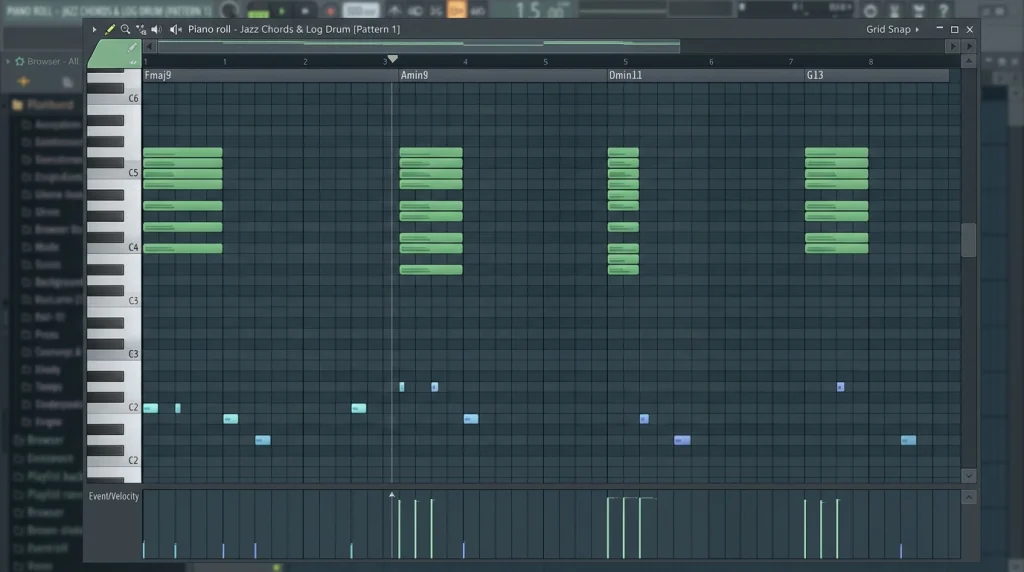
- Write extended chords: major 7ths, minor 9ths and 11ths, with smooth voice leading.
- Keep the log drum gentle. Lower its level, round its attack and play fewer notes.
- Add a live instrument. Even a short sax or guitar phrase lifts the track instantly.
- Leave space. Let pads and keys breathe, and avoid stacking percussion.
Sgija: The Hard-Hitting Dancefloor Strain
Sgija, also written S’gija, sits at the opposite end. It is harder, more percussive and built for maximum dancefloor energy.
The Sound
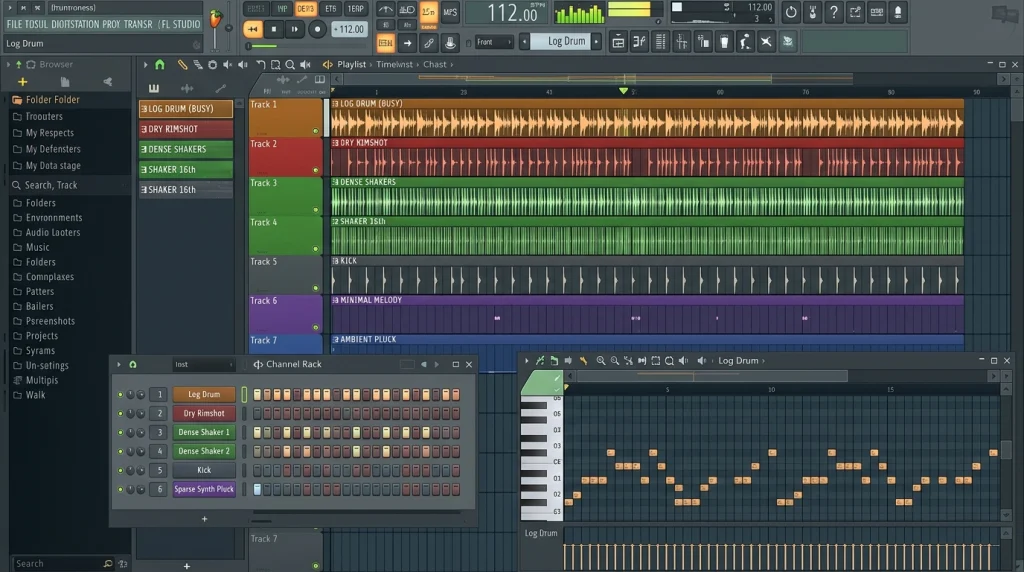
Sgija strips melodic elements back and pushes the log drum to the front. Expect busy, aggressive log drum patterns, dry rimshots, clattering shakers and very little harmony. The groove is the whole point.
Key Artists
Felo Le Tee is often credited with helping pioneer Sgija after moving to Pretoria. The Pretoria duo Mellow and Sleazy, who collaborated with him on the 2023 EP The III Wise Men, are central to the harder, Bacardi-flavored side of the sound. Get a feel for their approach in Mixmag’s session with Mellow and Sleazy.
How to Produce It
- Push the tempo to around 113 to 116 BPM.
- Make the log drum the lead. Write a busy pattern with pitch slides and accents.
- Use dry, tight percussion: rimshots, shakers and short claps with little reverb.
- Cut the chords. One stab or a single pad is enough.
- Use vocal chants or short phrases instead of long melodies.
Bacardi: The Pretoria Roots Behind the Sound
Here is the most misunderstood name on the list. Bacardi is often treated as an amapiano subgenre, but its roots are older than amapiano itself.
Bacardi House, the Original
Bacardi house is one of the amapiano subgenres, it is a Pretoria style that blends kwaito and house with heavy percussion and pop-synth melodies. It grew at township outdoor parties in the 2000s. DJ Spoko, from Atteridgeville, is credited with pioneering the sound and naming it. He also co-produced DJ Mujava’s “Township Funk”, which carried Bacardi house to international audiences around 2008.
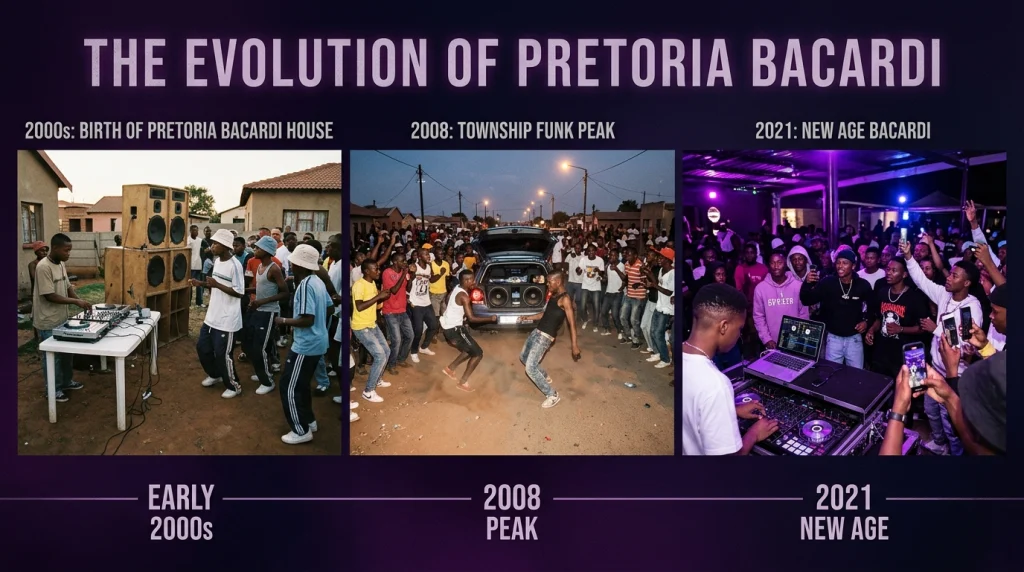
New Age Bacardi
Around mid-2021, Pretoria producers began fusing Bacardi house with amapiano. Mellow and Sleazy’s “Trust Fund”, featuring Kabza De Small, Mpura, Focalistic and DJ Maphorisa, helped spark the wave. You can read more in OkayAfrica’s report on Bacardi-tinged amapiano.
So when people say “Bacardi” today, they usually mean this fusion: amapiano’s log drum combined with Bacardi’s raw, bouncy, percussive energy. Among amapiano subgenres, it is the one most rooted in a specific city.
How to Produce It
- Work around 112 to 118 BPM.
- Lead with punchy, repetitive percussion and a bouncy groove.
- Use simple synth stabs or pop-style leads instead of jazz chords.
- Keep the log drum rhythmic and locked tightly to the kick.
- Keep it raw. Bacardi energy comes from grit, not polish.
Tech Piano: Where Amapiano Meets Techno
Tech piano is the most informal label of the four amapiano subgenres. It describes amapiano with a colder, more electronic, techno-influenced edge.
Where the Name Comes From
In Rolling Stone’s feature on the rise of amapiano, DJ Maphorisa contrasts the jazzy, instrumental side of the genre with a style he calls tech piano. He describes it as being like techno, with claps and snaps.
Is Tech Piano Just Sgija?
Sometimes. Some listening guides use tech piano and Sgija almost interchangeably, while others treat tech piano as a broader label for any electronic, percussion-driven amapiano. The safest reading: Sgija is a specific street sound, and tech piano is a wider description of amapiano that borrows from techno and tech house.
Blending styles like this is a skill in itself. Our guide to genre-bending production shows how to fuse genres without losing either identity.
How to Produce It
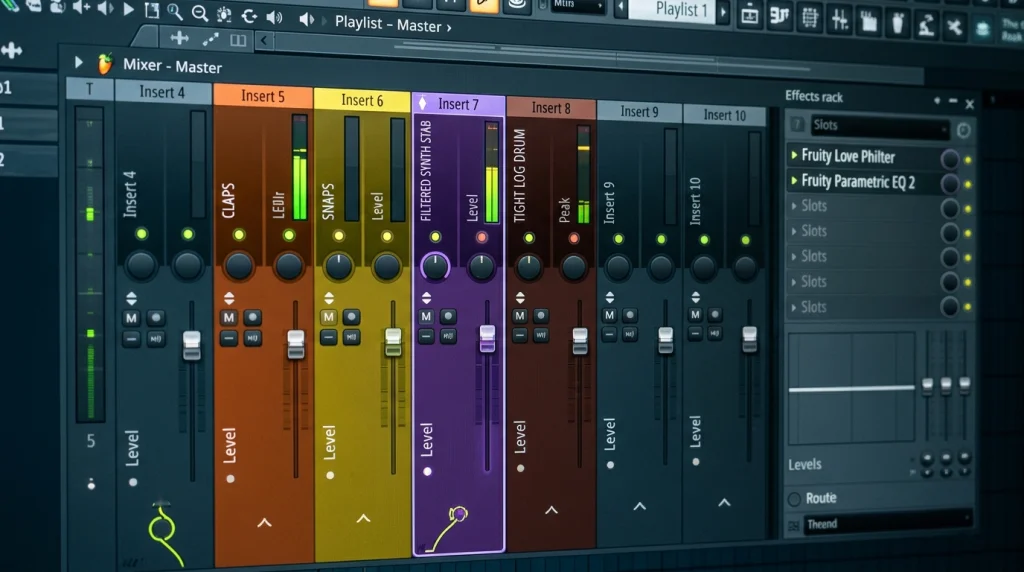
- Use tight claps and finger snaps as signature elements.
- Add filtered synth stabs and automate the filter for movement.
- Keep the log drum short and controlled.
- Borrow techno tricks: hypnotic loops, gradual filter sweeps and percussive builds.
- Keep melodies minimal so the groove stays hypnotic.
How to Choose Between Amapiano Subgenres
Now that you know the amapiano subgenres, which one should your next beat be? Ask three questions.
Choose by Mood
Warm, emotional and late-night? Go Private School. Aggressive and sweaty? Go Sgija or Bacardi. Hypnotic and cool? Go tech piano.
Choose by Audience
Lounge playlists and chill sessions favor Private School. Club DJs and street parties lean toward Sgija, Bacardi and tech piano. Make for the room you want to be played in.
Choose by Vocalist
Singers with rich, melodic voices shine over Private School chords. Chant-style vocalists and hype MCs fit the harder amapiano subgenres, where the drums leave room for call-and-response.
Choose by Your Skills
If you are stronger at drums and sound design, start with Sgija or tech piano. If you love chords and melody, Private School Piano will reward that talent. Play to your strengths first, then use the other lanes to grow.
Production Techniques Every Style Shares
Whichever lane you choose, these fundamentals carry across all amapiano subgenres. If you are brand new, start with our beginner’s guide to making amapiano beats.
Design Your Log Drum
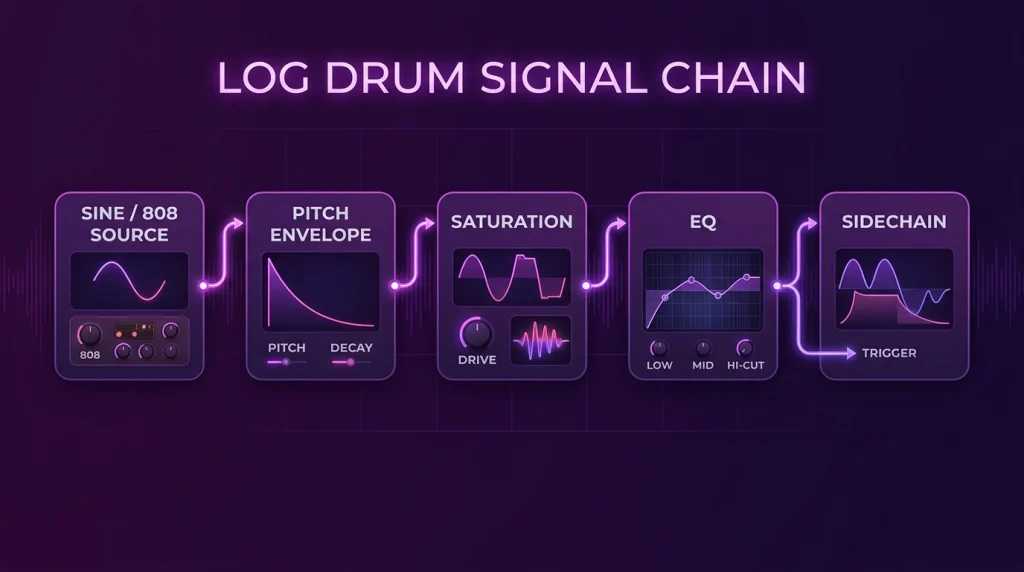
The log drum is the heart of every style. A common approach is a sine or 808-style source with a fast pitch envelope, saturation for harmonics, and EQ to control the boom. Adjust its attack and length to fit the subgenre: soft and round for Private School, hard and short for Sgija. For mix tips, see our guide to mixing amapiano log drums.
Reference Before You Start
Before you open your DAW, pick two reference tracks in your chosen lane and load them into the session. Match their tempo, compare your log drum level against theirs and check how much space they leave for vocals. Producers who reference constantly learn the details of amapiano subgenres far faster than those who rely on memory.
Build the Percussion Bed
Layer shakers, open hats and rimshots with swing. Keep the shaker steady and vary the other parts every eight or sixteen bars to keep the loop alive.
Arrange in Long Builds
Amapiano arrangements are patient. Introduce or remove one element every eight or sixteen bars, and save the full log drum drop for the moment the crowd is ready.
Mix the Low End
The log drum and kick fight for the same space. Use sidechain or careful EQ so the kick punches through, and check your mix on a big system and on phone speakers.
Other Amapiano Subgenres Worth Knowing
The four amapiano subgenres above dominate conversations, but two more lanes are worth knowing.
Quantum Sound
Quantum Sound is built on re-edits and rooted in gqom, especially its taxi kick style. Artists linked to it include RealShaunMusiq, Sizwe Nineteen and Nandipha808.
Bique
Bique takes its name from Mozambique and features a prominently undulating log drum. It shows how amapiano keeps absorbing influences from across southern Africa.
5 Mistakes to Avoid
Avoid these errors when producing amapiano subgenres and your beats will land in the right lane every time.
- Mislabeling your beat. Tagging a soft jazz beat as Bacardi hurts discoverability and trust.
- Mixing every style at once. Fusion works best with one clear foundation.
- Overloading Private School with drums. It needs space for harmony.
- Adding jazz chords to Sgija. Busy harmony fights the log drum.
- Ignoring the culture. Learn the history and credit the Pretoria and Johannesburg scenes that built these sounds.
Conclusion: Master the Amapiano Subgenres One Lane at a Time
Amapiano subgenres are not rigid boxes. They are directions the sound has taken as it moved through lounges, clubs and street parties across South Africa.
Here are the key takeaways:
- Private School Piano is soulful, slower and chord-driven, with gentle log drums and live instruments.
- Sgija is hard, percussive and minimal, with the log drum front and center.
- Bacardi comes from Pretoria’s older Bacardi house scene and returned through the 2021 New Age Bacardi wave.
- Tech piano is a loose label for amapiano with a techno edge: claps, snaps and filtered stabs.
- Every style shares the log drum, swung percussion and long, patient arrangements.
Pick one lane, study its key records and make five beats in it before moving on. Ready to start? Load up our must-have amapiano drum kits and build your first Private School, Sgija, Bacardi or tech piano groove today.
Frequently Asked Questions
What are the main amapiano subgenres?
The most discussed are Private School Piano, Sgija, Bacardi (New Age Bacardi) and tech piano. Quantum Sound and Bique are also recognized lanes.
What is the difference between Private School Piano and Sgija?
Private School Piano is soft and musical, with jazz chords, gentle log drums and live instruments. Sgija is hard and percussive, with minimal melody and the log drum at the front.
Is Bacardi an amapiano subgenre?
Not originally. Bacardi house is an older Pretoria style pioneered by DJ Spoko. Since 2021, a fusion called New Age Bacardi has blended it with amapiano, which is why many people now list it among amapiano subgenres.
What is tech piano?
Tech piano is an informal name for amapiano with a techno influence, marked by claps, snaps and electronic stabs. Some listeners use it as another name for Sgija.
What BPM are the different amapiano subgenres?
Most amapiano sits around 108 to 118 BPM. Private School tends toward the slower end, while Sgija, Bacardi and tech piano usually run faster. Ranges vary by artist.
Who pioneered Private School Piano?
Kelvin Momo is widely credited as the main pioneer of Private School Piano.
Which amapiano style is best for beginners?
Sgija and tech piano have fewer musical parts, which makes them easier to start with. Private School Piano requires stronger chord knowledge but teaches valuable harmony skills.