
Music Theory for Producers
Master Music Theory for Producers with 7 ultimate secrets. Discover essential composition techniques, advanced harmony, and practical tips that guarantee professional-sounding tracks. Start creating now!
Introduction to Music Theory for Producers & Beatmakers
For years, a harmful misconception has plagued the production community: that music theory for producers is a stifling, rigid set of rules designed only for classical composers. Many talented producers, particularly those focused on electronic music, hip-hop, and experimental genres, fear theory will kill their creativity. They rely solely on intuition, which inevitably leads to the producer’s dilemma: great sound design but predictable, repetitive harmonic ideas.
The Hook: The truth is that Music Theory for Producers is the ultimate superpower. It is the language of music, not a restraint. Understanding this language unlocks the ability to express complex emotions, break rules intentionally, and, most importantly, finish tracks that resonate professionally.
The Value Proposition: This Pillar Music Theory for Producers Guide will strip away the academic jargon and provide you with the 7 essential composition techniques that actually matter in the modern digital audio workstation (DAW). These proven secrets will elevate your compositions from amateur to expert, guaranteeing you create music that stands out in 2025.
H2: Practical Music Theory Basics: The Fundamentals for Beatmakers & Producers
Before you can compose, you must understand the basic alphabet of music. This section focuses only on the fundamental concepts that have a direct, practical application in the DAW.
Understanding the Chromatic Scale and Why it Matters
In Music Theory For Producers The chromatic scale is simply all 12 notes available in Western music. Every single melody, chord, and bassline you write is built from these 12 semitones. For producers, the chromatic scale is important because it dictates the structure of the piano roll in your DAW. Understanding it is the foundation for navigating scales and keys effortlessly.
Major vs. Minor Scales: Choosing Emotional Context for your production
Scales are subsets of the chromatic scale (typically 7 notes) that define the emotional feel of your track.
- Major: Often perceived as happy, bright, or triumphant.
- Minor: Often perceived as sad, dark, or melancholic.
The simple choice between a major or minor key defines the emotional landscape of your entire composition. Choose wisely, as this sets the tone for your entire harmonic structure.
Intervals and Ratios: The Architecture of Sound
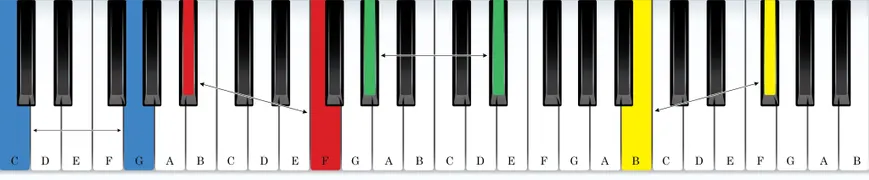
An interval is the distance between two notes. This concept is arguably the most important piece of Practical Music Theory for producers, as it governs the stability and emotional weight of chords. Intervals like the perfect fifth (7 semitones) create stability and power (crucial for basslines), while a tritone (6 semitones) creates tension and drama (great for lead lines).
H2: Essential Composition Techniques with Chords and Harmony
Chords are the backbone of almost all popular music. Moving beyond random stacking of notes requires understanding simple, yet powerful, rules of harmony. These techniques are often used when utilizing the best free VST plugins.
The Rule of Four: Mastering the I-IV-V-vi Progressions in Music Production Theory
In Music Theory For Producers Most hits, across pop, rock, and electronic genres, use variations of the I, IV, V, and vi chords (Tonic, Subdominant, Dominant, and Relative Minor). Mastering these four primary chords—and the predictable emotional movement between them—gives you 80% of the harmonic tools you need.
- I to vi: Strong, satisfying movement.
- V to I: The final, definitive resolution.
Borrowed Chords and Modal Interchange for Harmonic Depth
To add a professional-sounding “twist,” introduce a chord from the parallel minor scale into a major-key progression (or vice versa). This is called a borrowed chord. For example, in C Major, use the flat III (Eb Major) chord. This technique instantly creates an interesting, emotional shift that avoids predictability.
Advanced Harmony for Beatmakers and Producers: Utilizing the Extended Chords (7th, 9th)
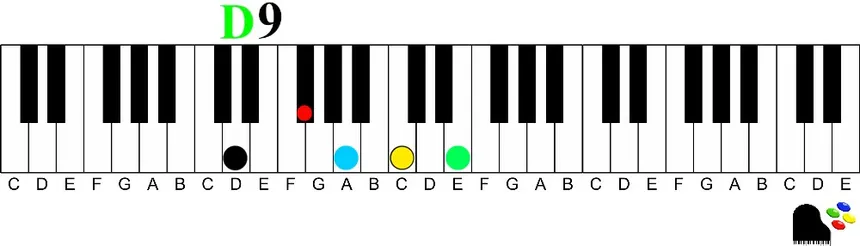
Simple triads (3 notes) are functional, but 7th and 9th chords add a sophisticated, rich texture perfect for R&B, jazz-infused house, and lo-fi genres.
- 7th Chords: Add a jazzy or melancholic flavor.
- 9th Chords: Create a dreamy, lush texture.
These additions are the key to Advanced Music Theory For Producers and Beatmakers because they utilize the tension of non-scale tones for expressive color in many genres.
H2: Melodic Structure and Counterpoint for Standout Leads
In Music Theory For Producers A powerful lead melody must be memorable, but also interact intelligently with the underlying harmony and bassline.
The Call and Response Method in Melody Writing (Simplified for Producers)
This simple Music Theory For Producers device is the foundation of all engaging melodies. The first phrase (the call) poses a musical question, and the second phrase (the response) answers it. The response often uses similar rhythmic patterns but resolves to a different note. This structure keeps the listener engaged and provides a clear framework for development.
Writing a Strong Bassline: The Root Movement Focus
For dance and electronic music, the bassline’s primary role is rhythmic and harmonic support. A strong bassline almost always follows the root (the defining note) of the chord. Deviations are possible for interest but ensure the root is hit on the strong beats (1 and 3 in 4/4) for stability.
Introduction to Species Counterpoint (Simplified for Production)
Counterpoint is the art of combining two or more independent melodic lines. In production, this means ensuring your main melody and your bassline (or a secondary lead) sound good when played simultaneously. The simplified takeaway is this: When one line moves up, the other should move down (contrary motion) to avoid the muddy, unprofessional sound that results from parallel motion.
H2: Rhythm and Groove Theory: Beyond 4/4
While harmony dictates emotion in Music Theory For Producers, rhythm dictates movement. Understanding the theory of groove is essential for creating compelling tracks in many genres, especially when analyzing Chord Progressions in EDM/Hip-Hop/Trap/Lo-Fi. Understanding how to make how to make Trap beats requires rhythm theory.
Syncopation, Off-Grid Grooves, and Polyrhythms
- Syncopation: Placing rhythmic accents on weak beats (the ‘e’ or ‘a’ of a beat, or beats 2 and 4). This creates momentum and forward drive.
- Off-Grid Grooves: Using slight, intentional timing shifts (often via a subtle delay or nudging notes in the piano roll) to give a human, “lazy” feel.
- Polyrhythms: The simultaneous use of two different rhythmic divisions (e.g., a group of 3 notes played over a group of 4 notes). This is the secret to complex, driving rhythms in Afrobeat and certain electronic subgenres.
The Power of Silence: Understanding the Rest and Suspension
A common mistake is filling every space. Rests are as important as notes. Using a rest or a suspension (a note held over from the previous chord that clashes briefly with the new chord) creates a moment of anticipation and allows the rhythm to breathe.
Analyzing Chord Progressions in EDM/Hip-Hop for Rhythmic Pockets
In many modern genres, the “groove” is less about the drum pattern and more about how the main instrument (e.g., the synth chord stab or bass note) interacts with the drums. Study successful tracks to see how the chords are often played in a highly syncopated pattern, creating a call-and-response with the kick and snare.

H2: Music Theory for Producers: Applying Theory to Digital Tools
The DAW is your ultimate music theory lab. You don’t need a textbook; you need to leverage the tools already at your fingertips. This includes using MIDI kits and production workflow to streamline your process.
Utilizing MIDI Keyboard Harmony for Quick Idea Generation
Instead of painstakingly drawing notes, use your MIDI controller to block out basic triads and then transpose them using the ‘up-and-down’ arrows in the piano roll. Focus on moving the inner notes of the chord to create inversions, which instantly adds melodic contour to your chord progression.
Automating Theoretical Concepts In Music Theory for Producers
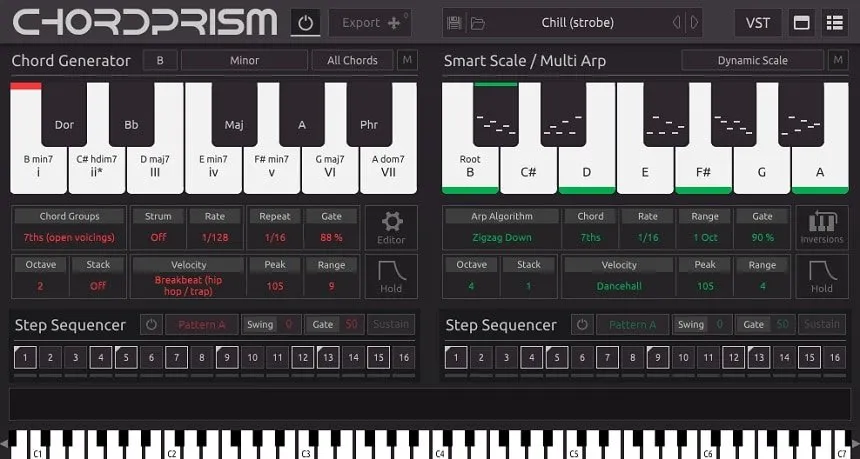
An arpeggiator automatically breaks a chord into its individual notes. This tool allows you to instantly turn a static chord progression into a flowing lead line or rhythmic sequence. Experiment with different arpeggiator patterns (up/down, random, staggered) to create complex rhythmic movement from simple harmonic content.
Chord Track and Key Detection Tools in the DAW
Many modern DAWs include a “Chord Track” feature or advanced MIDI tools that can analyze your existing melody and suggest compatible chords, or conversely, ensure that every note you play stays within your selected key. These features can often automatically harmonize your melodies or even generate full chord progressions that match the mood and scale of your track.
In addition to chord compatibility, some DAWs offer real-time feedback on scale adherence, highlighting notes that fall outside your chosen key and offering corrections. This eliminates guesswork and speeds up your workflow especially useful if you’re not deeply versed in music theory. Leverage these powerful tools to ensure your compositions are always musically sound, dynamic, and professional without needing to memorize every scale or manually calculate each harmonic move.
H2: The Secret of Tension and Release (Dissonance and Consonance)
The emotional impact of music theory for producers relies entirely on the successful management of tension (dissonance) and release (consonance). This dynamic principle separates the compelling track from the monotonous one.
Using Suspensions (Sus2, Sus4) to Create Anticipation
A suspended chord (Sus2 or Sus4) is where the third of the chord is temporarily replaced by the second or fourth note of the scale, creating a subtle dissonance. The listener’s ear anticipates the resolution back to the major or minor third, providing a powerful, yet gentle, sense of movement.
The Tritone and Its Role in Modern Sound Design
The tritone (the interval of three whole steps, e.g., C to F#) is the most dissonant and unstable interval in Western music. Producers utilize this instability to create extreme tension, often in drop buildups, distorted lead lines, or unsettling background pads. Learning to control the tritone is the key to mastering sound design dissonance.
Inversions: Changing Emotional Flavor Without Changing the Chord
An inversion is when a chord’s notes are reordered so that a note other than the root is in the bass. This simple theoretical change can drastically alter the emotion and narrative movement of a progression, creating smoother bass lines and a sense of momentum without introducing entirely new chords. By using inversions, you can subtly shift the harmonic texture of your piece, adding tension or resolution where needed while keeping the fundamental harmony intact.
This technique is especially powerful when crafting transitions, as inversions can bridge gaps between chords that might otherwise feel abrupt. Whether you’re producing a delicate ballad or a complex cinematic score, mastering inversions can elevate your compositions by adding depth and fluidity to your chord progressions.
H2: Analyzing and Deconstructing Complex Tracks
To apply your knowledge, you must learn to listen like a producer, not just a consumer.
Transcribing Melodies and Basslines to Understand Movement
Pick a song you admire and attempt to figure out the lead melody and bassline on your piano roll. This exercise in transcription is the most powerful way to absorb Essential Composition Techniques. You will instantly recognize the use of scale steps, arpeggiated movement, and call-and-response structures.
Isolating the Chordal Movement from the Instrumental Mix
Use an EQ to focus only on the midrange frequencies (where chords usually sit) to isolate the chord progression. By understanding the harmonic foundation of a track, you can steal the feeling of the progression and apply it to your own unique sound design.
Reverse Engineering the Rhythmic Structure of Advanced Grooves
As explored in the rhythm section, complex grooves often rely on polyrhythms. Try to isolate the kick, then the snare, then the hi-hats in a track like a complex Jazz or Afrobeat drum kits guide to find the underlying rhythmic divisions at play.
H2: Finalizing Your Composition: Arrangement and Pacing
music theory for producers extends beyond notes and chords; it is the study of musical form—the arrangement and pacing of a track.
Understanding Musical Form (Verse-Chorus vs. Through-Composed)
Most tracks follow a predictable form (AABA, Verse-Chorus, etc.). Using theory to plan your arrangement ensures a professional result. For example, ensuring the key change (if any) occurs at the bridge is a deliberate theoretical choice that maximizes impact.
The Final Theoretical Layer of Music Theory for Producers
Dynamic contrast (the difference between quiet and loud sections) is a theoretical tool essential for maintaining listener interest. The use of crescendos and decrescendos—volume swells and dips—should align with the track’s harmonic tension, peaking at the moment of highest dissonance or resolution.
Leveraging the Full Potential of Music Theory for Producers
When you apply all 7 secrets, you move from merely copying sounds to inventing musical concepts. Music Theory for Producers becomes the framework that supports boundless creative freedom, allowing you to create tracks with professional depth, pacing, and harmonic sophistication.
Conclusion (Music Theory for Producers)
The 7 secrets outlined in this Music Theory for Producers guide—from mastering basic intervals to utilizing advanced harmony and rhythmic counterpoint—are the definitive bridge between creative intuition and professional composition. Stop viewing theory as a burden; embrace it as the most powerful tool in your production arsenal. It is the framework that allows you to intentionally and effectively communicate complex musical ideas.
Start writing better tracks with Music Theory for Producers today, and unlock the next level of your production journey.
FAQ Section
Q: How much Music Theory for Producers do I actually need to know? A: You only need to know the concepts that are directly applicable to your composition workflow: intervals, scales (major/minor), triad construction, and the functional movement of the I, IV, V, vi chords. Skip the centuries of historical notation.
Q: What is the most important scale in music theory for producers? A: The minor scale is arguably the most dominant in modern electronic music (house, techno, drum and bass, trap) due to its inherent melancholic and dramatic feel, which works well with synthesized sound design.
Q: How do I use borrowed chords without making my track sound jarring? A: The secret to a successful borrowed chord is a quick return to the original key’s harmony. Introduce the borrowed chord on a weak beat and resolve it immediately back to a primary chord (like the I or IV).
Q: Can I learn Practical Music Theory without reading sheet music? A: Absolutely. All Practical Music Theory can be learned using the piano roll interface in your DAW. Intervals, chords, and scales are visual concepts on the piano roll and do not require traditional notation reading.
Q: What are the best resources for learning Advanced Harmony for Beatmakers? A: Focus on modern, genre-specific courses or tutorials that specifically address the 7th and 9th chords, modal interchange, and chromatic harmony as applied to synthesis and sampling, rather than purely classical resources.
Q: What is the difference between an arpeggio and a scale? A: A scale is a sequence of notes played in order (e.g., C-D-E-F-G-A-B). An arpeggio is the notes of a specific chord played in sequence (e.g., C-E-G-C). An arpeggio is a subset of the scale.
Q: How does rhythm theory apply to trap beats? A: Rhythm theory is essential. It explains the polyrhythmic nature of the 16th or 32nd note hi-hat rolls (often triplets), the syncopated placement of the snare on the ‘3’ beat, and the complex relationship between the sub-bass and the kick drum.