
The psychology of bass is one of the most powerful and least understood forces in music production. Before a single lyric lands, before the melody registers, the low end has already entered the body.
Bass frequencies do not just reach the ears. They move through walls, floors, seats, and skin. They trigger physical reflexes, activate ancient survival instincts, and create emotional responses that listeners cannot always explain but cannot ignore. Every producer who has watched a crowd respond to a heavy 808 drop has witnessed this in real time.
This guide breaks down 7 proven, science-backed secrets behind why low end makes people move. Whether you produce trap, Afrobeat, amapiano, dancehall, or any bass-driven genre, understanding these principles will transform how you design, mix, and place low frequencies in your music.
Bass is not just heard. It is felt. And what people feel, they remember.
Psychology of Bass: What Science Actually Says About Low Frequencies
Before getting into production application, it is worth establishing what research actually confirms about how humans process low-end sound. The psychology of bass is not folklore. It is documented neuroscience, acoustics, and evolutionary biology.
The human ear detects frequencies from roughly 20 Hz to 20,000 Hz. But bass frequencies, typically defined as anything below 300 Hz, with sub-bass sitting below 80 Hz, are not processed by the auditory system alone. They are also felt through mechanoreceptors in the skin and bones. This dual-channel processing makes low frequencies uniquely powerful.
A landmark study published in the Proceedings of the National Academy of Sciences found that bass frequencies play a critical role in establishing rhythmic pulse and the urge to move. Participants consistently reported stronger physical responses to lower-pitched rhythmic patterns than to higher-pitched equivalents, even when loudness levels were identical.
Why Bass Frequencies Travel Differently
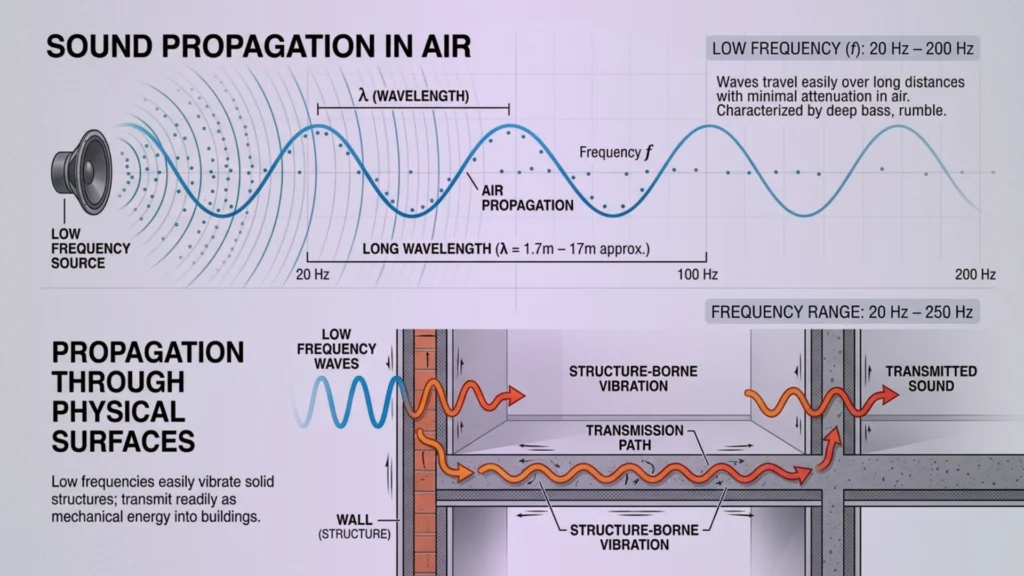
High frequencies lose energy quickly as they travel through air and physical barriers. Bass frequencies behave differently. They bend around obstacles, pass through walls, and maintain energy over long distances. This is why you hear the 808 from a car three blocks away before you hear any other element of the track.
This physical property means bass reaches listeners even before they consciously register the music. The body responds before the mind catches up.
The Evolutionary Argument for Bass Response
Several researchers in evolutionary acoustics argue that human sensitivity to low frequencies has deep biological roots. Low-frequency sounds in nature often signaled danger: thunder, earthquakes, large predators. The body developed rapid, unconscious responses to these frequencies, including elevated heart rate, heightened alertness, and increased physical readiness.
Music producers who work with heavy bass are, in a very real sense, tapping into a survival response system and redirecting it toward pleasure.
The Psychology of Bass: How the Brain Responds to Low End
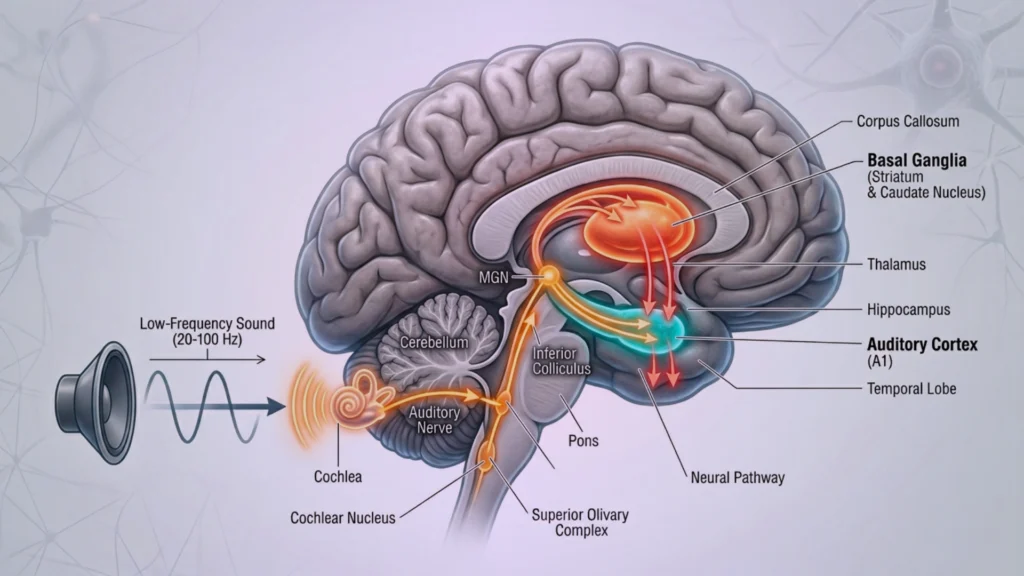
The brain does not process bass the same way it processes melody or lyrics. The psychology of bass operates through a set of neural pathways that bypass cognitive analysis and connect directly to emotional and physical response centers.
The Basal Ganglia and Rhythmic Bass
Research from the Rotman Research Institute demonstrated that the basal ganglia, the brain region most associated with movement and reward, responds more strongly to bass-heavy rhythmic stimuli than to higher-frequency equivalents. The basal ganglia are responsible for the involuntary foot tap and head nod that bass music triggers.
When a well-designed bass groove locks in with kick drums and rhythmic accents, it activates a feedback loop between the basal ganglia and the motor cortex. The brain is not just perceiving music. It is preparing to move.
Dopamine and the Bass Drop
Bass drops are not random aesthetic choices. They are psychological mechanisms. The anticipation phase before a bass drop triggers dopamine release in the prefrontal cortex. The moment the low end returns, a second dopamine spike occurs. This two-stage reward pattern is one of the most addictive cycles in music listening.
Producers who understand this dynamic can engineer drops, breakdowns, and re-entries with surgical precision. The silence before the bass hit is as important as the hit itself.
Infrasound: The Frequencies You Cannot Hear But Still Feel
Infrasound refers to frequencies below 20 Hz, technically below the threshold of human hearing. Yet research published in the British Journal of Psychology found that exposure to infrasound frequencies during music listening correlated with significantly higher reports of awe, unease, and presence.
Some of the most visceral moments in electronic music, horror film scoring, and live festival experiences are designed around infrasound content that the listener feels but cannot consciously identify. The psychology of bass extends below the range of hearing itself.
The Psychology of Bass: Why Bass Makes the Body Move Without Permission
One of the defining characteristics of bass music is that it produces physical responses that feel involuntary. Listeners do not decide to nod their head or feel a vibration in their chest. It happens before the decision is made.

The Somatosensory System and Bass Perception
The somatosensory system, which processes touch and vibration, plays a major role in how humans experience bass. At high enough volumes, frequencies below 200 Hz create vibrotactile stimulation, meaning you are literally touching the sound. The skin registers bass as a form of physical contact.
This is why live sound engineers treat low-frequency calibration as a physical experience rather than purely an auditory one. And it is why the same track can feel completely different at room volume versus at concert volume.
The Chest Cavity as a Resonance Chamber
The human chest cavity naturally resonates in the range of 40 Hz to 70 Hz. When bass content hits this range at sufficient volume, the ribcage and sternum vibrate sympathetically. This physical resonance is partly responsible for the feeling of excitement, power, and emotional intensity that listeners associate with heavy bass music.
Experienced producers specifically target this frequency range when designing 808s, kick drums, and sub bass lines. It is not just about what sounds good on speakers. It is about what the body responds to.
Heart Rate Entrainment and Bass Tempo
Research in music psychology has consistently shown that tempo and rhythm affect heart rate. Bass-heavy music with tempos in the range of 120 to 140 BPM tends to elevate heart rate in listeners, which in turn increases arousal, energy, and the desire to move. The bass line is the primary carrier of this tempo signal because it is the element the body physically feels most directly.
The Psychology of Bass: 808 and Emotional Response
No sound in modern music demonstrates the psychology of bass more clearly than the Roland TR-808 bass drum and its descendants. The 808 has become not just a production tool but an emotional language. Its presence in trap, hip-hop, Afrobeat, and pop signals a specific emotional register before a single bar plays out.
Why the 808 Became an Emotional Standard
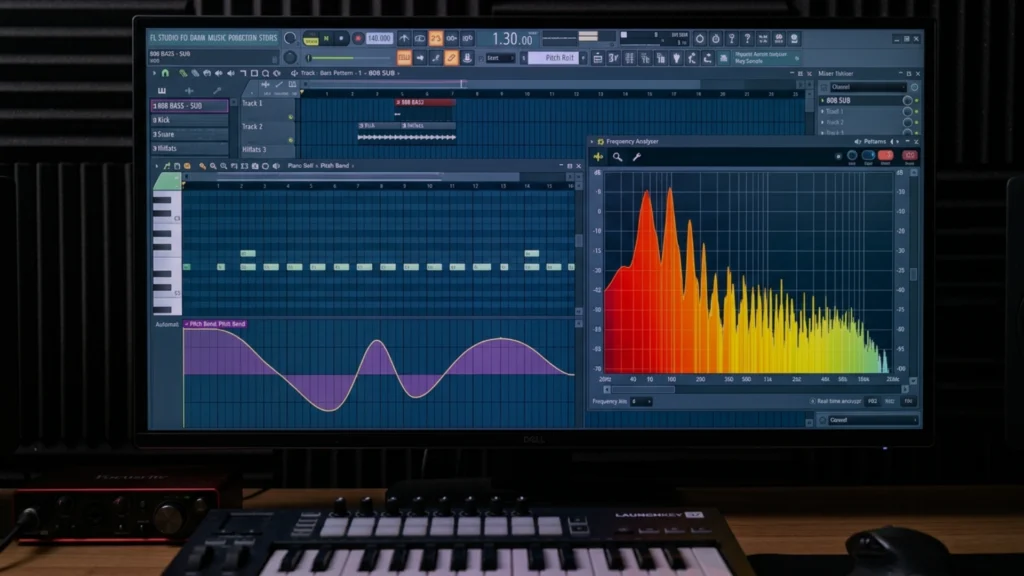
The original Roland TR-808 produced a bass drum sound with a long, tunable decay and a fundamental frequency typically sitting between 40 Hz and 80 Hz. This range sits directly in the zone of peak somatosensory response. When producers discovered that the 808 could be pitched and played melodically, they unlocked a hybrid instrument: part percussion, part bass line, part emotional signal.
The 808 communicates weight, gravity, and presence. When it appears in a mix, it commands physical attention. When it disappears, listeners feel the absence as a physical sensation.
Designing 808s that translate emotionally requires precision in both frequency shaping and mix placement. The complete guide to 808 bass design and crushing sounds covers the technical side of building 808s that hit both sonically and physically.
Pitch, Melody, and Emotional Signaling in Bass Lines
Melodic bass lines carry harmonic information that communicates specific emotional states. Minor intervals in the bass register produce feelings of tension, introspection, or melancholy. Major intervals produce warmth, energy, and resolution. When producers combine these harmonic choices with the physical impact of sub-bass content, they create layered emotional communication that operates simultaneously on conscious and unconscious levels.
This is why the bass line in an Afrobeat track feels different from the bass line in a trap banger, even at similar volumes and tempos. The harmonic content of the low end is telling a different emotional story.
Silence as a Bass Tool
The psychology of bass includes the psychology of its absence. Producers who strip the low end from a section and then reintroduce it are engineering a specific emotional sequence: disorientation, anticipation, and release. This technique appears in virtually every genre of bass-heavy music and remains one of the most reliable tools for generating crowd response at live performances.
Psychology of Bass in Dance Music: Why Low End Makes People Move
The connection between bass and physical movement is the most observable expression of the psychology of bass. Dance floors respond to bass with a reliability that no other frequency range matches.

The Groove Lock: How Bass Creates Irresistible Rhythm
Groove is the quality that makes rhythm feel inevitable. Research from the University of Oslo found that the most effective grooves for inducing movement contain slight rhythmic imperfections, called microtiming deviations, that create a sense of forward momentum. Bass is the primary groove carrier in most popular music because it anchors both the harmonic and rhythmic foundation simultaneously.
When a bass line grooves correctly, it does not just accompany the rhythm. It becomes the body from which all other rhythmic elements hang. The kick, snare, and hi-hat are defined partly by how they interact with the bass line underneath them.
Low End and the Vestibular System
The vestibular system, which controls balance and spatial orientation, is located in the inner ear and responds to low-frequency vibration. Bass frequencies, particularly in the 20 Hz to 120 Hz range, stimulate the vestibular system and create a mild sensation of spatial disorientation or floating.
This subtle destabilization of the body’s balance system is part of what makes bass-heavy music physically compelling. The body compensates through small movements and weight shifts that, in the context of music with a strong pulse, translate directly into dancing.
Why Different Genres Use Bass Differently to Drive Movement
Different genres have developed distinct bass strategies, each optimized for specific physical responses. In amapiano, the log drum bass sits in the mid-bass range and creates a rolling, full-body groove. In trap, the 808 operates in the sub-bass register to produce a heavy, chest-centered impact. In Afrobeat, the bass guitar plays off-beat accents that pull the body into polyrhythmic movement.
Understanding Afrobeat drum patterns reveals how African rhythmic traditions have always understood the relationship between bass frequencies and movement at a deep, structural level.
The Psychology of Bass: A Global Psychological Language
The psychology of bass is not culturally neutral. Different musical traditions have developed unique relationships with low-end frequencies, and these relationships carry specific cultural meanings, social functions, and emotional associations.

Sound System Culture and the Physics of Communal Bass
The Jamaican sound system tradition, which gave birth to reggae, dancehall, and eventually much of modern DJ culture, was built entirely around the physical experience of communal bass. Sound system operators competed on the depth and power of their low end, understanding intuitively that bass united a crowd in physical experience before it united them in melody or lyrics.
This tradition spread globally through the diaspora and influenced everything from UK grime to American hip-hop, each culture adapting the core insight: shared bass is a shared physical experience. When an entire room feels the same vibration simultaneously, it creates a form of social bonding that has been described by researchers as sonic embodiment.
West African Rhythmic Traditions and the Bass Foundation
West African drumming traditions place the lowest-pitched drums at the rhythmic and social center of the ensemble. The talking drum, the djembe bass tones, and the dundun bass drum family all function as both rhythmic foundations and communicative instruments. The bass is literally the voice of the community.
Modern Afrobeat and Afrobeats carry this tradition directly. The bass line in contemporary Nigerian and Ghanaian pop music is not a background element. It is a primary communicative layer carrying cultural information, emotional tone, and rhythmic identity.
Bass as Social Bonding Mechanism
Multiple researchers in music sociology have proposed that the shared physical experience of bass in communal listening contexts, concerts, clubs, ceremonies, serves a social bonding function analogous to synchronized movement and collective ritual. The physical uniformity of bass response across bodies in a shared space creates a form of physiological synchrony that strengthens social cohesion.
For producers, this is not abstract theory. Every heavy drop you design is potentially creating a moment of social bonding for the people who hear it together.
Applying the Psychology of Bass in Your Music Production
Understanding the psychology of bass is one thing. Applying it in your productions is another. The following principles translate the science directly into practical production decisions.
Designing Bass for Physical Impact
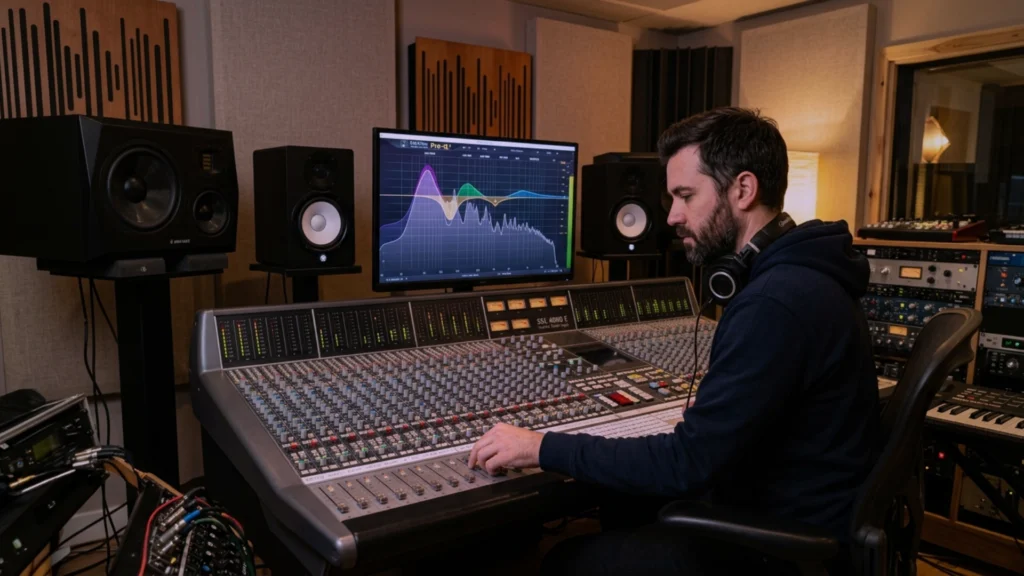
The most physically impactful bass sounds share a few consistent characteristics. They have strong fundamental energy in the 40 Hz to 80 Hz range for sub-bass chest impact. They have sufficient harmonic content in the 100 Hz to 200 Hz range to translate on smaller speakers and headphones. And they have a controlled attack that lets the transient of the kick and bass work together rather than against each other.
Getting this balance right requires careful attention to how your low end behaves in mono. The guide to mixing beats across the frequency spectrum walks through the exact EQ and compression decisions that make bass translate across every playback system.
Sidechain Compression and the Pulse Effect
One of the most psychologically effective tools in bass production is sidechain compression between the kick drum and the bass line. When the kick hits and the bass ducks momentarily, it creates a pumping, breathing rhythm that mimics the physical sensation of bass being cut and restored.
This pulse effect is part of what makes four-on-the-floor dance music feel physically compelling. The listener’s body anticipates the return of the bass on each beat, creating a cycle of micro-tension and release that is neurologically very close to the dopamine anticipation-reward loop described earlier.
The complete breakdown of sidechain compression techniques covers every method from basic ducking to advanced multi-band sidechain approaches that keep bass physically alive throughout a mix.
Frequency Arrangement and Emotional Narrative
Skilled producers use bass frequency content as an emotional narrative tool across the length of a track. A track might open with mid-bass warmth, introduce sub-bass content in the first verse to add weight, pull it back in a bridge to create tension, and then release the full low-end spectrum in the final chorus or drop.
This frequency arc mirrors the emotional structure of the song. Adding bass adds weight and emotional gravity. Removing it creates lightness or tension. Managing this arc intentionally is one of the differences between a track that sounds produced and one that feels like an emotional experience.
The principles in mixing and mastering proven secrets directly address how to manage the full frequency spectrum as an emotional tool across a complete track.
Monitoring Bass Accurately
None of this application is possible without accurate bass monitoring. One of the most common mistakes producers make is designing bass on headphones or small monitors that cannot reproduce sub-bass content accurately. What sounds balanced in headphones can be overwhelming or completely absent on a full-range system.
The comparison between studio monitors and headphones for bass production covers exactly why your monitoring choices directly affect the physical impact of your low end on real playback systems.
The Psychology of Bass Across Mixing and Mastering
Knowing the psychological impact of bass is only useful if your mix actually delivers that impact. The final stage of applying bass psychology is ensuring that your low end survives the mixing and mastering process and arrives at the listener with full emotional and physical force.
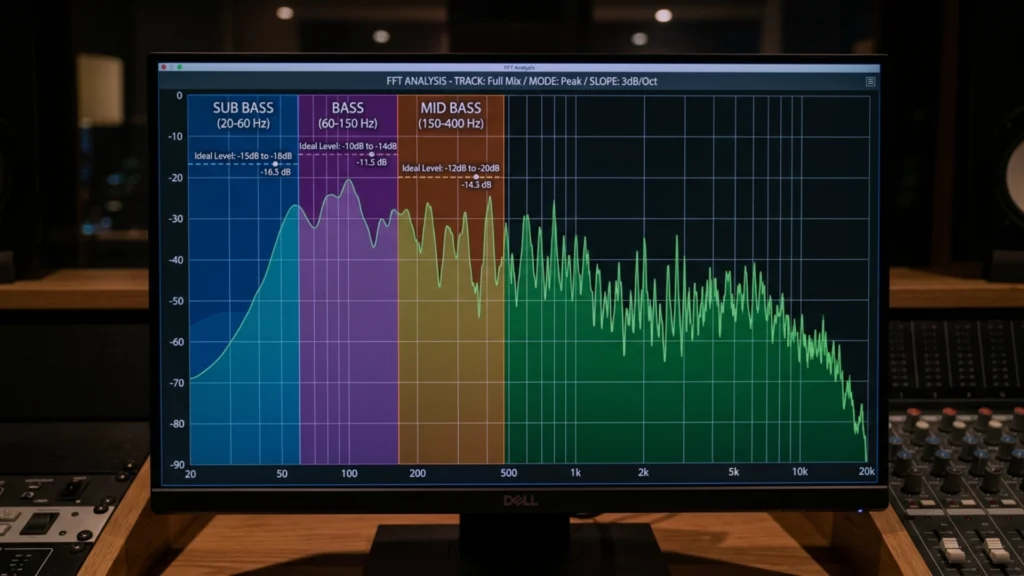
The Three-Layer Bass Approach
Professional mixers typically work with three distinct bass layers: the sub-bass layer (20 Hz to 80 Hz) for physical impact and weight, the bass layer (80 Hz to 200 Hz) for warmth and body, and the upper-bass layer (200 Hz to 300 Hz) for definition and presence on smaller speakers. Each layer serves a different aspect of the psychological bass response.
A mix that only has sub-bass impact loses effectiveness on headphones and phone speakers. A mix that only has upper-bass definition loses physical impact on full-range systems. The most effective bass in commercial music covers all three layers with appropriate relative levels.
Mastering Bass for Streaming Platforms
Streaming platforms apply loudness normalization that can dramatically alter the perceived impact of your low end. Understanding how LUFS targets affect bass perception is essential for ensuring that the psychological impact you design in your mix survives to the listener.
A track that has been mastered with excessive limiting in the low end will have reduced dynamic movement in the bass, which directly undermines the dopamine cycle of anticipation and release that makes bass emotionally effective. The guide to mastering Afrobeat for streaming platforms applies these principles specifically to bass-heavy modern production.
Start Using the Psychology of Bass in Every Production
The psychology of bass gives you a scientific foundation for decisions you may have already been making by instinct. Now you know why they work.
Bass frequencies travel through the body as well as the ears. They activate the basal ganglia and the motor cortex. They trigger dopamine cycles through anticipation and release. They resonate with the chest cavity, stimulate the vestibular system, and create social bonding through shared physical experience. They carry cultural memory and emotional language that has been refined over centuries of musical tradition.
Every production decision you make about the low end is a decision about how you want your listener to feel in their body. Design bass with that awareness and you move from making music that sounds good to making music that people physically cannot ignore.
The psychology of bass is your most powerful production tool. Use it with intention.
Bass is the part of music that makes the room feel smaller and the moment feel larger. Master the low end and you master the emotional core of every track you make.
FAQ: The Psychology of Bass
What is the psychology of bass and why does it matter for music producers?
The psychology of bass refers to the scientific study of how low-frequency sound affects human perception, emotion, and physical behavior. It matters for producers because understanding why bass frequencies create specific physical and emotional responses allows you to design low end with intentional impact rather than relying on guesswork.
Why does bass make people want to dance?
Bass makes people want to dance primarily because of how low frequencies interact with the basal ganglia, the brain region responsible for movement and reward. Bass rhythms activate the motor cortex and create a feedback loop that produces involuntary movement responses including foot tapping, head nodding, and full-body dancing. The vestibular system in the inner ear also responds to bass vibration, creating mild spatial disorientation that the body compensates for through rhythmic movement.
What frequency range has the strongest physical impact on listeners?
The 40 Hz to 80 Hz sub-bass range produces the strongest physical impact because it resonates directly with the chest cavity. However, the 80 Hz to 200 Hz mid-bass range is equally important for emotional warmth and translation across different playback systems. Professional producers target both ranges to create bass that is felt physically and heard clearly across all speakers.
How does the psychology of bass differ across music genres?
Different genres use bass to trigger different physical and emotional responses. Trap uses long-decaying 808s in the sub-bass register for chest-centered weight and emotional gravity. Amapiano uses rolling mid-bass log drum patterns for full-body groove. Dancehall and reggae use bass guitar accents that pull the body into off-beat movement. Each approach is culturally optimized for the specific physical response that genre is designed to create.
Can understanding bass psychology actually improve my productions?
Yes, directly. Understanding which frequency ranges create physical impact, how dopamine cycles work through bass drops and reintroductions, how sidechain compression creates pulse effects, and how bass frequency arcs can mirror emotional narrative gives you concrete tools to make intentional decisions about every bass element in your tracks. Producers who apply these principles consistently create music with stronger listener response across live, streaming, and radio contexts.
What is infrasound and how does it affect music listeners?
Infrasound refers to sound frequencies below 20 Hz, which is technically below the threshold of human hearing. Research has found that infrasound exposure during music listening correlates with feelings of awe, unease, and heightened presence, even when listeners are unaware of its presence. Some producers and sound designers deliberately include infrasound content in drops and breakdowns to create unexplained emotional intensity.
How do I make sure my bass psychology decisions translate in the final mix?
Accurate monitoring is the foundation. Design and check bass on full-range monitors capable of reproducing sub-bass content. Always check in mono to ensure low-frequency content is coherent. Apply careful sidechain compression to maintain rhythmic pulse. Use the three-layer bass approach covering sub, bass, and upper-bass zones. And reference your mix on multiple playback systems including headphones, phone speakers, and car audio to confirm that the physical impact you designed is surviving the monitoring translation.