
Brazilian funk is one of the most explosive dance sounds on the planet. Born at the street parties of Rio de Janeiro, it now shows up in global pop hits, viral dance videos and club sets from Europe to Africa. If you have heard a hard, bouncing drum pattern under a chanted vocal and a booming 808, you have probably heard baile funk.
For beginners, though, it can be confusing. There are funk carioca, funk 150 BPM, automotivo, mandelao and the mysterious “Brazilian phonk”, and most tutorials jump straight into presets without explaining the groove that ties them together.
This guide starts from zero. You will learn where the genre comes from, the main styles, seven simple secrets behind the sound and a step-by-step method to make your first beat in one session.
What Is Brazilian Funk?
Brazilian funk, also called baile funk or funk carioca, is a dance genre from Rio de Janeiro. Despite the name, it has little to do with American funk music. Its roots are in electronic dance and hip hop.
Born in Rio’s Favelas
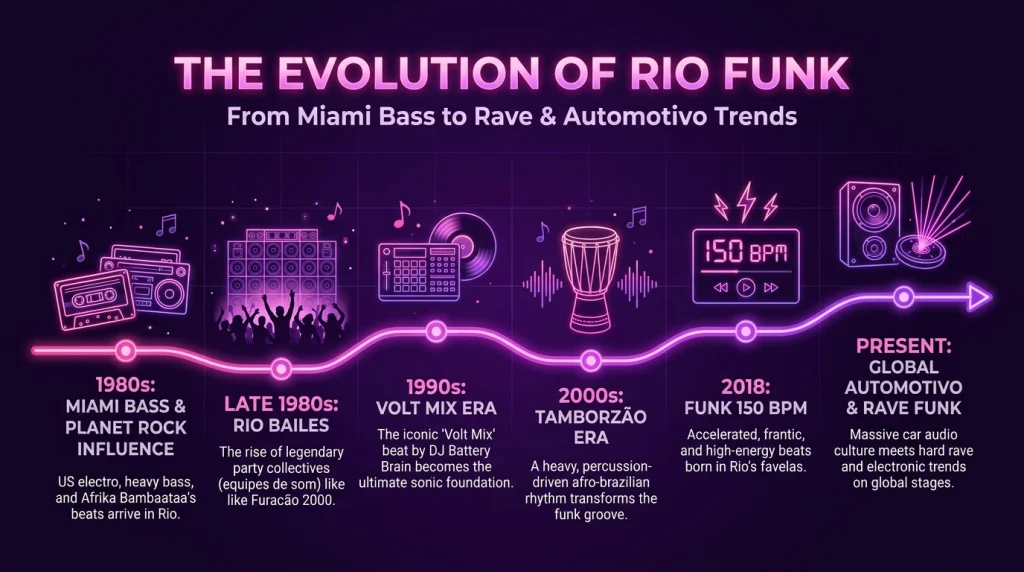
The genre emerged in Rio’s favelas in the 1980s at “bailes”, huge neighborhood dance parties powered by giant sound systems. Local DJs brought back American records, especially Miami bass and freestyle. Pioneer DJ Marlboro credited Afrika Bambaataa and Soulsonic Force’s Planet Rock as a major influence.
From Volt Mix to Tamborzao
Early funk carioca looped electronic drum breaks from Miami bass records. The most famous was the “Volt Mix”, a classic 808 pattern. Over time, producers developed the tamborzao, a heavier, drum-based groove that became the foundation of modern funk carioca.
Brazilian Funk Goes Global
M.I.A.’s 2005 single “Bucky Done Gun” and Diplo’s mixtapes brought the sound to international audiences in the mid-2000s. Since then, stars like Anitta have taken it into mainstream pop, and viral automotivo and rave funk tracks have spread across Europe and beyond.
Brazilian Funk Styles Every Beginner Should Know
The genre has many branches. Here are the ones you will hear most often. For another quick overview, see Orphiq’s baile funk explainer.
Classic Funk Carioca
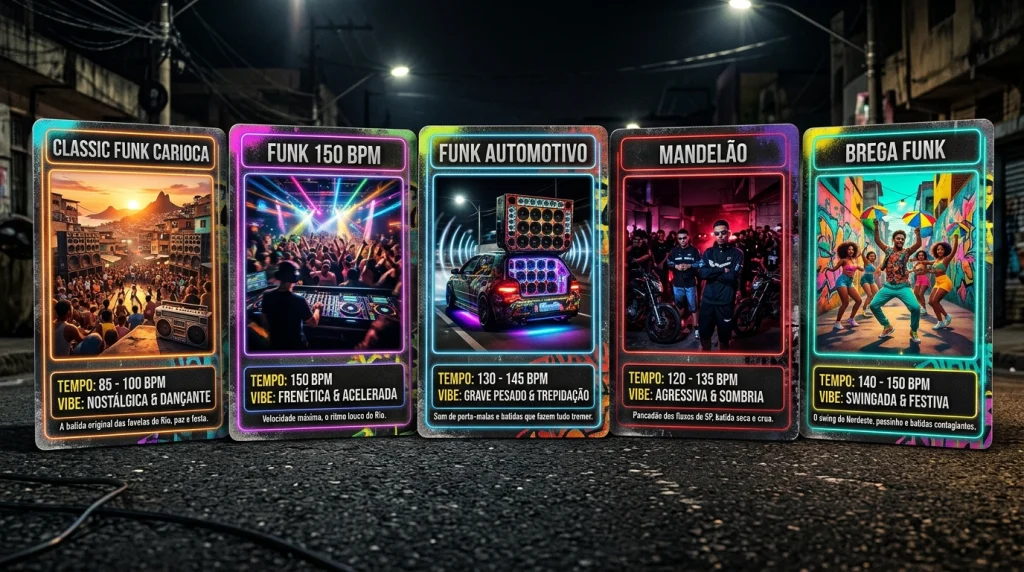
The classic Rio sound runs at around 130 BPM on the tamborzao groove, with chanted MC vocals, 808 bass and short samples. It is the best starting point for beginners.
Funk 150 BPM
Created in 2018 by DJs Polyvox and Rennan da Penha, funk 150 BPM speeds the groove up for a frantic, high-energy feel. It quickly became a staple of Rio parties and carnival blocks.
Funk Automotivo and the “Brazilian Phonk” Confusion
Since 2023, viral Sao Paulo-style automotivo tracks have often been labeled “Brazilian phonk” online. Despite the name, they are not the same as drift phonk. Automotivo is part of Brazilian funk, built around distorted bass, repetitive vocal chops and aggressive sound design.
Mandelao, Ostentacao and Brega Funk
Funk mandelao is a minimal Sao Paulo style. Funk ostentacao focuses on luxury lyrics. Brega funk, from Recife, blends local brega and arrocha styles and often uses a half-time feel. Each shows how flexible the core sound is.
Brazilian Funk: Rave Funk
Rave funk mixes the funk groove with bright, rave-style synths and electronic energy. MC Kevinho’s “E Rave Que Fala Ne” is a well-known example, and Anitta’s 2024 collaboration with The Weeknd, “Sao Paulo”, brought the style to a huge international audience. It shows how easily the groove adapts to other electronic sounds.
Styles Compared
| Style | Typical Tempo | Signature |
|---|---|---|
| Classic funk carioca | Around 130 BPM | Tamborzao groove, MC chants |
| Funk 150 BPM | Around 150 BPM | Fast, frantic energy |
| Funk automotivo | Varies, often near 130 BPM | Distorted bass, vocal chop loops |
| Funk mandelao | Varies | Minimal, stripped-back beats |
| Brega funk | Often 160 to 180 BPM, felt in half time | Melodic, Recife influences |
If you produce Afro or amapiano, these grooves blend surprisingly well with your sound, a perfect chance for some genre-bending production.
The 7 Secrets of a Brazilian Funk Beat
These seven simple ingredients make any Brazilian funk beat sound authentic.
Secret 1: Start at 130 BPM
Most classic tracks sit around 130 BPM. Master that tempo first, then try 150 BPM once the groove feels natural.
Secret 2: The Tamborzao Groove
The drum pattern is everything. A syncopated, bouncing kick and snare pattern carries the track, often with a slight swing or triplet feel.
Secret 3: A Booming 808
A punchy, distorted 808 or sub follows the kick and gives the beat its weight on big sound systems.
Secret 4: Short, Repetitive Samples
Horn stabs, accordion hits and short melodic loops repeat throughout. Less is more.
Secret 5: Chanted Vocal Hooks
MC chants and short vocal phrases, often chopped and repeated, are the hook. Leave space for them.
Secret 6: Minimal Harmony
Many tracks use one or two notes or chords. The groove matters more than complex melodies.
Secret 7: Loud, Aggressive Mixing
The genre is mixed to hit hard. Clipping and saturation are part of the sound, but they still need control.
Setting Up Your First Session
Preparation keeps your first baile funk session fast and fun.
Tempo and Grid
Set your project to 130 BPM. Use a 16th-note grid, and try a light swing or a triplet grid for the kick if your pattern feels too stiff. If you are new to making beats quickly, our guide on how to build a beat in 10 minutes using loops is a great warm-up.
The Sound List
- Kick: punchy and short, ideally a little clipped
- Snare and clap: sharp and bright
- Percussion: shaker, hats and a tom or conga for fills
- 808: a distorted or saturated 808 or sub
- Samples: horn stab, accordion hit or short synth loop
- Vocals: short chants or phrases you recorded or cleared
Gear You Actually Need
You do not need expensive equipment. Any DAW, a pair of headphones or monitors you know well, and a good drum kit are enough to start. A small MIDI keyboard helps for playing chops and samples, but you can also click notes into a piano roll. Many classic tracks were made on simple setups, so focus on the groove, not the gear.
How to Make a Brazilian Funk Beat Step by Step
Follow these six steps to build your first beat. Keep each layer simple, and listen to the groove after every step.
Step 1: Set the Tempo and Key
Start at 130 BPM in a minor key such as A minor or F minor. Minor keys give the dark, punchy mood common in the genre. Save this setup as a template so every future session opens with your tempo, key and favorite drum sounds ready to go.
Step 2: Program the Tamborzao-Style Groove
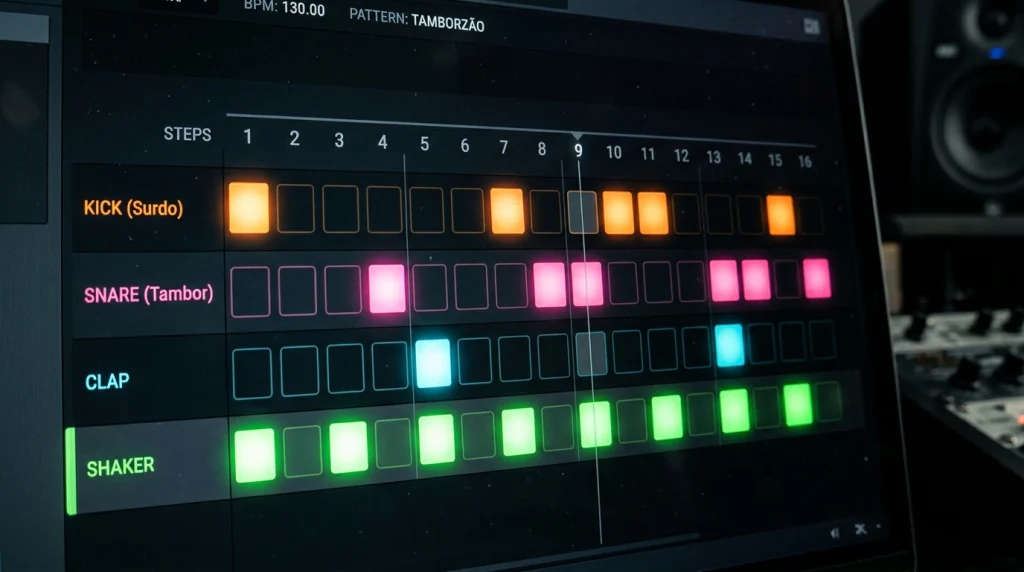
Build a syncopated pattern with a kick on beat 1 and extra kicks that bounce around the bar, a snare or clap on the backbeats and short percussion hits in the gaps. Loop one bar and adjust until it makes you move. Layer a shaker for drive.
Step 3: Add the 808
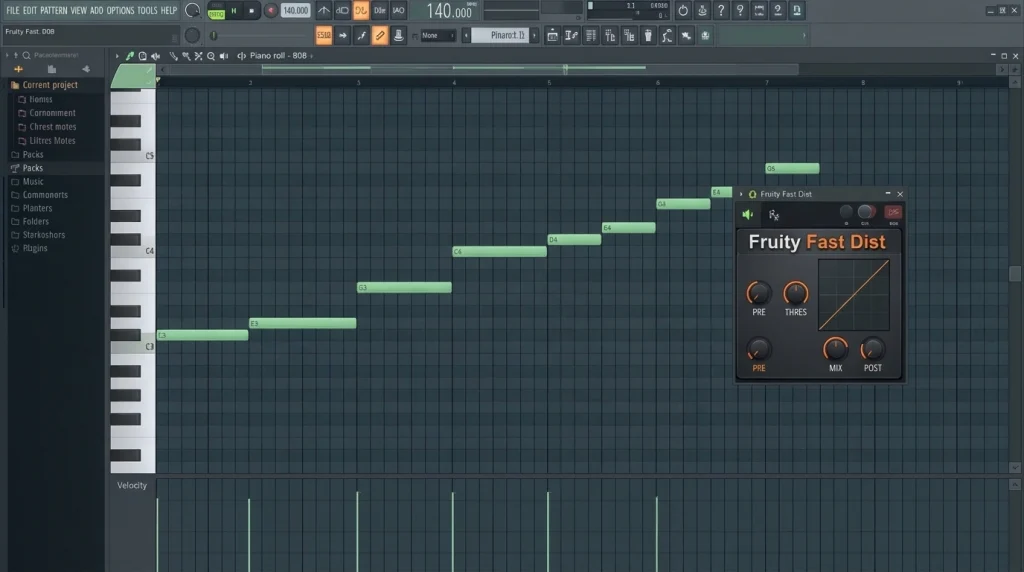
Program an 808 that follows the kick rhythm, mostly on the root note. Add saturation for punch and to help it cut through on small speakers. Learn more about shaping it in our guide to designing crushing 808 bass.
Step 4: Add a Repeating Sample
Choose one short melodic element, such as a horn stab, an accordion hit or a two-note synth loop, and repeat it. In baile funk, a simple repeating hook beats a complex melody every time.
Step 5: Chop a Vocal Hook
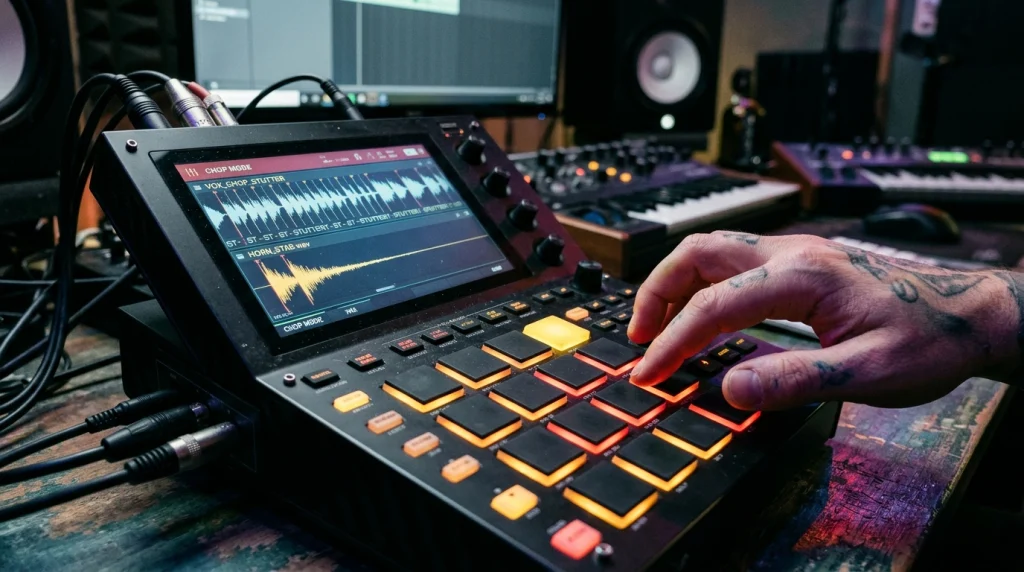
Record or load a short vocal phrase you have cleared. Chop it into syllables, repeat the catchiest part in a stutter, and pitch some chops up or down. This becomes the hook of your track.
Step 6: Add Fills and Variations
Add tom or percussion fills every four or eight bars, short drops where the drums cut out, and an extra percussion layer in the second half. These small changes keep the loop exciting. Try muting the kick for a single beat before a new section, or drop everything except the vocal for half a bar. Small moments of silence make the next hit feel twice as powerful on a big system. For another walkthrough, see Loopcloud’s Brazilian funk guide.
Arranging Your Brazilian Funk Track
Funk tracks are short, punchy and built to loop on the dancefloor.
The Arrangement Map
| Section | Bars | What Happens |
|---|---|---|
| Vocal intro | 4 to 8 | Vocal hook with filtered drums |
| Drop 1 | 8 to 16 | Full groove, 808 and sample |
| Verse | 8 to 16 | Lighter drums under MC vocals |
| Drop 2 | 8 to 16 | Full groove plus extra percussion |
| Break | 4 | Drums cut, vocal stutter |
| Drop 3 | 8 to 16 | Biggest energy |
| Outro | 4 | Quick ending |
Short and Loopable
Many funk tracks run around two to three minutes. Get to the groove fast, repeat the hook often and end before energy drops.
Make an Instrumental and a DJ Version
Export the full track, an instrumental and a slightly longer DJ version with a few extra bars of drums at the start and end. DJs mixing at parties love tracks that are easy to blend, and MCs often want instrumentals to perform over. Extra versions take minutes to export and make your music more useful.
Mixing for Maximum Punch
Mixing baile funk is about impact. The genre is loud, but loud does not have to mean broken.
Loud but Controlled
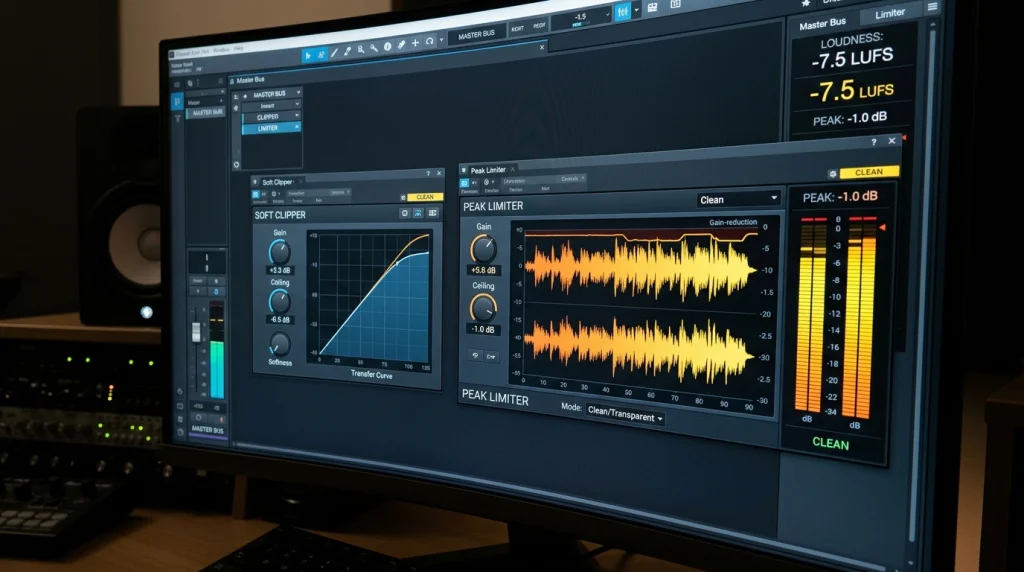
Many producers use clipping and saturation to push drums and 808s hard. Use a soft clipper on the drum bus and a limiter on the master, and compare against reference tracks at the same volume. Our guide to competitive mastering loudness explains the trade-offs.
Keep the 808 Clean
Keep the 808 and kick in mono, cut low frequencies from everything else and make sure the kick and 808 do not fight. A clean low end lets you push the overall level higher without distortion getting out of control.
Check on Phones and Big Speakers
Much of this music is first heard on phones and then played loud at parties. Check your mix on both. On a phone, the kick and vocal hook should still be clear. On a big system, the 808 should hit hard without rattling or blurring the kick.
Respect the Culture
The sound comes from real communities, and understanding that makes your music better.
Learn From the Source
Listen widely to classic Rio records, modern Sao Paulo styles and Recife’s brega funk before you try to copy them. Notice how MCs ride the groove, how DJs build energy and how parties react to drops.
Credit and Collaborate
If you borrow a style, credit its roots, and when possible, collaborate with Brazilian MCs, singers and producers. Authentic voices and real collaboration will always beat imitation.
Understand the Lyrics
Funk lyrics range from party chants to social commentary and explicit content. If you work with vocals in Portuguese, ask a native speaker what they mean before you release, especially for brand, sync or radio use. A clean version is often worth preparing.
5 Beginner Mistakes to Avoid
Avoid these and your first Brazilian funk beats will sound much more authentic.
- Treating it like American funk. The genre comes from Miami bass and electronic music, not funk bands.
- A stiff, quantized groove. Add swing or try a triplet feel.
- Too many melodies. One repeating hook is enough.
- Uncleared vocal samples. Record your own chants or use cleared material.
- Unchecked distortion. Loud is good, harsh is not.
Conclusion: Make Your First Brazilian Funk Beat Today
Brazilian funk proves that a simple idea, a killer groove with a chant and a booming 808, can move the whole world. Start with the classic 130 BPM sound, master the tamborzao feel, and then explore 150 BPM, automotivo and beyond.
Here are the key takeaways:
- Start at 130 BPM with a syncopated, bouncing drum groove.
- Add a punchy 808 that follows the kick.
- Use one repeating sample and a chopped vocal hook.
- Keep arrangements short and get to the drop fast.
- Mix loud but controlled, with a clean low end.
Ready to start? Grab our mix-and-match sample kits, set your tempo to 130 BPM and build your first baile funk groove tonight.
FAQ: Brazilian Funk
What is Brazilian funk?
It is a dance genre from Rio de Janeiro, also called baile funk or funk carioca, built on Miami bass roots, the tamborzao drum groove, chanted vocals and heavy 808 bass.
What BPM is Brazilian funk?
Classic funk carioca usually sits around 130 BPM. Funk 150 BPM, created in 2018, runs faster, and brega funk is often 160 to 180 BPM with a half-time feel.
What is the tamborzao?
The tamborzao is the heavy, syncopated drum groove at the heart of modern funk carioca. It replaced the earlier Volt Mix loops.
Is Brazilian phonk the same as Brazilian funk?
Not exactly. Tracks labeled “Brazilian phonk” online are usually funk automotivo, a branch of Brazilian funk, and are different from drift phonk.
Is Brazilian funk related to American funk music?
Not directly. Its main influences are Miami bass, freestyle and electro, not funk bands.
Can beginners make Brazilian Funk ?
Yes. Its simple structure, short samples and focus on one groove make it a great genre for beginners.
Who are famous Brazilian funk artists?
DJ Marlboro is a pioneer. Modern names include Anitta, Ludmilla and MC Kevinho.