
Every producer knows the feeling of a mix that sounds massive in the studio but falls apart on a phone speaker or in a club. This happens because the mix relies on stereo width to hide problems. To fix this, elite engineers use specific Mono Mixing Secrets to ensure their tracks sound powerful on every system. If your mix sounds clear, punchy, and balanced in mono, it will sound incredible in stereo. However, the opposite is rarely true.
The problem with modern production is the abundance of stereo-widening plugins that create a false sense of space. These tools often introduce phase issues that remain hidden until the audio is played on a mono system, such as a club sound system or a mobile device. By applying Mono Mixing Secrets, you force yourself to deal with the technical reality of your audio signals. This article provides a comprehensive guide to mastering the art of the mono mix.
Why Mono Mixing Secrets Are the Foundation of Pro Audio
The foundation of a great record is not the width; it is the balance. When you mix in stereo, it is easy to “cheat” by panning two clashing instruments away from each other. While this solves the immediate problem in your headphones, it does nothing to fix the frequency conflict.
Mono Mixing Secrets: Sound Translation
Sound translation refers to how well your music sounds across different playback environments. Most consumer devices, including smart speakers, laptops, and professional club systems, actually sum audio to mono or have very narrow stereo separation. By using Mono Mixing Secrets, you ensure that your lead vocals, drums, and bass remain prominent regardless of where they are played. If the lead synth disappears when you hit the mono switch, you have a translation problem that needs immediate attention. Using the best studio headphones for mixing can help you identify these shifts more accurately during the monitoring process.
Mono Mixing Secrets: The Stereo Field
Many beginners believe that a wider mix is always a better mix. However, width is a relative perception. A mix only feels wide if there is a strong, solid center image to compare it to. Mono Mixing Secrets teach you to build that rock-solid center first. By stripping away the side information, you can focus on the core energy of the track. Once the mono foundation is indestructible, the stereo elements you add later will feel even wider and more impactful.
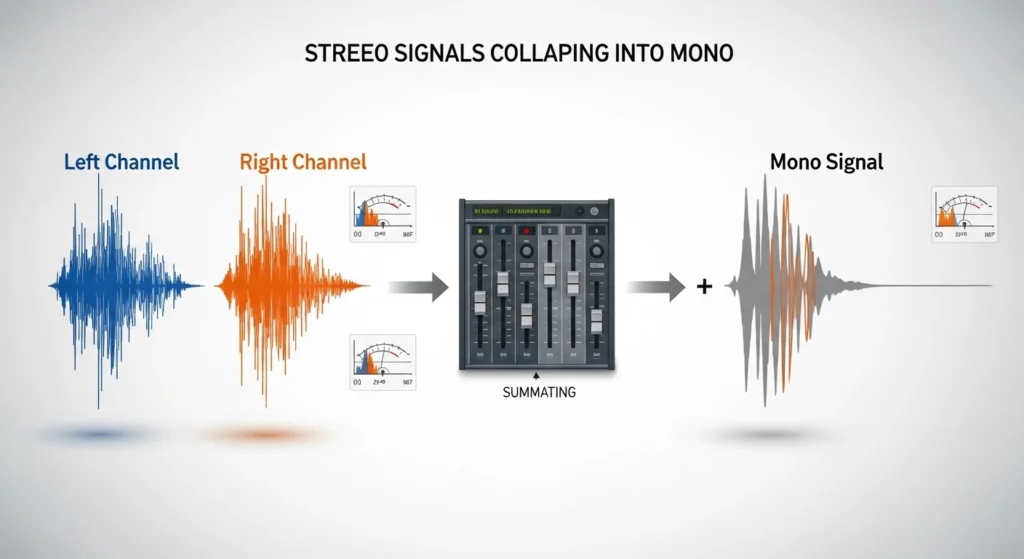
7 Essential Mono Mixing Secrets for Crystal Clear Clarity
Implementing a mono workflow requires discipline. You must resist the urge to pan until the core elements are working together. Here are the seven secrets used by top engineers to achieve professional results.
1. Identifying Frequency Masking in Mono
Frequency masking occurs when two instruments occupy the same frequency range, causing one to “hide” the other. In stereo, you might pan a guitar left and a keyboard right to separate them. In mono, these two instruments sit on top of each other. This is where you find the truth.
To solve this, use EQ to carve out space. If the vocal and the snare are fighting for 2kHz, you must decide which one owns that space. By using Mono Mixing Secrets to identify these overlaps, you create a mix that has more “air” and definition once it is converted back to stereo. This level of precision is essential when applying advanced trap mixing techniques.
2. Fixing Phase Cancellation Before It Ruins Your Mix
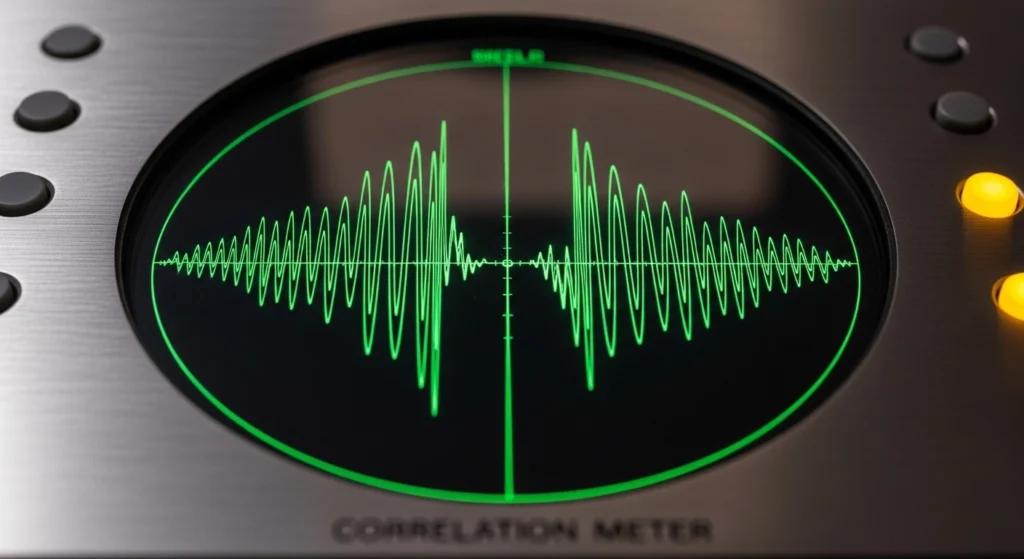
Phase cancellation is the silent killer of great mixes. It happens when the peaks of one waveform align with the troughs of another, effectively canceling the sound out. This is most common in multi-mic setups, like drums, or when using heavy chorus effects.
When you mix in mono, phase issues become immediately obvious. If your kick drum loses all its low-end punch when summed to mono, you have a phase problem. You must check your phase correlation research to understand how to flip polarity or nudge waveforms to align them. Fixing this in mono ensures your drums hit hard on every sound system.
3. Balancing Levels with Precision
One of the most powerful Mono Mixing Secrets is level balancing. It is much harder to hear volume differences in a wide stereo field. When everything is pushed into a single mono point, the relative volume of each element becomes much clearer.
Try setting your initial levels in mono. You will find that the vocal needs to be slightly louder than you thought, or the hi-hats are much too piercing. Achieving a perfect balance in mono creates a natural “depth” that carries over into the final stereo version.
4. Managing Mid-Side Processing Conflicts
Mid-Side (M/S) processing allows you to EQ or compress the center (Mid) and the sides independently. However, aggressive M/S processing can lead to a hollow sound when the track is summed to mono. Expert engineers use Mono Mixing Secrets to monitor the “Mid” channel specifically. This ensures that the essential information of a sound is not being lost in the “Side” channel processing.
5. Using Mono to Set Reverb and Delay Depth
Reverb and delay are often used to create width, but they can easily clutter a mix. If you set your reverb levels while mixing in mono, you will be much more conservative with the wet/dry signals. This prevents the “washy” sound that plagues many amateur productions. If the reverb sounds good in mono, it will sound lush and expensive in stereo without drowning out the dry signals.
6. The Fletcher-Munson Curve and Mono Monitoring
The human ear does not hear all frequencies equally at different volumes. This is known as the Fletcher-Munson Curve. According to equal-loudness contour studies, our perception of bass and treble changes as volume increases. Mixing in mono at a low volume is one of the best Mono Mixing Secrets to combat this. It forces your ears to focus on the midrange, which is where the heart of the song lives. Incorporating analog warmth plugins can help fill out this midrange naturally.
7. Ensuring Club and Radio Compatibility
Professional clubs often run their subwoofers in mono to prevent phase issues in large rooms. If your bass is strictly stereo, it might completely disappear on a club floor. Using Mono Mixing Secrets to check your low end is non-negotiable for dance music producers. Ensure your sub-bass is 100 percent mono below 100Hz to guarantee it rattles the walls as intended.
How to Set Up Your DAW for Mono Mixing Secrets Workflow
You do not need expensive hardware to start mixing in mono. Most modern DAWs (Digital Audio Workstations) have built-in tools to help you switch.
Master Bus Routing Strategies
The most common way to monitor in mono is to place a “Gain” or “Utility” plugin on your master bus as the very last insert. You can then toggle the “Mono” or “Width” control to 0 percent.
However, a better way is to use a dedicated monitor controller or a plugin specifically designed for monitoring, such as the free versions of various room correction software. This allows you to flip the mono switch without accidentally exporting your final track in mono. This setup is a key part of an advanced sidechain compression guide because it allows you to hear exactly how the compression is clamping down on the center image.
Recommended Plugins for Mono Monitoring
While standard utility plugins work, some specialized tools offer better insights. Look for plugins that provide:
- Mono summing with a single click.
- The ability to listen to only the “Side” information (to hear what you are losing).
- Visual frequency masking meters like those found in iZotope Learning Hub.
Common Mistakes When Using Mono Mixing Secrets
Even though mixing in mono is beneficial, there are traps you should avoid.
Over-compressing the Center Image
Because mono makes the center feel very “busy,” you might be tempted to over-compress the audio to make it fit. This can kill the dynamics of your track. Remember that mono is a diagnostic tool, not the final destination. Use it to find the problem, but don’t over-process the signal to the point where it loses life.
Ignoring Low-End Phase Shift
Sometimes, certain “mono-compatible” widening plugins still shift the phase of the low end slightly. Always use a dedicated low-end mono maker to keep your kick and sub aligned. This ensures your foundation remains solid regardless of the processing on the higher frequencies.
FAQ
Q: Should I do my entire mix in mono? A: Not necessarily. Most pros use Mono Mixing Secrets for the first 50 to 70 percent of the mix, especially for setting levels, EQing for clarity, and fixing phase. You should switch back to stereo to finalize the spatial positioning and creative effects.
Q: Does mixing in mono make my music sound boring? A: No. In fact, it makes it sound more exciting in stereo. By perfecting the mono balance, you create a foundation that allows the stereo elements to pop more vividly.
Q: Will mono mixing secrets help with my vocals? A: Yes. Vocals are almost always the most important mono element. Mixing them in mono ensures they stay on top of the instruments and don’t get buried by stereo guitars or synths.
Q: Can I use mono mixing for mastering? A: Yes, mastering engineers constantly check for mono compatibility to ensure the final product works on all radio and streaming platforms.
Q: Is there a specific frequency where everything should be mono? A: Usually, everything below 100Hz to 120Hz should be kept in mono. This prevents phase issues in the most energy-dense part of the frequency spectrum.
Conclusion
Mastering Mono Mixing Secrets is the fastest way to bridge the gap between amateur and professional sound. It strips away the distractions of the stereo field and forces you to confront the technical reality of your mix. By focusing on frequency masking, phase alignment, and level balance in a mono environment, you create tracks that are clear, powerful, and ready for any playback system in the world.
Stop hiding behind stereo width. Hit the mono switch, find the cracks in your foundation, and build a mix that can stand the test of any sound system.